[Asia Economy Reporter Jang Hyowon] Global dining company Didim announced on the 25th that it has completed the purchase of land and buildings for Songdo Didim Town, for which the contract was signed on the 28th of last month. The company expects that through this real estate acquisition, it will be able to reduce related financial expenses by more than 30% annually, and improve business competitiveness through future real estate value appreciation and enhancement of dining service quality.
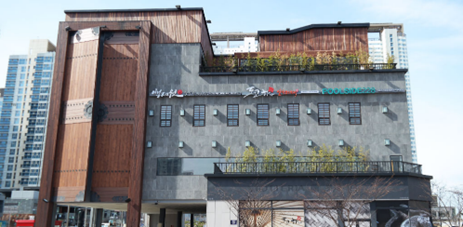
On the 28th of last month, Didim completed the contract for land and buildings used for business located in Yeonsu-gu, Incheon Metropolitan City. Songdo Didim Town has a land area of 1,839.4㎡ and a building area of 3,982.07㎡, housing Didim’s flagship dining brand directly operated stores in one building. Currently, Didim’s traditional Korean cuisine specialty restaurant ‘Baekjewon’, Japanese course meal specialty restaurant ‘Tokyo Hana’, and Italian restaurant ‘Poolside 228’ are located there.
Didim paid a deposit of 895 million KRW to Hana Bank upon signing the real estate sales contract on the 28th of last month. Subsequently, on the 21st, the remaining balance of 17.9 billion KRW was fully paid, and the real estate registration was completed, finalizing the purchase process.
The company explained that the purchase price was about 4% (700 million KRW) lower than the market price, and that they considered the geographic advantage of Incheon Songdo as an international city, continuous investment by large corporations, ongoing population inflow, the potential for future real estate value appreciation, and the promising commercial district.
Didim had been paying approximately 70 million KRW monthly in rent for 10 years to Vestas Asset Management, a collective investment business operator, for the use of the property.
The company stated, “With this purchase of Songdo Didim Town, the fixed cost burden from high rent has been alleviated, and from the second half of this year, there will be a positive effect on the company’s profit and loss improvement. Transitioning from leased buildings to owned buildings will strengthen the business competitiveness of directly operated stores and improve service quality.”
© The Asia Business Daily(www.asiae.co.kr). All rights reserved.

















