Frequent Raccoon Dog Attacks in Urban Areas
Not Harmful Wildlife, "Capture and Killing Are Illegal"
Need to Establish Institutional Measures to Seek Coexistence Methods
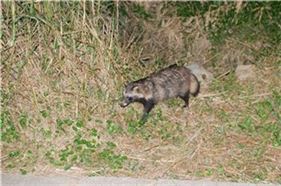 Recently, there have been numerous complaints from residents about raccoon dog attacks in urban areas. The photo is not related to the specific content of the article.
[Asia Economy Culture Young Intern Reporter] Recently, raccoons attacked residents on a walking trail in a park in Seoul. The victim was severely injured, with bones exposed on all limbs. Although raccoon attacks in urban areas occur frequently, raccoons are not classified as harmful wild animals, so they cannot be captured or removed, raising urgent calls for coexistence measures.
On the night of the 17th, a woman in her 50s, Ms. A, was attacked by three raccoons in a park located in Songpa-gu, Seoul. She had to be hospitalized with bandages wrapped around various parts of her arms and legs. Ms. A’s son explained the situation, saying, "She was attacked by the raccoons when she turned around, and because it was a downhill slope, she lost her balance and fell."
Ms. A received inpatient treatment and even rabies shots, with hospital bills exceeding 1 million won, but she did not receive any compensation.
Lee Won-bok, head of the Korea Animal Protection Union, said, "As habitats and ecological environments are destroyed, raccoons appear in urban areas," adding, "There are also cases where raccoons are abandoned after being kept as pets." He further explained, "Since raccoons are not harmful wild animals, there are no institutional measures in place for cases of damage or bites," and "Therefore, there is no way to receive compensation at the national level."
The bigger problem is that the park area where the incident occurred is frequented by many children and elderly people, so the damage could be repeated. Residents also say that because the attacks happen so suddenly, escaping is not easy.
In fact, on the 22nd of last month, a dog was attacked by a raccoon while on a nighttime walk along Ui Stream in Gangbuk-gu. As similar incidents occur, related complaints have been continuously filed with district offices recently.
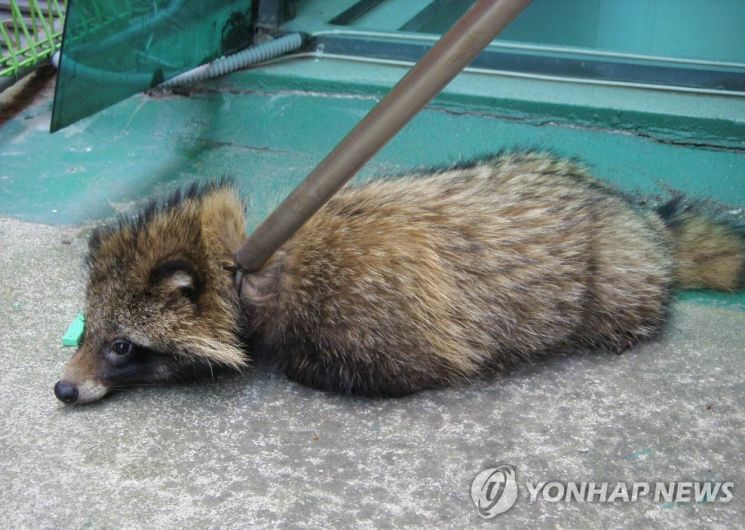
◆ Not a harmful animal... How to coexist?
As attacks on both pets and residents by raccoons occur, district offices are considering ways to protect people, pets, and raccoons alike.
However, since raccoons are not classified as harmful wild animals, capturing or killing them is strictly illegal. Therefore, the district offices’ position is that aside from installing warning signs, there are no appropriate measures.
With ongoing damage and complaints caused by raccoon attacks, the district offices announced plans to visit areas where complaints were received, inspect the sites, and install warning signs.
Experts say that as raccoon habitats shrink due to various developments, their appearance in urban areas will increase, making it urgent to find wise coexistence methods.
Lee said, "We need to help raccoons return to nature as much as possible," adding, "Not only warning signs but also detailed guidance on how residents should respond and report when raccoons appear is necessary." He also added, "Just as there are institutional measures to capture, neuter, and release stray cats for coexistence, similar systems are needed for raccoons."
© The Asia Business Daily(www.asiae.co.kr). All rights reserved.
![Clutching a Stolen Dior Bag, Saying "I Hate Being Poor but Real"... The Grotesque Con of a "Human Knockoff" [Slate]](https://cwcontent.asiae.co.kr/asiaresize/183/2026021902243444107_1771435474.jpg)
















