Police Agency Places Chief Superintendent Ryu Sam-yeong, Who Led Nationwide Police Chiefs Meeting, on Standby
Experts: "Standby Order Has No Flaws but Legal Disputes Are Inevitable"
"Government Must Take Responsibility and Act to Resolve Conflict"
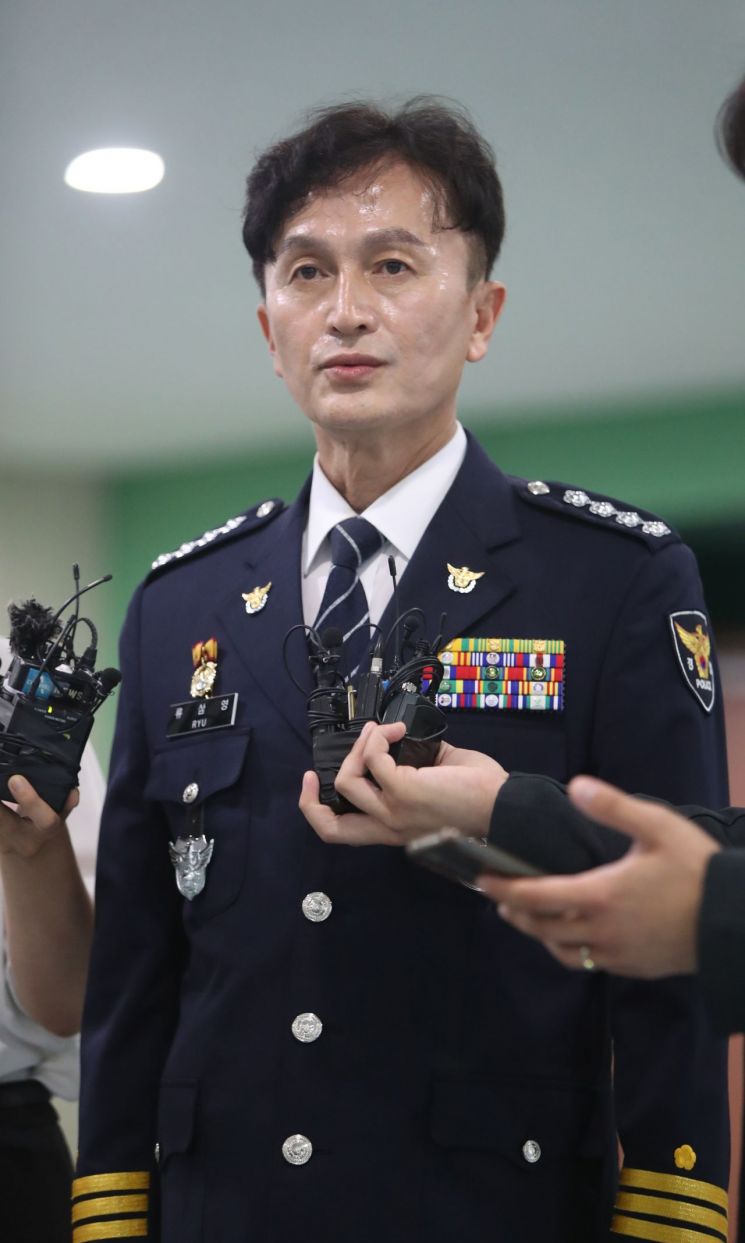
The National Police Agency issued a standby order to Chief Superintendent Ryu Sam-yeong, who led the nationwide police chiefs' meeting opposing the establishment of the Police Bureau under the Ministry of the Interior and Safety, on the grounds of violating the duty of obedience under the National Public Service Act. It was because he did not comply with the order to disband the meeting. Experts say that while there is no legal issue with the disciplinary action by the National Police Agency according to the law, the process of establishing the Police Bureau by the Ministry of the Interior and Safety, which triggered this incident, did not follow the usual communication procedures, so it is highly likely to face public criticism in the future.
According to comprehensive reporting by this paper on the 25th, the legal consensus in the legal community is that there is no defect in the National Police Agency's standby order against Chief Superintendent Ryu on the 23rd. Professor Jung Wan of Korea University Law School said in a phone interview with this paper on the same day, "It depends on interpretation, but it is true that chief superintendents did not follow the request or order not to engage in collective action," adding, "It should also be considered that the police is an organization where hierarchical order is important." According to Article 57 of the current National Public Service Act, public officials must obey the orders of their superiors in the performance of their duties. Furthermore, Article 66 of the same law stipulates that national public officials must not engage in collective actions for labor movements or other non-official duties.
There are also predictions that legal disputes will be inevitable in the future. It is explained that Chief Superintendent Ryu's claim that "police officers gathered on the weekend, which is not considered duty time," regarding the initiation of disciplinary procedures by the National Police Agency, is also a reasonable argument. Professor Lee Yun-ho of the Department of Police Science at Korea Cyber University said, "Police officers, including Chief Superintendent Ryu, are strongly opposing the disciplinary actions," and "Those subject to discipline judge that the National Police Agency's decision constitutes abuse of authority and will take all necessary judicial actions such as injunction applications and appeals against the disciplinary actions."
There are also criticisms that the government should examine whether the Ministry of the Interior and Safety followed the usual procedures in establishing the Police Bureau, which is the root cause of this incident. Professor Lee said, "Since an organization controlling the police is being created, sufficient communication with frontline police officers should have taken place," adding, "Considering the reduction of the legislative notice period, it is questionable whether the Police Bureau was established after communicating with each command." The Ministry of the Interior and Safety requested the Ministry of Government Legislation to shorten the legislative notice period for the enforcement decree of the Police Bureau establishment from the usual 40 days to 4 days, citing that it is unrelated to the rights, duties, and daily lives of the public.
Ultimately, experts suggest that the government must take responsibility and act to resolve this conflict. Professor Jung said, "Considering the political situation, the government's establishment of the Police Bureau is an excessive measure," and "The more hastily it moves, the more the public will suspect intentions other than democratic control." Professor Lee said, "It is not that the police do not want to be under democratic control," adding, "There are options such as strengthening the Police Commission or separating administrative and security affairs, but establishing the Police Bureau without communication with frontline police officers is somewhat regrettable."
© The Asia Business Daily(www.asiae.co.kr). All rights reserved.
!["The Woman Who Threw Herself into the Water Clutching a Stolen Dior Bag"...A Grotesque Success Story That Shakes the Korean Psyche [Slate]](https://cwcontent.asiae.co.kr/asiaresize/183/2026021902243444107_1771435474.jpg)
















