Young Adults Take 11 Months on Average to Get First Job After Graduation
Youths Dissatisfied with Jobs Attempt Startups or Career Changes
 On the 19th, citizens wearing masks are moving during their morning commute around Gwanghwamun, Seoul. Photo by Hyunmin Kim kimhyun81@
[Asia Economy Reporter Heo Midam] # Eunhye Kim (29, pseudonym), an office worker in the marketing department of a small-to-medium enterprise, decided to resign after just one year at the company. She said, "When I gave my opinions to my boss, they were often ignored or nitpicked over trivial matters. At first, I felt bad because it seemed like I was being disregarded, but over time, I thought, 'Maybe I'm not suited for marketing,' and decided to quit. After resigning, I plan to attend a coding academy. These days, many companies want developers, and the salaries are high. I think switching to a developer role will allow me to have a more satisfying work life than now."
More young people are deciding to quit their jobs because the work does not suit their aptitude, even after struggling to find employment. Some of them start their own businesses or completely change industries to take on new roles. As the turnover rate among new employees rises, companies are making various efforts to improve the work environment.
According to the 'May Economically Active Population Survey Youth Supplement' released by Statistics Korea on the 19th, the average time for young people to find their first job was 10.8 months, about 0.7 months longer than last year. In particular, the job search period for those with a high school diploma or less was 1 year and 4 months, longer than the 7.8 months for college graduates or higher.
On the other hand, the average tenure at the first job was only 18.8 months, or 1 year and 7 months. The most common reason for quitting was dissatisfaction with working conditions (45.1%).
Traditionally, older generations had a strong concept of lifelong employment, working steadily at one company until retirement. However, younger generations, for whom the idea of a lifelong job has faded, tend to resign or change jobs more easily than other age groups. While older generations worked with promotion and higher pay as goals, younger people tend to focus less on promotion and more on personal growth and pursuing 'work-life balance (WLB).'
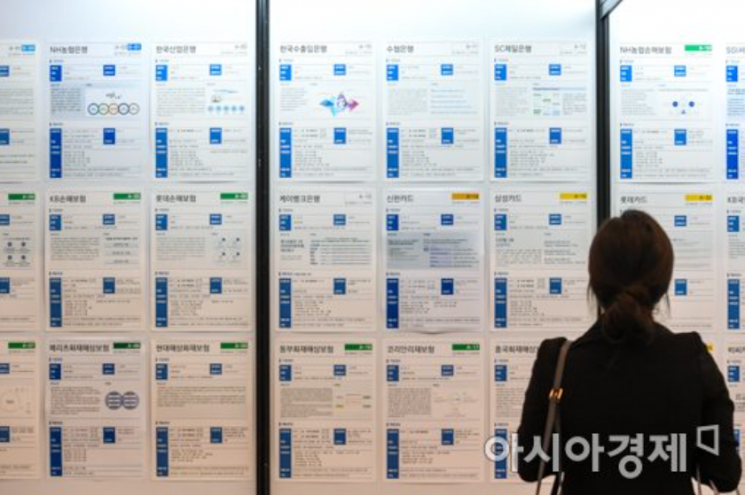
In particular, some young people dissatisfied with their jobs are planning to switch industries. They give up their current roles for better treatment, such as higher salaries, and challenge entirely new jobs. For example, humanities graduates are learning coding to transition into the IT sector, where demand and salaries are rising.
On the anonymous office worker community app 'Blind,' posts about considering career changes are steadily appearing. One user, who said they work at a public enterprise, shared, "I’m tired of a culture where I have to follow my boss’s orders without clear direction. I feel doubtful about my current job and plan to switch to a developer role. I intend to attend coding academies and build a portfolio. It’s late, but I want to start from the bottom step by step."
Some, fed up with rigid organizational cultures, choose entrepreneurship. Eunyoung Park (27, pseudonym), who currently runs a Smart Store, said, "After working about three years, I was physically and mentally exhausted from intense work and conflicts with my boss, so I resigned last year. I no longer wanted to continue company life, so I started a Smart Store business. Although sales are not high, it is steadily growing." Smart Store is a service by Naver that allows users to operate an online shopping mall for free.
The entrepreneurial trend among youth is also confirmed by statistics. According to the 'Small Business Survey' released by Statistics Korea in December last year, the number of businesses led by people in their 20s or younger was 182,000 in 2020. This is about a 163% increase compared to 69,000 in 2019.
Meanwhile, companies are introducing various welfare systems to reduce early turnover among new employees and improve work efficiency. For example, Woowa Brothers, which operates 'Baedal Minjok,' will introduce a 'Workplace Autonomy System' starting January next year, allowing employees to choose their work location freely as long as they comply with set working hours. This includes overseas locations if conditions permit.
Similarly, TMON started implementing 'Smart & Remote Work' this month. TMON employees can work autonomously anywhere with a suitable work environment, including the new office opening soon in Garosugil, Gangnam-gu, Seoul, as well as base offices and shared offices throughout the metropolitan area. The aim is to boost employees’ work efficiency by removing spatial constraints.
© The Asia Business Daily(www.asiae.co.kr). All rights reserved.


















