Increase in Companies Adopting Workation
73% of Workers Satisfied with Workation
Interest in Whether It Can Be an Alternative to Prevent Local Extinction
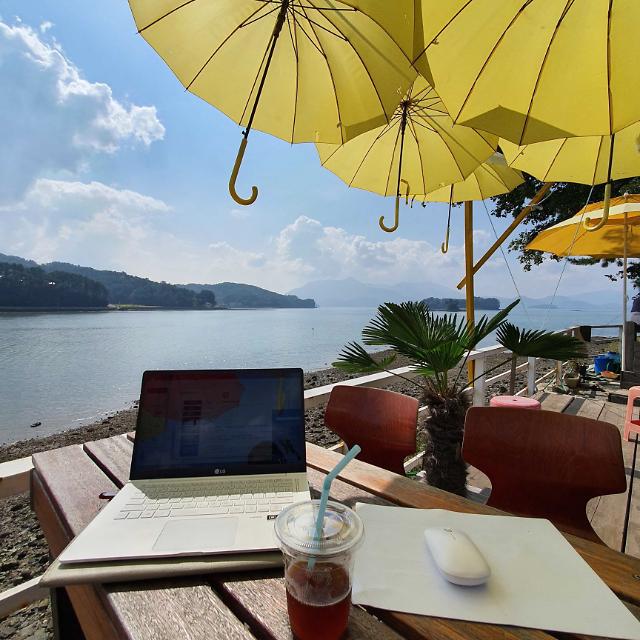
[Asia Economy Intern Reporter Seohee Lee] Mr. A, who works in the HR department of a large corporation, wakes up at an accommodation overlooking Sehwa Beach in Jeju. His workplace is a brunch cafe about a 5-minute walk from the accommodation where he is staying. After grabbing his laptop, earphones, and diary, he settles into a corner of the cafe, and his work officially begins. He shares tasks with colleagues through the company messenger and attends department meetings via the remote video program 'Zoom.' Mr. A said, “Working while looking directly at the beautiful Sehwa Beach increases my work efficiency and concentration, and I am also motivated because I can enjoy sightseeing after work or on weekends.”
More companies are adopting the so-called 'workation.' Workation (work + vacation) is a type of remote work where employees work remotely from vacation spots. Since remote work became a new working style after COVID-19, workation?handling work while on vacation?has emerged as another trend. Employees can escape the stuffy office and work in an open natural environment, while companies benefit by securing talented personnel and improving employees' work efficiency.
In fact, satisfaction with workation is high among both employees and employers. According to a survey conducted by the accommodation reservation platform Hotels.com from November 10 to 16 last year, targeting 1,000 domestic office workers and 500 employers, 73% of employees responded that 'workation is beneficial,' and 86% of employers thought 'workation is beneficial to employees.' Employees cited 'mental health management and improvement' (45%) and 'inspiration and creativity enhancement' (42%) as advantages of workation, while employers pointed to 'employee inspiration and creativity enhancement' (58%) and 'improvement in employee work efficiency and productivity' (54%) as its benefits.
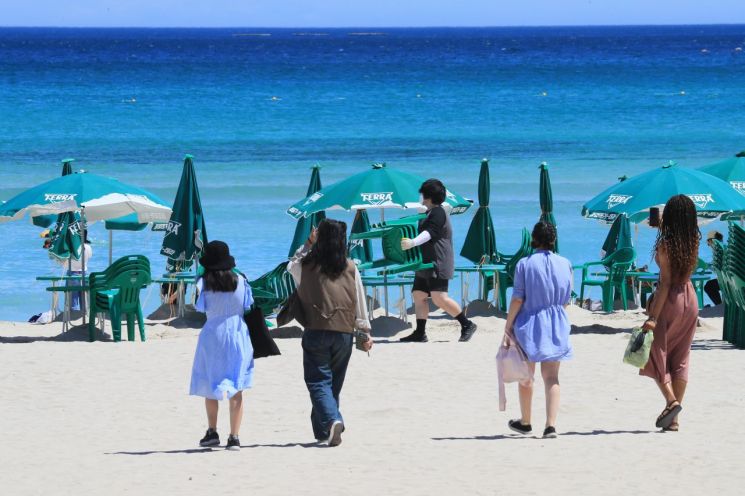
Along with this, workation is gaining attention as an alternative to revitalize local economies and prevent regional extinction. Expectations are spreading that workers staying in tourist areas for as short as two weeks or as long as several months will bring vitality to nearby regions and commercial districts. According to data released last year by the Korea Tourism Organization on the 'Economic Impact of Domestic Workation,' the economic effects of adopting workation are estimated to include approximately 350 billion KRW in direct spending, about 27,000 jobs induced, and around 4.5 trillion KRW in production inducement effects.
Local governments, once fearful that 'regions might soon disappear,' are now fiercely competing to attract workation companies. Some are building complex centers equipped with accommodations and office spaces, while others have created entire 'workation villages.' Local community groups have also jumped into the workation market. The Sehwa Village Cooperative opened the 'Jilgeuraengi Center,' a shared office, accommodation, and cafe created from a vacant building in front of Sehwa Beach. In addition, various village communities are striving to capture workation demand.
Meanwhile, experts point out that several practical conditions must be resolved for workation to be linked with regional balanced development policies. Professor Donghoon Seol of the Sociology Department at Jeonbuk National University said, “Workation targets only employees who can work without going to the office, so the floating population is inevitably limited. Moreover, if the workation period lasts only one to two weeks, it is difficult to include this in the resident population. The stay period should be at least three weeks or more to be meaningful from the perspective of regional balanced development.”
© The Asia Business Daily(www.asiae.co.kr). All rights reserved.


















