Causes and Overcoming Methods of 'Gawinullim' (Sleep Paralysis)
[Asia Economy Reporter Jin-kyung Lee] Have you ever experienced the so-called ‘sleep paralysis,’ where your consciousness is awake but your body cannot move while sleeping? Once you experience sleep paralysis, you become engulfed in the fear of it happening again, making it difficult to fall asleep easily. If this leads to a lifestyle of sleep deprivation and poor sleep quality, anxiety and fatigue increase, causing not only sleep paralysis but also more frequent nightmares. So, how can sleep paralysis be avoided?
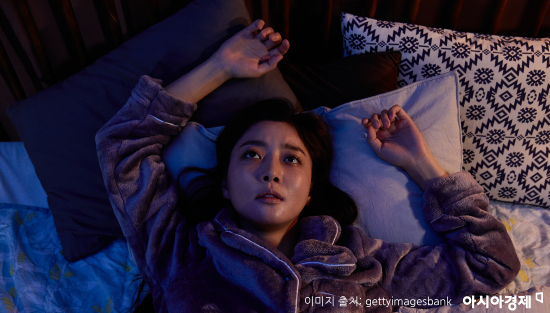
● What is Sleep Paralysis?
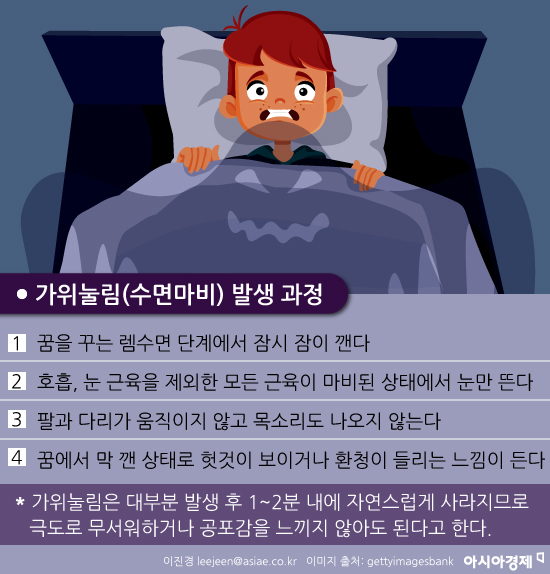
Sleep paralysis is a type of sleep paralysis disorder where the consciousness is awake but the body cannot move. It usually begins in the teenage years but can actually occur to anyone at any age or gender at any time. Sleep paralysis mainly occurs when awakening is incomplete; the brain is conscious and awake, but the limbs are in a state of hypnopompic paralysis, and it is known to occur mainly during REM sleep.
● Why does our body become paralyzed during REM sleep?
Sleep consists mainly of cycles of REM (Rapid Eye Movement) sleep and Non-REM sleep. Non-REM sleep accounts for about 80% of total sleep, while REM sleep accounts for 20-25%. During the REM sleep stage, when dreaming occurs, the body’s muscles become paralyzed as a defense mechanism to prevent accidents that could happen if dream actions were physically enacted. Therefore, during REM sleep, all muscles except for the respiratory muscles used for breathing and the eye muscles used for blinking are paralyzed, making the body unable to move.

● Can hallucinations and auditory hallucinations be experienced?
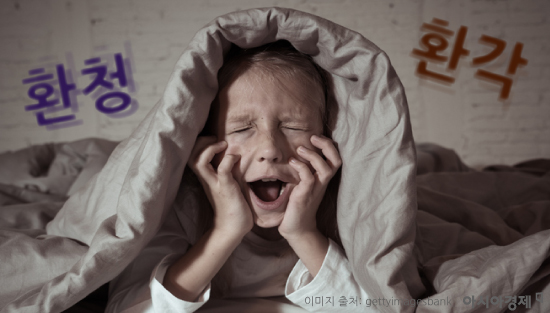
During REM sleep, all muscles except for the respiratory and eye muscles are relaxed, so the body cannot move voluntarily. If you wake up during this time, your muscles may not catch up with your consciousness, causing sleep paralysis where you are conscious but unable to move your body for a while. In addition to being unable to move, sleep paralysis can also involve hallucinations or auditory hallucinations such as ghosts or dark objects. Frequent sleep paralysis can cause significant mental stress and anxiety, potentially leading to chronic sleep disorders, so caution is advised.
● Types of Sleep Paralysis
▷ Isolated Sleep Paralysis
This refers to sleep paralysis that temporarily occurs upon waking in the morning. It is known that about 40-50% of the general population experiences it once or a few times in their lifetime, mainly appearing in childhood or adolescence. Since it rarely becomes chronic, treatment is generally not necessary.
▷ Familial Sleep Paralysis
This is an extremely rare form reported in a few cases in some literature. It is genetically inherited in an X-linked dominant manner and can occur as isolated sleep paralysis.
▷ Sleep Paralysis due to Narcolepsy
Sleep paralysis can occur as a symptom of narcolepsy, which involves problems with the sleep-wake mechanism, causing daytime sleepiness and abnormal REM sleep. Sleep paralysis accompanies 20-40% of narcolepsy patients and can become chronic, requiring prompt treatment.
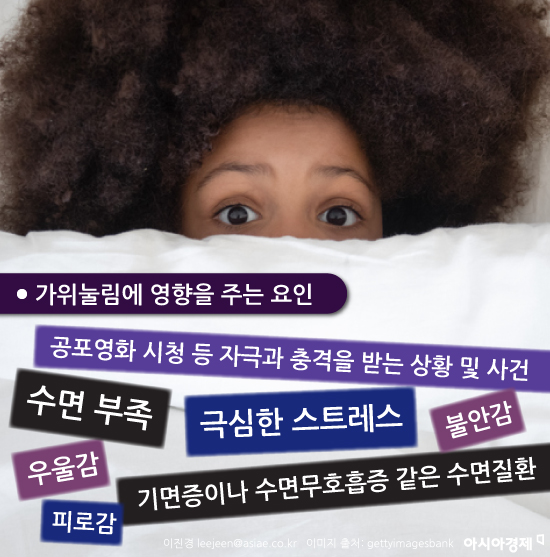
● Is frequent sleep paralysis deeply related to sleep disorders?
Sleep paralysis symptoms can be related to sleep disorders. Besides sleep disorders such as narcolepsy and sleep apnea, conditions like migraines and anxiety disorders may also be associated. Sleep paralysis symptoms like sleep paralysis are especially severe in narcolepsy patients. If you experience severe daytime sleepiness and frequent sleep paralysis continuously for 3 months, it is advisable to undergo polysomnography and daytime testing considering the possibility of narcolepsy.

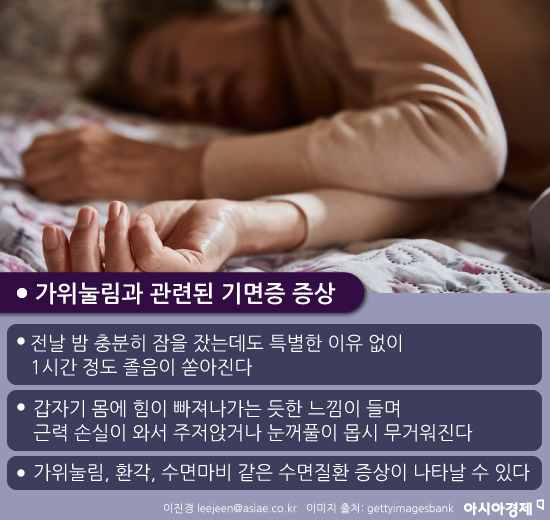
● What happens if you frequently experience sleep paralysis?
Frequent sleep paralysis negatively affects daily life. Anxiety and fear about sleep paralysis make it difficult to fall asleep, and you may wake easily during sleep, significantly lowering sleep quality. This eventually leads to decreased concentration, impaired memory, increased fatigue, and a decline in quality of life, making it difficult to maintain daily activities, so caution is necessary.
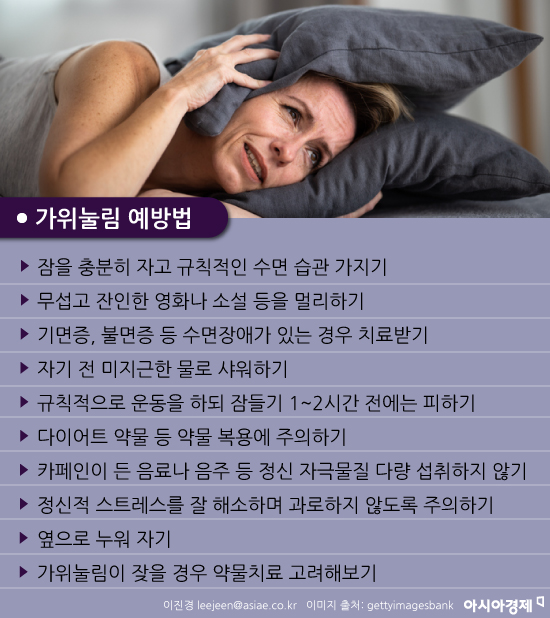
● How can you avoid sleep paralysis?
Sleep paralysis can be somewhat prevented by improving lifestyle habits. It is especially important to avoid excessive physical activity and to manage stress levels. According to surveys on sleep paralysis experiences, people reported experiencing sleep paralysis most often when they were tired, had a stressful day, lacked sleep, or watched horror movies or scary scenes. It is also recommended to avoid excessive consumption of alcohol or caffeine that disrupts sleep and to sleep lying on your side at a slight angle to prevent the uvula from pressing on the airway and disturbing deep sleep.
● Should sleep paralysis be treated?
About 7-8% of healthy individuals experience sleep paralysis, but treatment for this symptom itself is rare. However, if sleep paralysis lowers sleep quality and causes daytime fatigue and concentration difficulties that interfere with daily life, treatment is recommended. If symptoms such as anxiety disorder, stress disorder, narcolepsy, or seizures are present, detailed examinations and accurate diagnosis and treatment are necessary, so it is advised to visit a specialized hospital promptly.

© The Asia Business Daily(www.asiae.co.kr). All rights reserved.



















