June Jeju Island Prices Rise 7.4%
1.4%p Higher Than Nationwide
Jeju, Gangwon, Gyeongbuk, Jeonnam Order
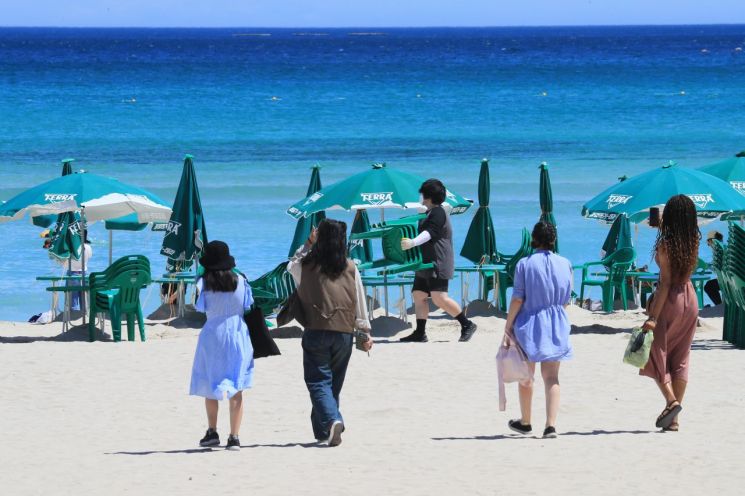
[Asia Economy Reporter Seo So-jeong] Kang Ji-seok, an office worker living in Seoul, recently visited Jeju Island for summer vacation and was shocked by the high prices. After a family of four finished a meal at a restaurant in Jungmun, Seogwipo City, where two servings of black pork barbecue were sold for 64,000 won, the receipt showed nearly 150,000 won. Kang said, "Prices at restaurants and cafes are much higher than in Seoul, so the vacation expenses far exceeded my expectations," adding, "Even considering tourist area prices, it feels like the cost of living in Jeju has risen excessively."
According to the regional trends of the Consumer Price Index by Statistics Korea on the 20th, Jeju's consumer price inflation rate in June (compared to the same month last year) was 7.4%, the highest among the 17 metropolitan cities and provinces nationwide. While the nationwide consumer price inflation rate in June was 6.0%, the highest in 23 years and 7 months, Jeju's rate was 1.4 percentage points higher than that.
Following Jeju, Gangwon (7.3%), Gyeongbuk (7.2%), and Jeonnam (7.1%) also showed inflation rates in the 7% range, significantly surpassing Seoul's 5.1%, demonstrating considerable regional differences in price increases.
An official from the Bank of Korea Jeju Branch stated, "Jeju's prices are at the highest level nationwide, and the gap with the rest of the country has widened since the fourth quarter of last year," adding, "Looking at the item-specific inflation rates in June, Jeju showed higher increases than the national average in petroleum products (43.8%), livestock products (14.3%), and personal services (7.0%), which have large weights within the region."
Jeju is particularly sensitive to petroleum prices. Due to high private car usage and expensive fuel costs, vehicle maintenance expenses are higher than in other regions, and public transportation usage is low, resulting in high per capita petroleum consumption. Additionally, as an island, the selling price of petroleum products is also high. The sharp rise in international oil prices this year has directly impacted inflation. Historically, Jeju has experienced larger inflation spikes during periods of rising oil prices.
The easing of COVID-19 restrictions and the significant increase in tourists visiting Jeju this year have also been major factors driving up prices. In June this year, the number of tourists visiting Jeju was 1,268,000, an increase of 129,000 compared to the same month last year. Not only individual domestic tourists but also group and foreign tourists have recovered, leading to a substantial increase in tourist spending in sectors such as accommodation, leisure, and food and beverages, thereby increasing demand-side inflationary pressures.
Following Jeju, prices in the Gangwon region also rose sharply. Similar to Jeju, Gangwon has a higher consumer price weight for petroleum products such as gasoline and diesel compared to other regions, and the significant price increases in these items have contributed to consumer price inflation. Given Gangwon's economic characteristics with a high proportion of service industries, the recovery in dining out and tourism demand has also played a role in driving up prices.
A Statistics Korea official explained, "On average, local areas have a smaller share of public transportation items such as city bus fares and a larger share of petroleum products in the consumer price index compared to the metropolitan area, making them more affected by high oil prices," adding, "Because regional economic characteristics differ and item weights are applied differently, price differences between regions occur."
© The Asia Business Daily(www.asiae.co.kr). All rights reserved.

















