Recent Economic Trends in July
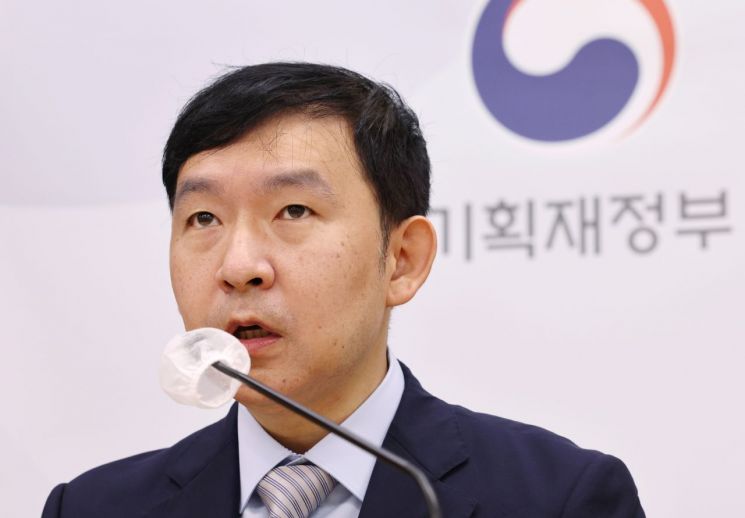 Lee Seunghan, Director of Economic Analysis at the Ministry of Economy and Finance, is presenting the recent economic trends on the morning of the 20th at the Government Complex Sejong in Sejong City. 2022.7.20
 [Photo by Yonhap News]
[Asia Economy Sejong=Reporter Son Seon-hee] The government expressed concerns about economic slowdown for the second consecutive month, mentioning the expanding inflationary trend. As the Ukraine crisis prolongs and major countries worldwide, including the United States, accelerate tightening monetary policies such as interest rate hikes, the dark clouds of economic recession are becoming even thicker.
On the 20th, the Ministry of Economy and Finance diagnosed in the 'Recent Economic Trends in July (Green Book)' that "due to the continued deterioration of external conditions, inflationary pressures are expanding, and there are concerns about economic slowdown, including constraints on future export recovery." This follows the mention of 'economic slowdown' for the first time since March 2020, the early stage of the COVID-19 crisis, last month, showing concerns for two consecutive months.
The Ministry explained, "Externally, global inflationary pressures continue to expand due to the prolonged Ukraine crisis, while major countries are accelerating the shift in monetary policies with significant interest rate hikes in the U.S., and ongoing supply chain disruptions have further increased volatility in international financial markets and downside risks to the global economy."
However, domestically, it judged that a 'gradual improvement' continues thanks to the recovery of the employment market and face-to-face service industries. This is influenced by improvements in real indicators such as the rebound (0.1 point) of the coincident composite index's cyclical component in May, which had been declining, and a double-digit increase (13% month-on-month) in facility investment. Exports also appear to be normalizing following the end of the Cargo Solidarity strike last month.
Nevertheless, due to the recent alarming resurgence of COVID-19, the domestic demand outlook remains uncertain. Looking at the 'June domestic card approval amount,' which reflects consumption conditions, it increased by 17% compared to the same month last year, maintaining an upward trend for now. However, the consumer sentiment index fell to 96.4 from 102.6 the previous month, likely acting as a negative factor. Domestic sales of Korean passenger cars also decreased by 7.2% year-on-year.
Lee Seung-han, head of the Economic Analysis Division at the Ministry of Economy and Finance, explained, "Domestic indicators showed improvement compared to last month, but overseas, China's growth rate appeared lower than market expectations, and overall economic outlook is worsening due to factors such as the suspension of gas supply in Europe and the possibility of negative growth in the U.S." He added, "The International Monetary Fund (IMF) is also expected to lower its global economic growth forecast, indicating that risk factors are expanding."
He further stated, "The government plans to strengthen all-round responses for people's livelihood and price stability, while thoroughly managing economic responses and risks, and will speedily pursue tasks to overcome low growth and achieve a virtuous cycle of growth and welfare."
© The Asia Business Daily(www.asiae.co.kr). All rights reserved.

















