Martial Arts "Korean Companies' Profits Must Be Reflected"
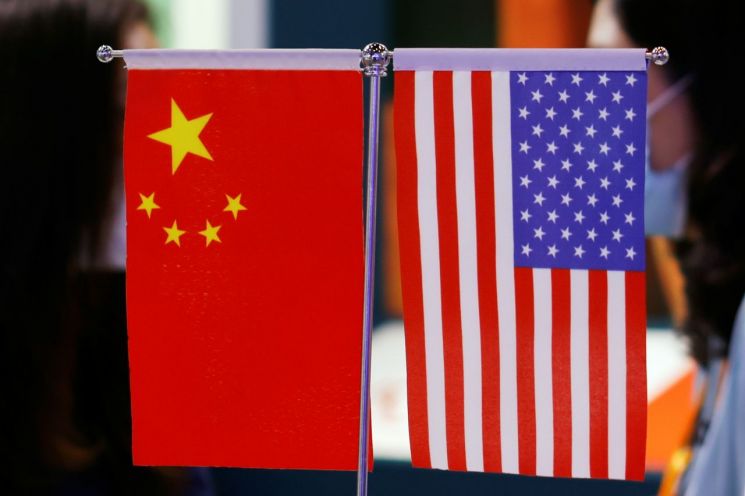
[Asia Economy Reporter Moon Chaeseok] As competition over digital trade norms intensifies among the United States, China, and the European Union (EU), there is a call for South Korea to strengthen its bilateral and regional agreements.
According to the report titled "The Digital Trade Trilemma of the US, China, and EU and the Current Status of South Korea," released on the 20th by the Korea International Trade Association's Institute for International Trade and Commerce, the development of electronic transaction methods and the digitalization of traditional goods have shifted major trade targets from goods to data and services.
The report particularly diagnosed that the US, China, and the EU are exerting influence to establish their own country-centered data policies as global digital trade norms.
Looking at each country's digital economy policies, the US is analyzed to pursue market-centered policies characterized by control through digital enterprises. It supports the free movement of data policy-wise to help US companies with technological superiority pioneer new markets. In contrast, China actively intervenes in the entire digital economy through the state, regulating cross-border data movement via extensive regulations.
The EU controls data based on individuals' fundamental rights. It freely allows data transfers to countries with personal data protection levels similar to the EU or within the EU region, but if the protection level is insufficient, it makes data transfers very stringent.
The report diagnosed that each country is spreading its digital economic principles as a quid pro quo for market access. The US includes US-centered digital trade norms in regional trade agreements. China is expanding its stance through support for digital infrastructure in emerging countries, such as the Digital Silk Road. The EU demands the introduction of systems at the EU's level and seeks to spread its digital trade norms by applying its regional laws extraterritorially.
South Korea is also introducing digital trade norms through bilateral and plurilateral trade agreements. Starting with the Korea-Singapore Free Trade Agreement (FTA) that came into effect in 2005, electronic commerce provisions are included in FTAs with 12 regions to date.
Notably, in December last year, South Korea concluded its first digital trade agreement, the Korea-Singapore Digital Partnership Agreement (Korea-Sing DPA). This introduced digital new technology norms such as fintech and artificial intelligence (AI) in addition to the existing electronic commerce norms of the Korea-Singapore FTA. The Korea-Sing DPA, which is preparing for official signing, emphasizes institutional interoperability and compatibility and also imposes obligations to participate in international standard development. The scope of South Korea's digital trade norms is expected to expand.
Jung Haeyoung, a senior researcher at the Korea International Trade Association, advised, "As digital transformation accelerates, affecting not only digital industries but also manufacturing, the formation of digital trade norms can impact not only digital companies but all export companies handling personal data. It is necessary to actively respond to reflect the understanding of Korean industries at the stage of forming digital trade norms and to secure market entry opportunities for companies."
© The Asia Business Daily(www.asiae.co.kr). All rights reserved.
![User Who Sold Erroneously Deposited Bitcoins to Repay Debt and Fund Entertainment... What Did the Supreme Court Decide in 2021? [Legal Issue Check]](https://cwcontent.asiae.co.kr/asiaresize/183/2026020910431234020_1770601391.png)
















