Starting October 2, pallet unit transactions begin; non-pallet transactions banned from December 1... Modernization project Vegetable 2-dong restricts truck entry to temperature-controlled facilities, only pallet entry allowed
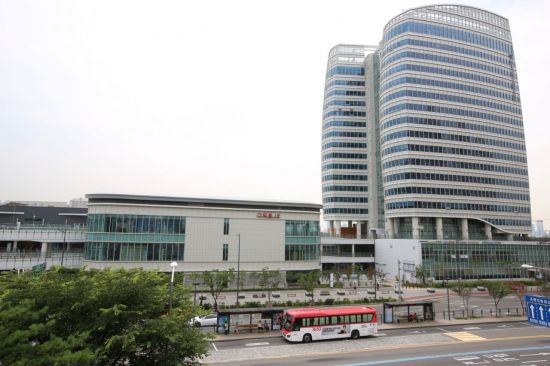
[Asia Economy Reporter Jong-il Park] Seoul Agro-Fisheries & Food Corporation (President Moon Young-pyo) announced that starting October 2, pallet unit transactions will begin for packaged green onions, garlic, ginger, and dried chili peppers at Garak Market.
However, considering small-scale and marginal farmers, a grace period will be provided until November 30, and from December 1, non-pallet shipments and transactions will be completely prohibited.
The corporation has made significant efforts in recent years to improve the labor-intensive, traditional unloading and logistics system. In particular, it has been focusing on promoting pallet unit transactions for 11 items traded in Vegetable Building 2, which is scheduled to be completed in the second half of next year as part of the facility modernization project.
Since 2017, Garak Market has sequentially implemented unloading transactions for radish, onions, young radish, fresh green onions, cabbage, and green onions, and has been promoting corn (from July 1) and cabbage (within this year) starting this year.
Accordingly, pallet unit transactions for packaged green onions, garlic, ginger, and dried chili peppers, which are currently not implemented, are planned to be established within this year.
Vegetable Building 2, scheduled to open in the second half of 2023, is a temperature-controlled facility where vehicle entry is not allowed, and only pallet unit logistics movement is possible. Therefore, pallet unit transactions for items traded in Vegetable Building 2 must begin within this year to ensure smooth logistics upon occupancy and reduce confusion among shippers.
The corporation stated that to facilitate smooth pallet unit transactions for these items, it will support pallet rental fees according to the packaging type for fully standardized shipment products. For net (sack) packaging, 3,000 KRW per pallet will be provided, and for box packaging, 6,000 KRW per pallet will be paid to shippers for three years.
Even if loaded and shipped on pallets, pallet rental fees will not be supported if the products are not fully standardized. This is because unloading union workers have to manually re-sort each item, and the logistics improvement effect is minimal.
By conducting pallet unit transactions with fully standardized products, re-sorting costs can be reduced, unloading efficiency improved, contributing to the development of the market logistics environment, as well as enhancing the working conditions of unloading laborers.
Kang Sung-soo, head of the Logistics Innovation Team, said, “We are continuously explaining the necessity of pallet transactions, shipping guidelines, and support measures to shippers in the production areas and seeking their cooperation. Since these items have many small-scale and marginal farmers, working conditions at production sites are not easy. However, if there are multiple shippers and product grades per pallet, re-sorting costs occur and pallet rental fee support is not possible. Therefore, we ask shippers for active cooperation to ship as fully standardized products as possible.”
© The Asia Business Daily(www.asiae.co.kr). All rights reserved.
















