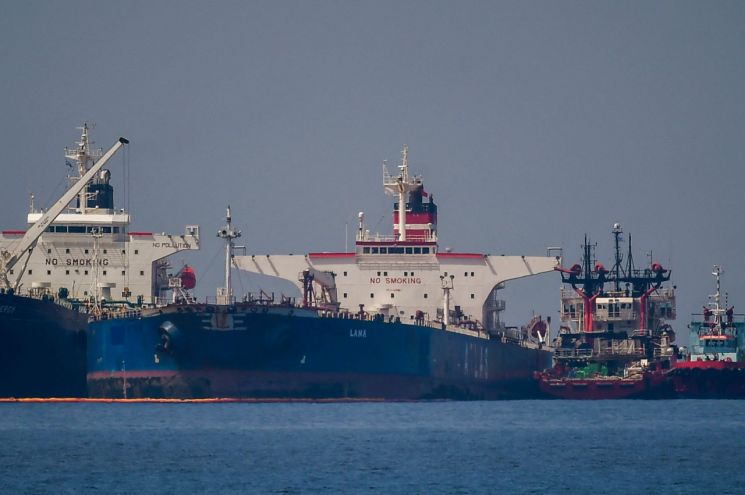
[Asia Economy Reporter Park Byung-hee] Bloomberg News reported on the 14th (local time) that the Russian government plans to announce a benchmark price for domestic crude oil transactions starting next year. This move is interpreted as Russia's effort to secure an independent crude oil trading market in response to Western sanctions on its oil. If Russia establishes a benchmark price for its representative crude oil grade, Urals, it could also serve as a way to neutralize the price cap system that the West is promoting as part of sanctions against Russia.
According to documents obtained by Bloomberg, key ministers from the Russian government, oil producers, and the central bank are discussing the establishment of a system to trade domestic crude oil by October. A representative from a Russian oil production company, who requested anonymity, said that discussions on the benchmark price for Russian crude oil are underway confidentially.
Russian authorities aim to set up a framework to activate Russian crude oil trading by October, then increase trading volumes and announce a benchmark price between March and July next year. To secure sufficient trading volume for future benchmark price announcements, they also plan to attract foreign investors interested in purchasing Russian crude oil.
Russia has been striving for over a decade to announce its own crude oil benchmark price. Some Russian oil producers traded export crude oil on the Moscow-based SPIMEX commodity exchange, but due to low trading volumes, it was difficult to present a benchmark price accepted in the global market. Low trading volumes increase price volatility, making it harder to gain international trust. Since futures trading for West Texas Intermediate (WTI) on the New York Mercantile Exchange (NYMEX) and Brent crude on the Intercontinental Exchange (ICE) in Europe are already active and provide global benchmark prices, there was no strong need for a new benchmark price from SPIMEX.
However, following the Ukraine war and Western sanctions on Russian crude oil, the necessity for Russia to establish an independent crude oil trading market has grown. Last month, the Group of Seven (G7) countries reached a principle agreement to introduce a price cap system that allows imports of Russian crude oil only below a certain price.
Typically, Russia's representative crude oil grade, Urals, has been traded at a lower price than North Sea Brent crude. After Russia's invasion of Ukraine and subsequent sanctions, demand for Urals declined, increasing the discount on Urals prices. However, with oil prices rising significantly, the Russian government is earning substantial revenue even by selling less Urals crude. Moreover, countries like China and India have recently increased their imports of discounted Russian crude oil, providing support to Russia. Russia is expected to seek to build an independent crude oil trading ecosystem by attracting China, India, and others.
© The Asia Business Daily(www.asiae.co.kr). All rights reserved.

















