The Past, Present, and Future of Korea's Space Science Development
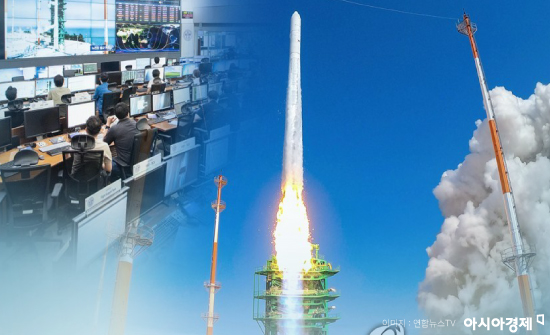
[Asia Economy Reporter Jin-kyung Lee] On June 21st, the space launch vehicle 'Nuriho,' completed with independent technology for the first time, achieved final success after its second launch. This elevated the status of South Korea's space science and showcased our technological capabilities to the world, marking the official beginning of the space era for our country. It is exciting to anticipate what role we will play in the global history of space exploration going forward. Before looking ahead, let us take a moment to reflect on the significance by tracing the historical footsteps of how much investment and time we have devoted to space development so far.
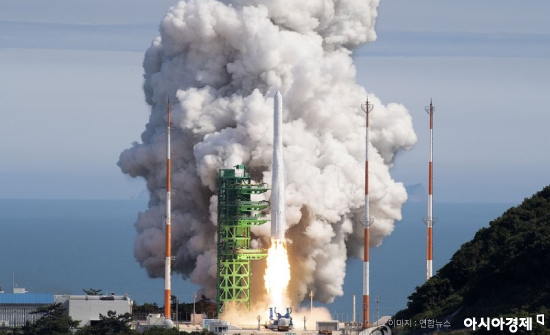
● The Significance of the Success of the Korean Launch Vehicle ‘Nuriho’
A space launch vehicle refers to a rocket that carries spacecraft (such as artificial satellites, artificial planets, lunar probes, etc.) into space. The success of the Korean launch vehicle ‘Nuriho’ means that Korea has secured launch vehicle technology capable of placing a 1.5-ton class practical satellite into a sun-synchronous orbit at an altitude of 600 to 800 km by its own power. There are ten countries that possess space launch vehicles independently: the United States, Russia, the United Kingdom, France, China, Japan, India, Israel, Iran, and North Korea. With this success, Korea has become the 11th country to join the ‘Space Club,’ which refers to countries capable of launching space launch vehicles.
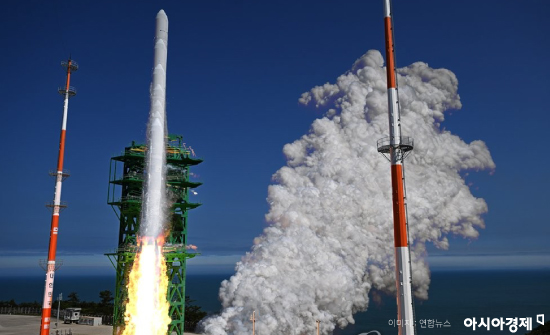
● One of the World’s Seven Major Space Powers
With the success of the 'Nuriho' launch, Korea became the seventh country to independently develop a medium-to-large liquid engine of 75 tons capable of placing practical satellites over 1 ton into sun-synchronous orbit. This success, achieved entirely with independent technology from start to finish, surprised existing space powers that had refused to transfer technology to Korea, and established Korea as one of the ‘world’s seven major space powers.’
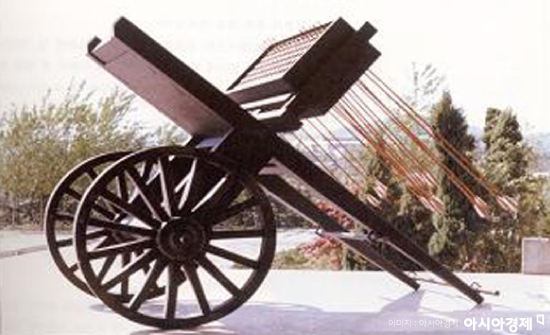
● Korea’s First Rocket Launch
The record of Korea’s first rocket launch appears in the Goryeo history. Between 1377 and 1392, Choi Mu-seon is believed to have produced the Juhwa (走火) at the Hwatoongdogam. It is considered the world’s first multiple rocket launcher and Korea’s first rocket, and an improved version of this, known as Singijeon, was produced in 1448 (the 30th year of King Sejong’s reign).
● Thirty Years of Challenge for Korean Space Launch Vehicles
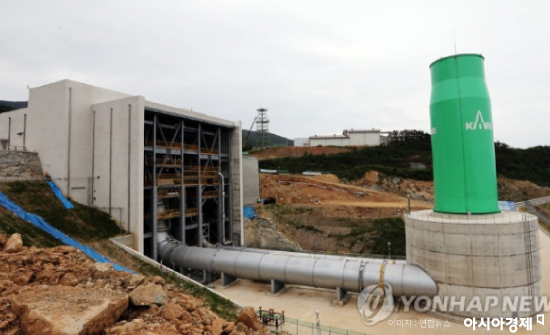
Counting from the success of the first scientific experimental rocket (KSR-I) launch in 1993, it took exactly 30 years for Korea to succeed in developing a space launch vehicle. Thus, Korea’s space development technology was not created overnight but is the result of steady and continuous interest and efforts over approximately 30 years.
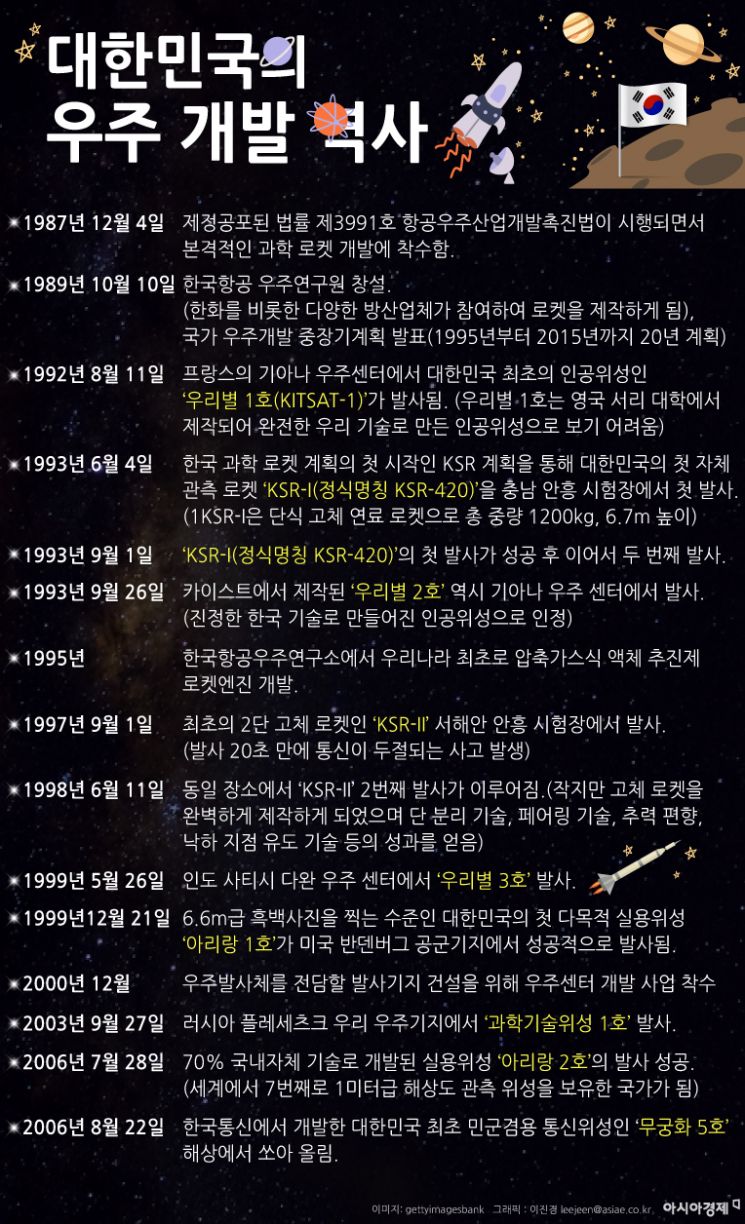
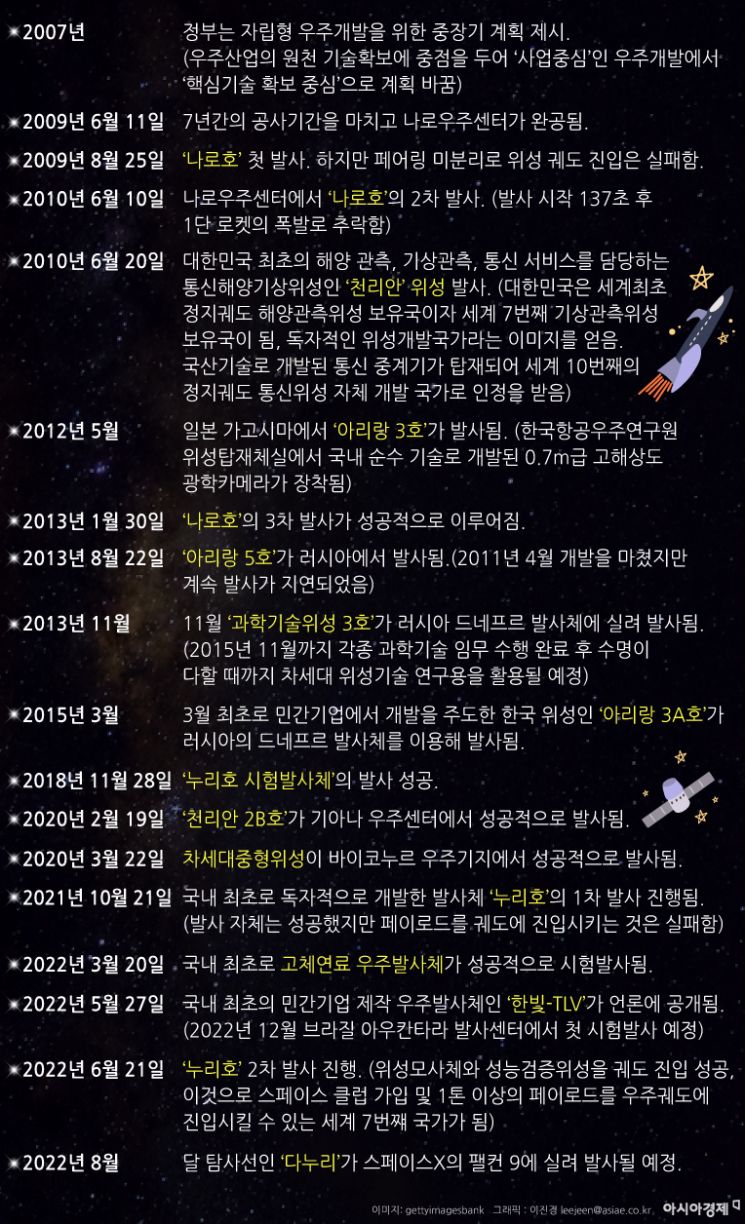
● The Future of Korea’s Space Development
Following the success of the Nuriho launch, the Korean launch vehicle advancement project is expected to proceed as planned, with four additional launches carrying satellites made by Korea itself aboard the Nuriho. The third Nuriho is currently in assembly, aiming for launch in 2023. Additionally, a next-generation launch vehicle capable of sending payloads to the moon with our own hands is scheduled for development by 2031. From 2023 to 2031, a total of 1.933 trillion KRW will be invested over nine years to develop a more powerful two-stage next-generation launch vehicle than Nuriho, with a preliminary feasibility study underway. Marking the success of the Nuriho launch, about 300 private companies involved in its development have received technology and know-how transfers, establishing a foundation that is expected to activate space development led by private enterprises in the future.
© The Asia Business Daily(www.asiae.co.kr). All rights reserved.



















