Fear Induction Is Key... Difficult to Prove Crime
Supreme Court Rules "Crime Established by Harm Notification Alone"
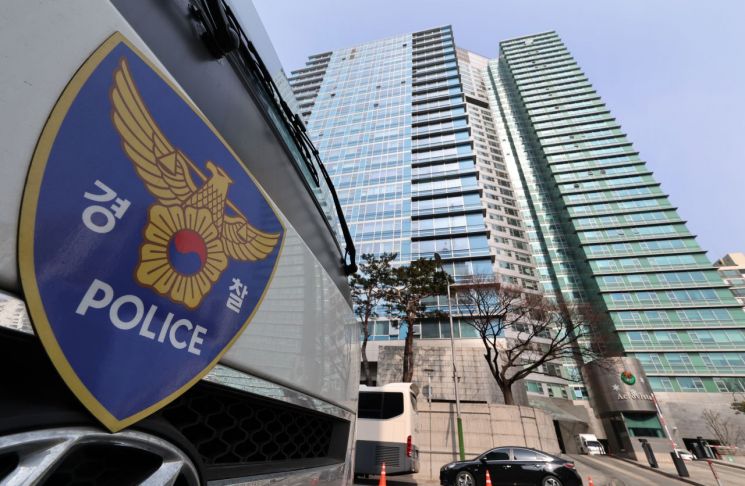
[Asia Economy reporters Seongpil Jo and Byeongdon Yoo] The day after former Japanese Prime Minister Shinzo Abe was shot and killed during a campaign speech, a post implying a terror attack against President Yoon Suk-yeol appeared on a domestic internet portal site in the early morning. The post included statements such as "I’m going to Seoul for sightseeing, where is good to visit? I’m thinking of going to Yongdon (Yongsan) first," and "There are still 6 bullets left." There was also mention of a shotgun, known as the weapon used in the assassination of former Prime Minister Abe. The man in his 40s who posted this message turned himself in to the police after media reports about him flooded out. The Michuhol Police Station in Incheon has booked the man on suspicion of attempted threats and is investigating. A police official said, "We have not yet decided on the direction of the suspect’s custody," adding, "Whether to send the case to the prosecution will require further investigation."
This incident drew attention as it coincided with the timing of the shooting of former Prime Minister Abe, but similar cases implying terror against President Yoon have occurred before. The first was a man in his 20s who posted on an online community board in May that he would bomb President Yoon’s inauguration ceremony. On the afternoon of May 9, one day before the inauguration, he posted, "Looking for someone to carry out a grenade terror at tomorrow’s inauguration," referencing the lunchbox bomb used by independence activist Yun Bong-gil during the Japanese colonial period. He was arrested by the police the next day. On June 2, a teenager who posted about terrorizing President Yoon’s residence was also caught by the police. The suspect, a university freshman on leave, is accused of posting on Naver’s ‘Geonsarang’ cafe, "I will terrorize President Yoon’s residence."
All these cases are currently under police investigation. According to our investigation on the 12th, the police are continuing non-custodial investigations of the suspects. For up to two months, they have not reached conclusions on these relatively simple criminal cases. The reason the police investigation is at a standstill is due to the difficulty in proving the criminal charges. The police are investigating the suspects under charges of threats or attempted threats. Under criminal law, the crime of threat requires an act of notifying harm that can cause fear in the other party. In these cases, the key issue is whether the posts made by the suspects on the internet actually caused fear in the other party, President Yoon. To determine this, an investigation of President Yoon would be necessary, but considering the scale of the incidents, which do not even reach the level of attempt, the police find it difficult to proceed easily. A police official said, "It’s not like we can call the president in for questioning."
Unlike continental law systems such as Germany and Japan, our criminal law includes provisions for punishing attempts. Article 286 of the same law corresponds to this. However, regarding the essence of the crime of threat, there is a conflict between the ‘risk theory,’ which holds that the crime is complete even if the victim does not actually feel fear, and the ‘infringement theory,’ which holds that if the victim did not actually feel fear, it remains an attempt. This is a point of divergence not only among investigative agencies such as the police and prosecution but also in court judgments.
The Supreme Court has previously sided with the risk theory. In 2007, the Supreme Court’s full bench, presided over by former Chief Justice Yang Seung-tae, who is currently on trial for judicial corruption, ruled on a case involving a police officer charged with threats and other offenses. The ruling stated, "For the establishment of the crime of threat, it is not necessary that the other party actually feel fear," and "If the harm is notified and the other party recognizes its meaning, the elements of the crime are satisfied regardless of whether actual fear was induced." Of course, there was a minority opinion in the full bench ruling that adopted the infringement theory. Under current criminal law, the crime of threat as an infringement crime generally requires that the notification of harm reaches a level that can cause fear in the other party.
The various posts implying terror against President Yoon, which have been reported to the police since May, are being investigated without adopting either the risk theory or the infringement theory. These cases are handled by the Michuhol Police Station in Incheon and the Seocho Police Station in Seoul, respectively. If either police station adopts one of these theories and concludes the investigation accordingly, it is highly likely to become a precedent for similar cases in the future. The police plan to complete the ongoing investigations soon and then decide whether to send the cases to the prosecution.
© The Asia Business Daily(www.asiae.co.kr). All rights reserved.

















