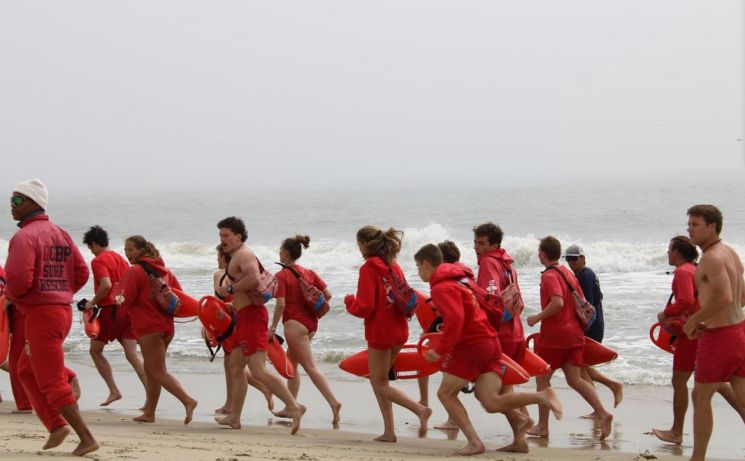
 As the peak summer vacation season approaches, many swimming pools in the United States are temporarily closed due to a shortage of lifeguards caused by the COVID-19 pandemic. The photo is not related to any specific expression in this article. [Image source=Pixabay]
[Asia Economy Reporter Sumi Hwang] As the peak summer vacation season approaches, foreign media reports have emerged that a significant number of swimming pools in the United States, which are in their peak season, are effectively closed. This is due to a shortage of lifeguards caused by the aftermath of the COVID-19 pandemic. With swimming pools shutting down, concerns about safety accidents during outdoor water play have also arisen.
On the 8th (local time), the British BBC cited data from the American Lifeguard Association (ALA) and reported that about 33% of swimming pools across the U.S. are experiencing operational difficulties this month. Swimming pools in major cities such as New York and Chicago have limited their operating hours this summer and reduced public education programs. Some public pools have not opened at all. The ALA predicted that up to half of the nation's swimming pools will be affected until September.
This phenomenon has occurred due to a shortage of lifeguards. According to the BBC, to maintain lifeguard certification, individuals must complete relevant training and be re-certified every two years. However, over the past two years, many pools closed due to the COVID-19 pandemic, and those whose certifications expired did not renew them.
Another cause mentioned is the difficulty of foreign nationals entering the U.S. during the period when student visas were restricted amid the spread of COVID-19. Lindsey Mundik, a water safety expert affiliated with the YMCA, stated, "Many lifeguards who worked at U.S. pools were foreign students," adding, "Since June 2020, their entry has become difficult, which has exacerbated the situation."
Some voices express concern that as more pools close, people on summer vacation may flock to outdoor watersides, increasing the risk of drowning and other safety accidents.
The industry has begun securing lifeguards through measures such as wage increases. According to the BBC, some pools have raised hourly wages from around $16 (about 20,800 KRW) to about $20 (about 26,000 KRW) or offered incentives worth $2,500 (about 3.25 million KRW). Some are proposing to hire lifeguards as full-time employees rather than part-time.
Meanwhile, the U.S. aviation industry is also struggling with labor shortages and appears unable to handle the surge of travelers. According to U.S. economic media Business Insider and others, during the Independence Day holiday (July 1?4) alone, about 16,500 flights were canceled or delayed. Additionally, according to the flight tracking site FlightAware, the cancellation rate of U.S. flights increased from 2.1% last year to 2.8% this year. The rate of delays also rose from 16.7% to 20.2%.
This is analyzed as a result of failing to recover the workforce that sharply declined after the COVID-19 crisis. In 2020, the aviation industry reduced staff to cut costs as travel demand plummeted due to the pandemic. Then, as the situation shifted to endemic this year and air travel gradually resumed, demand increased, but the industry has not been able to restore the reduced workforce, increasing the workload on remaining staff.
The industry is also facing difficulties securing pilots. American Airlines, a leading U.S. carrier, experienced a situation this month where up to 12,075 flights temporarily lacked pilot assignments due to a flaw in its pilot management system. In response, regional airlines Piedmont and Envoy have promised a 50% wage increase for their pilots until August 2024 to secure personnel. American Airlines has promised wage increases for 14,000 pilots flying major routes. Alaska Airlines and United Airlines also opened flight training schools earlier this year and provide financial support for aspiring pilots.
However, the labor shortage in the aviation industry is unlikely to be resolved quickly. Scott Kirby, CEO of United Airlines, said, "Most airlines are experiencing pilot shortages, so I don't know how many flights we can offer," adding that this situation could continue for at least five years. Azam Ismail, CEO of Malaysia Airlines, also analyzed that "it will take at least about a year to resolve the labor shortage issue."
© The Asia Business Daily(www.asiae.co.kr). All rights reserved.
!["The Woman Who Threw Herself into the Water Clutching a Stolen Dior Bag"...A Grotesque Success Story That Shakes the Korean Psyche [Slate]](https://cwcontent.asiae.co.kr/asiaresize/183/2026021902243444107_1771435474.jpg)
















