Dozens of Security Personnel Present During Campaign Speech... Unable to Prevent Crime
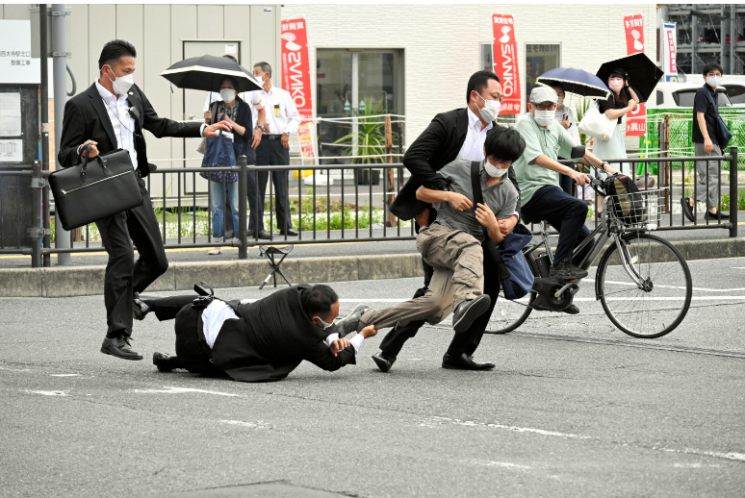 On the 8th (local time), a man who shot former Prime Minister Shinzo Abe with a firearm in Nara Prefecture, Japan, was subdued by security guards immediately after the crime. The suspect, Tetsuya Yamagami, who caused the death of former Prime Minister Abe, is known to be a former Maritime Self-Defense Force member who served as an officer for three years before being discharged in 2006.
 [Image source=Yonhap News]
[Asia Economy Intern Reporter Kim Nayeon] Following the assassination of former Japanese Prime Minister Shinzo Abe during an election campaign, concerns have been raised about significant security lapses in VIP protection.
On the morning of the 8th, around 11:30 AM, former Prime Minister Abe was conducting a street campaign ahead of the House of Councillors election in front of the Yamato-Saidaiji area in Nara City, Nara Prefecture, Japan, when Tetsuya Yamagami (41) shot him from a distance of about 7 to 8 meters. Abe collapsed and was rushed to the hospital but later died.
According to the Yomiuri Shimbun and other sources on the 9th, the security situation at the campaign site, which lacked even minimal safety measures, has come under scrutiny following Abe’s fatal shooting the previous day. The location where Abe was shot was a street in front of the Yamato-Saidaiji area in Nara City, Nara Prefecture.
The 30 cm high makeshift podium where he stood was positioned between the sidewalk and the roadway, surrounded only by a low guardrail. Essentially, the front and back of the campaign site were wide open. A former police official and VIP security expert questioned, "Why was a location with an open rear chosen as the campaign site?"
At the scene, there were officers from the Nara Prefectural Police and 'SP (Security Police)' agents from the Metropolitan Police Department responsible for special VIP protection.
The Nara Prefectural Police stated at a press conference the previous day, "The police only learned that former Prime Minister Abe would be giving a speech yesterday evening (the 7th). Although the security was sudden, we believe we were sufficiently prepared and had time to arrange security."
The police did not disclose the exact number of security personnel present at the time of the incident, but it is reported that dozens of officers, including one SP agent and plainclothes officers from the Nara Prefectural Police, were deployed.
The security personnel were positioned around Abe, guarding all sides, including behind him where Yamagami fired the shots.
However, they failed to prevent the attack. The suspect, Tetsuya Yamagami, was initially listening to the speech from about ten meters behind Abe, then slowly approached and fired from approximately 7 to 8 meters away.
Video footage taken by a bystander at the scene shows Yamagami slowly approaching from behind Abe, but no police officers are seen intervening before the gunshots. Yamagami fired the first shot, moved closer, fired a second shot, and was only then subdued.
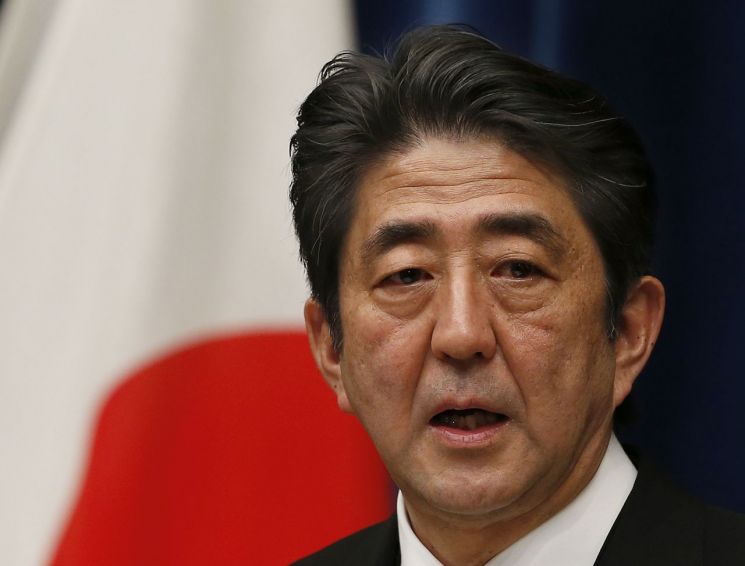
Even after Yamagami fired the first shot, the men in black suits standing behind former Prime Minister Abe merely flinched and looked toward the source of the sound without actively defending him. It was only after another gunshot and Abe collapsing that the suspect was subdued.
Had the security personnel stopped the stranger from approaching or at least followed protocol by quickly surrounding Abe with a protective 'human shield' upon hearing the first gunshot, Abe’s life might have been saved.
A former police officer who worked at the Metropolitan Police Department said, "The footage shows the suspect wandering around with a bag or heading directly toward former Prime Minister Abe before the incident. In such cases, the principle is to remove suspicious individuals from the scene, question them, and inspect their belongings. It seems there was a security gap."
A security official explained that election campaigns attract large crowds of voters, and candidates try to interact with as many voters as possible, making security challenging.
There are voices acknowledging that perfect security is difficult due to the nature of election campaigns. A Metropolitan Police Department official told Yomiuri, "The police must prevent crowds from getting too close to the candidate, but candidates want to meet as many voters as possible, making it difficult to strike a balance in security."
Former Prime Minister Abe, who was shot by Yamagami, was transported to the hospital but died at 5:03 PM the same day due to excessive bleeding.
A former police official and VIP security expert said, "Why was a campaign site with an open rear chosen? There was a risk that the perpetrator could target from 360 degrees around. Also, the police should have questioned the suspect but did not, so this can only be called a complete police failure."
The Yomiuri Shimbun, in an article titled "Security Gaps in Campaign Protection," pointed out that Yamagami approached to within 7 to 8 meters behind Abe and fired without police intervention, suggesting significant problems with on-site security and personal protection.
The National Police Agency plans to review whether there were any issues with the security posture at the time of the incident.
© The Asia Business Daily(www.asiae.co.kr). All rights reserved.


















