[Asia Economy Reporter Yoo In-ho] Former Japanese Prime Minister Shinzo Abe, who was shot dead during an election campaign on the 8th, has been regarded as a symbolic leader of right-wing nationalism. During his tenure, he confronted South Korea and China, and the right-wing shift in Japanese society deepened significantly.
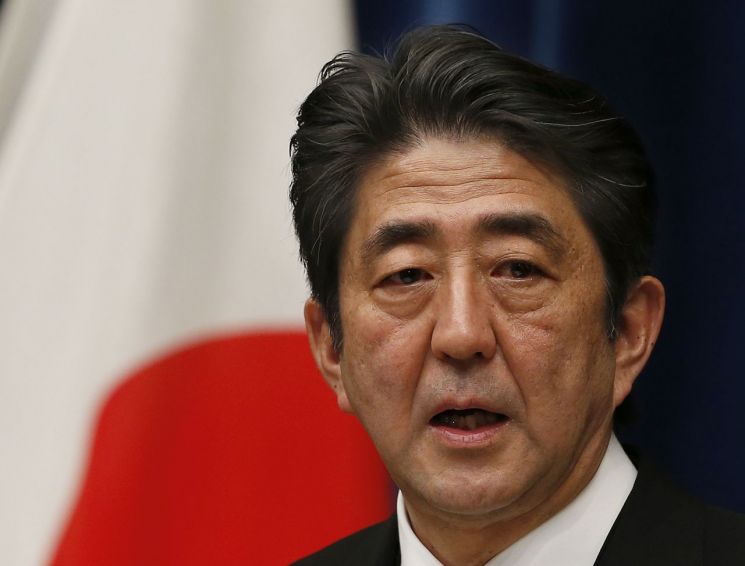
According to diplomatic circles on the 9th, former Prime Minister Abe showed a friendly stance toward South Korean foreign policy during his first term, but took a completely opposite approach during his second term. Serving a total of 8 years and 9 months as prime minister, he had interactions with four South Korean presidents: Roh Moo-hyun, Lee Myung-bak, Park Geun-hye, and Moon Jae-in.
During his first term, which began in September 2006, he appeared to prioritize Korea-Japan relations. Less than two weeks after taking office, he visited Seoul and held a summit with former President Roh. At that time, Abe paid respects at the National Cemetery, becoming the first Japanese prime minister to do so. However, he resigned after one year due to health issues.
After returning to power in 2012, Abe took a distinctly far-right stance on Korea-Japan issues, including historical matters. In 2013, he made a controversial visit to Yasukuni Shrine, where Class A war criminals from World War II are enshrined, provoking backlash from South Korea, China, and other neighboring countries. Subsequently, he only sent offerings to Yasukuni Shrine but visited the shrine again after his retirement.
In 2015, Abe announced the Korea-Japan agreement on comfort women with the Park Geun-hye administration, but the agreement stalled after the Moon Jae-in government in South Korea questioned it for not being victim-centered.
Abe also provoked South Korea by stating that he had “not even thought for a moment” about sending letters to the victims of Japanese military comfort women.
He strongly opposed South Korean court rulings on forced laborers mobilized during Japanese colonial rule, which is one of the major sources of conflict in Korea-Japan relations. In response to the 2018 Supreme Court ruling ordering compensation for forced labor, Abe insisted that the issue was “already resolved by the 1965 Korea-Japan agreement,” deepening the diplomatic deadlock.
At that time, the Japanese government tightened export controls on key semiconductor materials to South Korea and removed South Korea from its export preferential treatment list (white list).
In response, the South Korean government filed a complaint with the World Trade Organization (WTO) and unilaterally notified the termination of the Korea-Japan General Security of Military Information Agreement (GSOMIA), but later retreated.
However, GSOMIA remains in a state of “conditional suspension,” effectively inactive, and Japan’s export restrictions on South Korea have not been lifted.
Nonetheless, Abe recently expressed hope that the inauguration of President Yoon Suk-yeol would serve as an opportunity to improve Korea-Japan relations.
In an interview with The Economist in the UK last May, he said, “From a security perspective, President Yoon seems to understand the importance of cooperation not only among Korea, the US, and Japan but also between Korea and Japan,” adding, “I met with a Korean policy delegation recently and formed this view based on what I heard there.”
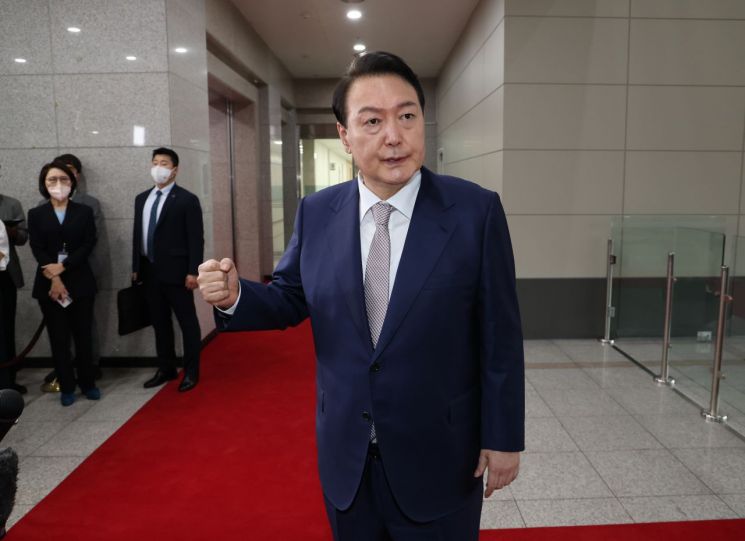
Diplomatic circles suggest that although President Yoon has emphasized a “future-oriented Korea-Japan relationship” since taking office, raising hopes for improved relations, the shock to Japanese society caused by the death of Abe, a central figure of the Japanese right wing, may introduce uncertainties into diplomatic schedules.
Initially, Foreign Minister Park Jin was considering visiting Japan after the House of Councillors election on the 10th, but this plan may change.
However, some argue that the impact on Korea-Japan relations will be limited, as Abe was not a sitting politician and thus his death may not have a direct significant effect on bilateral ties.
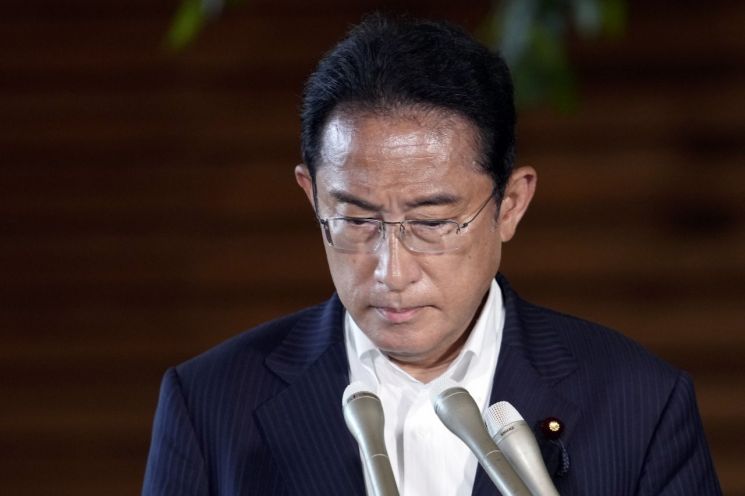
Accordingly, it is expected that Prime Minister Fumio Kishida will step out of Abe’s shadow and assert his own voice on Korea-Japan issues. There is speculation that Kishida may exercise greater flexibility in Korea-Japan relations by distancing himself from the influence of hardliners.
© The Asia Business Daily(www.asiae.co.kr). All rights reserved.
!["The Woman Who Threw Herself into the Water Clutching a Stolen Dior Bag"...A Grotesque Success Story That Shakes the Korean Psyche [Slate]](https://cwcontent.asiae.co.kr/asiaresize/183/2026021902243444107_1771435474.jpg)


















