Two Members Elected by Conservative Party Lawmaker Vote, Final Party Leader Decided Through Nationwide Party Member Vote
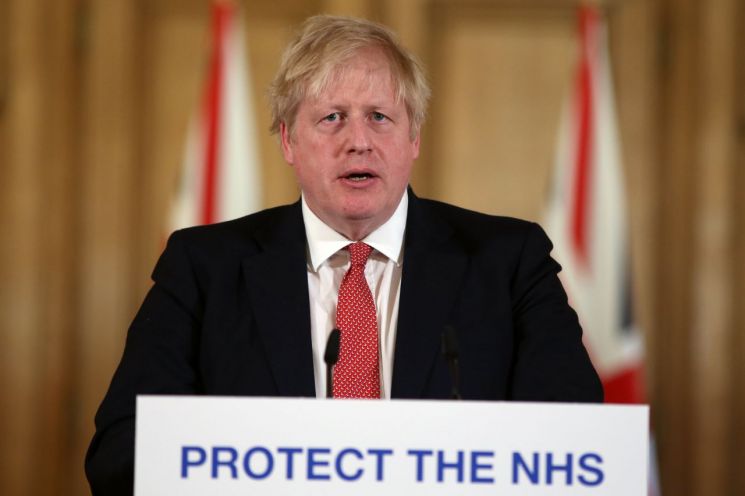
[Asia Economy Reporter Kim Heeyoon] British Prime Minister Boris Johnson is stepping down as leader of the Conservative Party amid resignation pressure following the departure of 48 ministerial-level officials.
On the 7th (local time), the UK BBC reported that Prime Minister Johnson announced his intention to resign that day. Johnson will step down as leader of the Conservative Party but is expected to remain Prime Minister until a new Prime Minister takes office in the fall.
With Johnson’s resignation, the Conservative Party will proceed to elect a new leader. The process of selecting the UK Prime Minister differs from other parliamentary systems.
According to BBC and other UK media, when the ruling party leader of the Conservative Party resigns, a new leader is elected through a vote among party MPs. Candidates must be nominated by at least eight fellow MPs to register.
Among multiple candidates who declare their intention to run, Conservative MPs conduct a first round to select candidates with over 5% support (currently 18 MPs based on seats), and a second round to select those with over 10% support. The candidate with the lowest votes is eliminated in each round until two final candidates remain.
The party leader is then chosen from the two candidates through a vote not only by MPs but also by party members nationwide.
Previously, the 1922 Committee, which oversaw Johnson’s confidence vote, will decide the election schedule for the new leader. Election rules may be revised if necessary.
The leader of the Conservative Party, which currently holds the most seats, is appointed Prime Minister by Queen Elizabeth and asked to form a cabinet.
The current Parliament’s term lasts until January 2025, so the new Prime Minister is not required to hold a general election immediately. However, the decision to call an early election depends on their judgment.
It is customary for the outgoing Prime Minister to remain in office until a successor is chosen, as Johnson stated he would do. Former Prime Ministers Theresa May and David Cameron followed the same practice.
If Johnson had announced an immediate resignation from the Prime Ministership, Queen Elizabeth could have appointed an interim Prime Minister from current MPs. Within and outside the Conservative Party, there are calls for Johnson to step down immediately from the Prime Ministership due to damage to his morality and loss of leadership.
Potential successors for party leader include former and current ministers such as Jeremy Hunt and Sajid Javid, who competed with Johnson in the previous leadership race, as well as Michael Gove, Penny Mordaunt, Rishi Sunak, Liz Truss, and Ben Wallace.
Meanwhile, the BBC reported, “The Conservative Party leadership election will take place this summer, and the new Prime Minister will be appointed in time for the Conservative Party conference in October.”
© The Asia Business Daily(www.asiae.co.kr). All rights reserved.

















