'Three Characteristics and Implications of Employment Trends Over the Past 5 Years' Presentation
"Urgent Need to Revitalize the Private Sector Through Regulatory Reform and Labor Reform"
[Asia Economy Reporter Kiho Sung] A recent survey revealed that employment polarization and labor force idleness have worsened over the past five years.
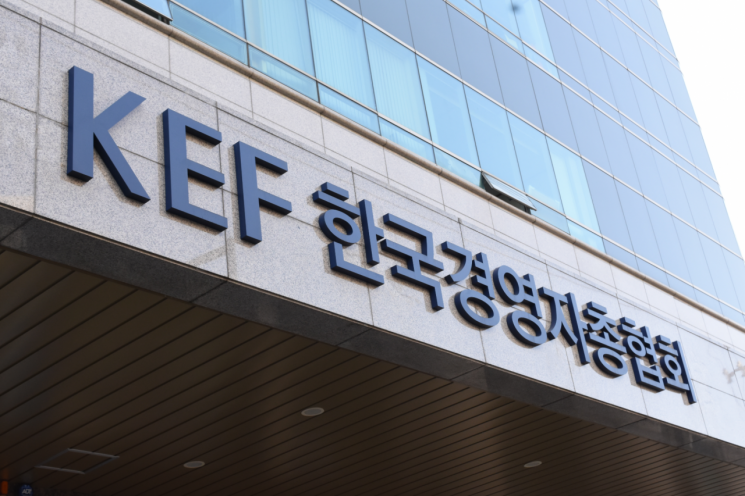
The Korea Employers Federation (KEF) released a report on the 5th titled "Three Characteristics and Implications of Employment Trends Over the Past Five Years," analyzing the employment trends as ▲pronounced employment polarization, ▲intensified labor force idleness, and ▲structural adjustment in the self-employment sector.
First, regarding the "pronounced employment polarization," employment among those aged 60 and over increased due to aging, but employment among the core economic activity group of people in their 30s and 40s decreased. Ultra-short working hours jobs (less than 15 hours per week) surged, while jobs with 36 hours or more per week declined. By industry, employment in the "quasi-public sector" increased, but employment in "face-to-face service industries" decreased. Regionally, employment rose in 12 local governments including Gyeonggi Province, but declined in Seoul, Busan, Daegu, Ulsan, and North Gyeongsang Province.
Looking at working hours, ultra-short working hours jobs increased by 66.3% over the past five years. KEF explained that this was largely due to the hiring of "ultra-short part-time jobs" as a desperate measure to reduce the burden of rapid minimum wage hikes in 2018-2019, and the impact of "government job projects" aimed at minimizing COVID-19 employment shocks in 2020-2021.
By industry, the contribution rate of employment growth in the quasi-public sector (health and social welfare services, public administration) over the past five years was 68.7% (871,000 people), accounting for more than two-thirds of the total employment increase (1.269 million people).
Notably, the survey found that labor force idleness has intensified. The economically inactive population, who did not participate in economic activities as employed or unemployed, increased by 295,000 over the past five years. Among them, those considered chronic non-employed, such as "resting" and "preparing for employment," increased significantly, indicating a deepening of labor force idleness. Additionally, the number of "self-employed with employees" and "unpaid family workers" decreased over the past five years, showing that structural adjustment is underway in the self-employment sector.
Lim Young-tae, head of KEF's Employment Policy Team, emphasized, "To create quality jobs and resolve employment polarization, it is necessary to foster a business-friendly environment through regulatory reform and labor reform, and to focus policy efforts on improving employment services and vocational training systems so that idle labor and self-employed individuals facing difficulties due to structural adjustment can more easily re-enter the market."
He added, "Bold regulatory reforms such as establishing a negative regulation principle and introducing a regulatory management system, improving fixed-term and dispatch systems, and labor reforms including restructuring wage systems based on job and performance should be supported so that companies can actively invest and create jobs. It is also necessary to build an employment service and vocational training system where everyone who wants to work can easily find jobs through strengthening customized employment support by target groups, expanding vocational training support by life cycle, and increasing vocational training budgets."
© The Asia Business Daily(www.asiae.co.kr). All rights reserved.

















