[DTx Era⑦] Interview with Kang Sang-wook, Executive Director of F&I Korea
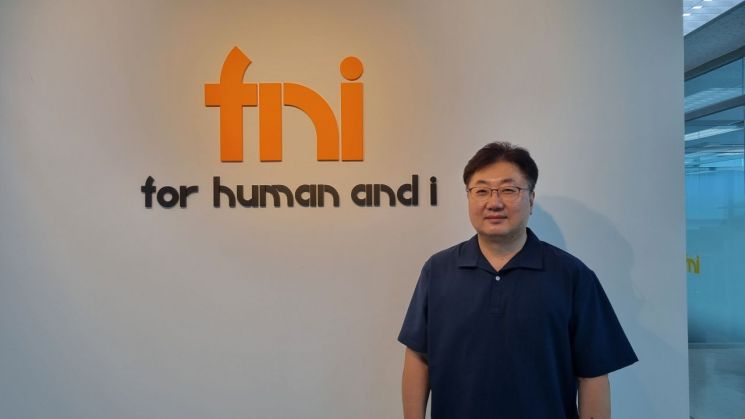
[Asia Economy Reporter Kim Young-won] FNI Korea is one of the 10 domestic companies that have received clinical trial approval for digital therapeutics (DTx) from the Ministry of Food and Drug Safety. They are developing 'Alcothera' and 'Nicothera,' DTx for alcohol and nicotine use disorders using VR (virtual reality). Currently, exploratory clinical trials are underway with 30 participants each for nicotine and alcohol.
Having specialized in VR development since the early 2000s, this experience became the foundation for developing VR-based DTx. Kang Sang-wook, Executive Director of FNI Korea, said, "Since 2000, we have been developing content under the theme of virtual reality, initially working on architecture, product design, and various other fields. Later, we started medical-related work at an addiction clinic in a hospital, and as we expanded to multiple hospitals, we focused more on healthcare."
DTx using VR has the advantage of increasing patient immersion compared to traditional hospital counseling treatments or mobile application-based use disorder treatments. Executive Director Kang explained, "Many addiction patients do not visit hospitals, but DTx offers the concept of treatment at home and includes fun elements, so experts believe it is effective."
Nicothera and Alcothera present VR environments similar to real-life settings. In Nicothera, for example, patients are repeatedly exposed to VR scenarios where they are gathered with friends at a bar and encouraged to smoke, increasing cravings to build tolerance. The VR scenarios are customized according to the patient's age and gender. Patients also learn how to 'refuse' in an engaging way within the VR environment, enabling them to apply these skills in real situations.
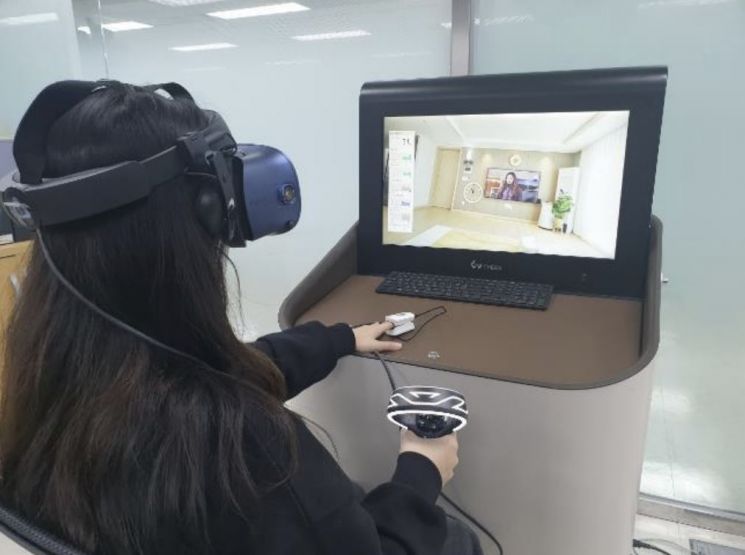
Both DTx programs run for a total of 12 weeks, with patients visiting the hospital three times to use VR devices and using mobile devices at home for the remaining sessions. Through the app, patients watch educational content, set goals, and take quizzes to check their progress. During the weeks when patients visit for VR use, app records are also utilized for medical consultations and counseling. Since biometric signal monitors are used alongside VR, medical staff can refer to data such as sympathetic nerve activity and heart rate variability.
In addition to DTx for patient treatment, FNI Korea is developing VR content for medical staff training. This content is based on XR (extended reality), which encompasses AR (augmented reality) as well as VR. Using XR, medical staff can experience realistic simulations of severe trauma care and neonatal resuscitation training.
FNI Korea plans to complete the exploratory clinical trials for Nicothera and Alcothera by the end of this month and prepare to start confirmatory clinical trials around September to October. While the exploratory trials are currently conducted at one hospital, the confirmatory trials will be multi-center clinical trials at three hospitals. Based on their experience with government projects, they also aim to develop DTx for various diseases in the future. Executive Director Kang said, "Fair Therapeutics, which developed use disorder DTx, has various pipelines including Reset and Somlist (insomnia DTx), as well as PTSD and depression. We are closely monitoring them."
© The Asia Business Daily(www.asiae.co.kr). All rights reserved.


















