Tightening Financing... Capital Companies Face Growing Concerns Over Real Estate PF Sector Soundness
[Asia Economy Reporter Yu Je-hoon] Concerns are growing over the liquidity and soundness of credit-specialized financial companies such as card and capital companies due to the global tightening trend and the impact of domestic base rate hikes.
According to the Bond Information Center of the Korea Financial Investment Association on the 5th, the interest rate on 3-year credit-specialized financial bonds with an AA+ rating (Shinhan, Samsung, KB Kookmin Card) was recorded at 4.362% per annum as of the previous day. Although this is a slight decline compared to the late last month when it reached the highest level of the year, considering that the rate was around 2% in January, it has nearly doubled since the beginning of the year.
Card and capital companies, which do not have deposit functions, raise funds through bonds (credit-specialized financial bonds), commercial papers (CP), and asset-backed securities (ABS). Recently, the proportion of floating rate notes (FRN) and CP has increased, but since 60-70% of their funding still depends on credit-specialized financial bonds, the sharp rise in bond interest rates significantly affects their liquidity.
However, it is difficult to easily offset the increased funding costs. In the case of card companies, the merchant fee rate is fixed every three years by the authorities based on qualified cost calculations, and loan interest rates are also difficult to raise due to competition from internet-only banks, which have recently been expanding rapidly.
Moreover, the financial investment industry forecasts that the outflow of low-cost deposits seen in the banking sector due to interest rate hikes will further intensify the funding pressure on credit-specialized financial companies. Seo Young-soo, director at Kiwoom Securities, stated in a recent report, "If the outflow of low-cost deposits intensifies, it will inevitably trigger an increase in bank bond rates and subsequently the interest rates of card and capital companies," adding, "If the surge in bond interest rates prolongs, credit-specialized financial companies will face difficulties not only in rising funding costs but also in securing funds."
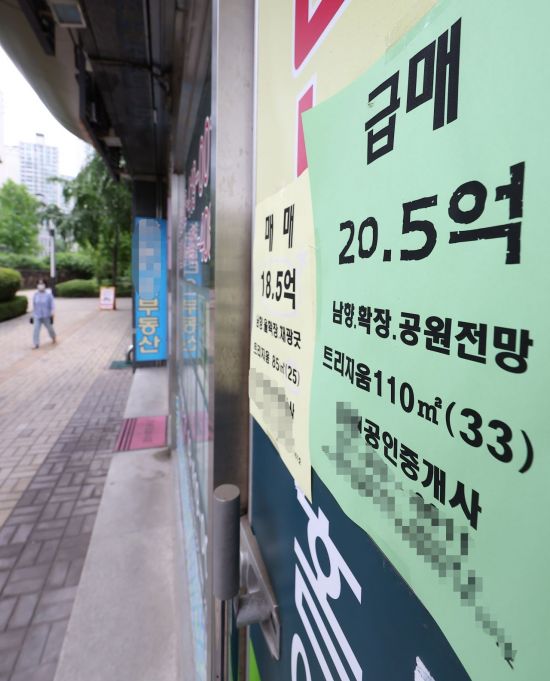
For capital companies, the real estate project financing (PF) sector is emerging as a potential risk factor threatening soundness. As the installment and lease markets for automobiles, their core business, have become difficult due to the entry of card companies, capital companies have focused on corporate and investment finance markets, especially real estate-related investments.
According to NICE Credit Rating, as of the end of the first quarter, the proportion of real estate PF among 28 capital companies was 12.6%, which is not high. However, the growth rate is relatively high. The outstanding balance of real estate PF loans was about 20.9 trillion KRW at the end of the first quarter, an increase of 51.8% compared to the previous year. This far exceeds the growth rate of household loans (6.1%). The average annual growth rate over the past five years (2017-2021) also reached 18%.
The problem is that while the real estate PF sector guarantees high profitability, it also entails high risks as it is sensitive to economic conditions. Recently, due to the interest rate hike trend, the real estate market has frozen to the extent that unsold properties have occurred in provincial areas. A representative from a credit-specialized financial company said, "Above all, the tightening of the real estate market is the problem," adding, "If unsold apartments continue to appear in provincial areas, it is quite possible that small and medium-sized capital companies, which have supplied funds amounting to hundreds of billions of KRW, will face difficulties in recovering their funds."
© The Asia Business Daily(www.asiae.co.kr). All rights reserved.

















