40% of Households to Be Single-Person by 2050
Small Homes Under 60㎡ in High Demand
Experts Advise Housing Policies for 1-2 Person Households with Long-Term Perspective
[Asia Economy Intern Reporter Lee Seohui] As the proportion of single-person households increases, small-sized housing units with exclusive areas under 60㎡ are gaining popularity. However, the share of small-sized housing in the housing market remains insufficient, prompting calls for government housing supply measures tailored to the changing population structure.
On the 28th, Statistics Korea projected through the "Future Population and Household Projections" that by 2050, about 40% of all households in South Korea will be single-person households. Currently, the number of single-person households in South Korea is approximately 6.64 million, accounting for 31.7% of the total, but this ratio is expected to increase by about 10 percentage points in 30 years. Additionally, Statistics Korea forecasts that by 2050, the proportion of two-person households will also rise significantly to 36%, ranking second highest after single-person households. By 2050, 1-2 person households will account for about 76% of all households.
Reflecting the sharp rise in 1-2 person households, small-sized housing (exclusive area under 60㎡) is highly popular in the housing market. According to the Korea Real Estate Board, as of October last year, out of 119,686 housing transactions, 55,910 were small-sized housing transactions, accounting for 46.7%. The sales ratio has steadily increased from 36.1% in 2017 to 42.4% in 2019.
On the other hand, the supply of small-sized housing has not kept pace with the rapid increase in single-person households. The Korea Research Institute for Human Settlements (KRIHS) predicted in data released last year that from 2021, the demand for small-sized sale housing would increase by 40,000 units annually, requiring a total of 10.6 million households by 2025, or 1.78 million units based on small-sized apartments. However, the number of move-in units is decreasing. According to Real Estate 114, the supply of small-sized apartments (exclusive area under 60㎡) nationwide steadily declined from 78,713 units in 2018 to 70,461 units in 2019 and 63,352 units in 2020.
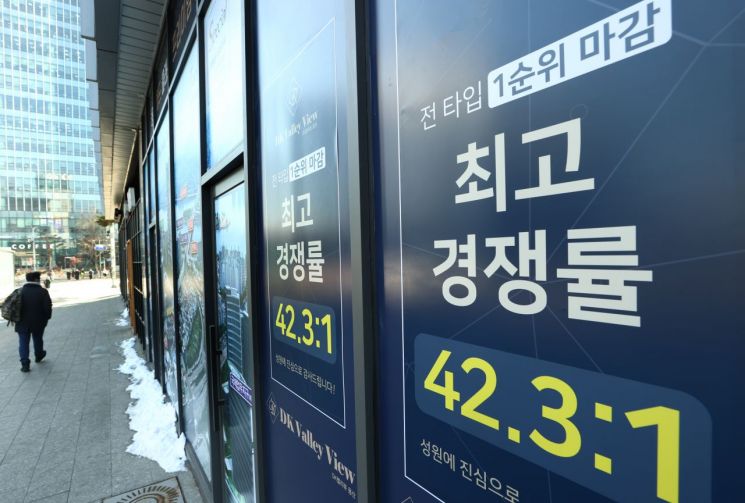
Given this situation, more people have been seeking medium-to-large officetels. Buyers are increasingly purchasing medium-to-large officetels, which have similar size and floor plans to small apartments, as alternative products to small-sized housing. In April, the resident-priority subscription competition rate for the officetel "Yeouido Hyundai Maestro" located in Ilwon-dong, Yeongdeungpo-gu, Seoul (exclusive area 73~77㎡) reached 89 to 1. Considering that the competition rates for the same recruitment group were 31.71 to 1 for 25~27㎡ and 22.41 to 1 for 47~51㎡, the popularity of medium-to-large officetel units is evident.
Experts advise that housing supply measures tailored to the changing population structure are necessary, but the government should carefully adjust policies with a long-term perspective. Professor Jeon Jaesik of Konkuk University’s Department of Real Estate said, “For young single-person households, there is a high possibility that they will move to larger homes upon marriage or prefer more spacious living spaces as they age,” adding, “While housing measures for young and elderly single-person households are necessary, the government should refrain from indiscriminately increasing small-sized housing.”
He continued, "In particular, attention should be paid to housing spaces for the elderly from the perspective of welfare and services," and "the supply should be increased by utilizing small-scale housing maintenance projects during redevelopment."
© The Asia Business Daily(www.asiae.co.kr). All rights reserved.

















