The World Raises Interest Rates Following the US... Japan Maintains 'Ultra-Low Rates'
As Yen Depreciates, Japanese Real Estate Becomes Cheaper, Increasing Demand Among Hong Kong Wealthy
'Direct Purchase from Japan' Popular in Korea... Despite High Shipping Fees and Few Sellers, Strong Price Advantage
Japan May Abandon Ultra-Low Rates... Global Turmoil Feared if Yen Strengthens
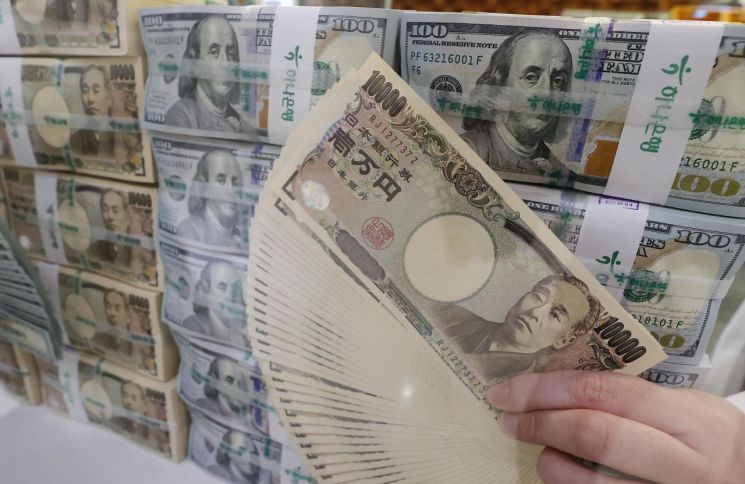 An unprecedented era of 'Yen depreciation' has arrived. The photo shows Japanese yen. Photo by Yonhap News Agency
[Asia Economy Intern Reporter Kim Se-eun] Foreign investors seeking investment opportunities are showing strong interest in Japan amid the arrival of the "weak yen era" for the first time in 30 years. The term "weak yen" refers to a situation where the Japanese currency, the yen, is depreciated.
According to reports from the South China Morning Post and others on the 28th, as the weak yen phenomenon has made Japanese real estate relatively cheaper, wealthy individuals from Hong Kong have begun flocking to Tokyo to purchase properties.
This trend originated from a tour organized by a Hong Kong real estate brokerage, costing HKD 128,000 (approximately KRW 22 million) per person for a 6-night itinerary.
The main purpose of the tour is not sightseeing but "site inspection." Site inspection refers to exploring real estate locations. Tourists ride in Bentleys or helicopters to survey Tokyo's real estate market. Experts expect that hotels renovated for the Tokyo Olympics but rendered obsolete after the event will be the primary targets.
Hong Kong’s wealthy investors looking to invest in Tokyo real estate do not simply perceive Japan as a country with a "weak currency." Instead, they view it as a place that avoids the global recession because Japan does not follow the U.S.-led interest rate hike trend.
Currently, Japan maintains ultra-low interest rates. On the 17th, the Bank of Japan decided to keep its current monetary easing policy, with the short-term policy rate at -0.1% and the 10-year government bond yield at zero. The reason is that raising interest rates now could increase mortgage rates and dampen consumption.
This "ultra-low interest rate persistence" policy has accelerated the weak yen phenomenon. Ultra-low interest rates have led to capital outflows from Japan. On the 29th of last month, the yen closed at 136.6 per dollar in the New York foreign exchange market, marking the lowest level in 30 years since 1998.
As the weak yen accelerated, the burden on domestic Japanese consumers increased, giving rise to the term "bad weak yen" within Japan. As of April, import prices rose by 43.3%, and consumer prices increased by 2.1%. Although the consumer price increase is lower compared to other countries, it represents a very serious level of inflation for Japan, which has experienced virtually no price increases for nearly 30 years.
On the other hand, some voices argue that there is no need to fear the weak yen phenomenon. Some experts view the current weak yen not as a real decline in the value of the Japanese currency but simply as a result of the "interest rate differential with the U.S."
The weak yen phenomenon has also affected South Korea. Domestic "direct purchase" consumers have turned their attention to the Japanese market, which was relatively less popular.
Based on South Korean currency, the KRW/JPY exchange rate was around 1,000 KRW per 100 yen at the end of March but has since fallen to the 950 KRW range. Meanwhile, the KRW/USD exchange rate is 1,298.00 KRW (as of 2 PM on the 3rd, according to Hana Bank), showing a continuous upward trend since early last year.
Until now, the Japanese direct purchase market was less active compared to other countries due to high delivery fees and a limited number of service providers. However, as the yen’s value dropped, price competitiveness emerged, leading to a surge in direct purchases.
Meanwhile, there is also analysis that Japan might break away from its "ultra-low interest rate" stance.
According to the WSJ, some hedge funds speculate that if the ongoing weak yen phenomenon destabilizes the domestic and international economy, the Bank of Japan may abandon its current near-zero control of government bond yields. If this happens, Japan’s government bond yields could soar, the yen could strengthen again, and global markets could be shaken.
© The Asia Business Daily(www.asiae.co.kr). All rights reserved.
![Clutching a Stolen Dior Bag, Saying "I Hate Being Poor but Real"... The Grotesque Con of a "Human Knockoff" [Slate]](https://cwcontent.asiae.co.kr/asiaresize/183/2026021902243444107_1771435474.jpg)
















