Bitcoin Falls Below $20,000 Defense Line
El Salvador Takes 'Risk' to Buy More Despite Previous Investment Losses
[Asia Economy Intern Reporter Kim Nayeon] The virtual asset market continues to plummet without a bottom in sight. Bitcoin has broken below the $20,000 mark (approximately 25.96 million KRW). After hovering around the 27 million KRW range, Bitcoin has finally turned downward.
The causes of this decline include inflation and the bankruptcy of the virtual asset hedge fund 3AC. The hedge fund Three Arrows Capital (3AC), known as a major whale investor in cryptocurrency, has been declared bankrupt.
3AC was a large hedge fund that borrowed money from various companies to continue investing in virtual assets. However, according to digital asset brokerage Voyager Digital, 3AC failed to repay $350 million (approximately 454.3 billion KRW) worth of the stablecoin USDC, pegged to the US dollar, and about 15,250 Bitcoins worth approximately $323 million.
On the 29th (local time), CNBC reported, "3AC was declared bankrupt on the 27th by a court in the British Virgin Islands." The decisive cause of the bankruptcy was the liquidation of loans taken from cryptocurrency lending companies.
3AC had been heavily invested in cryptocurrencies. Starting with a $1.2 million (150 million KRW) fund in 2012, it grew to $3 billion (3.8 trillion KRW) by April of this year. However, it invested about $200 million (260 billion KRW) in the domestic coin Luna, which was hit hard by the collapse of Terra and Luna. After the cryptocurrency market faltered, most of the assets invested through leverage were liquidated.
Following the news of 3AC's bankruptcy, Bitcoin's $20,000 defense line was broken. According to cryptocurrency market tracking site CoinMarketCap, as of 5 p.m. on the 30th, Bitcoin's price dropped to around $19,400.
The Wall Street Journal (WSJ) stated, "The losses from the Luna incident were manageable for 3AC, but the overall cryptocurrency market crash triggered by the Luna Foundation's massive Bitcoin sales to defend Terra's price was unbearable."
The total market capitalization of cryptocurrencies has long been below $1 trillion. According to CoinMarketCap, it fell from $1.3118 trillion (approximately 1,701 trillion KRW) at the beginning of this month to $869.9 billion (approximately 1,128 trillion KRW) as of 5 p.m. on the 30th. This means $441.9 billion vanished in one month.
WSJ diagnosed the current DeFi (decentralized finance) system, which handles cryptocurrency lending and other services, as being in a much more serious situation than the speculative investment by investment banks that caused the 2008 Lehman Brothers crisis.
The harsh winter in the cryptocurrency market is expected to continue for some time. More experts are analyzing that Bitcoin's price could continue to plunge further after breaking below $20,000.
Mark Newton, Chief Strategist at Wall Street investment analysis firm Fundstrat, said in an interview with CNBC on the 29th that although Bitcoin prices are falling daily, the bottom has not yet been reached. He said, "Analysis of the charts shows that large-scale Bitcoin liquidations remain," and "Bitcoin prices could fall to as low as $12,500."
Robert Kiyosaki, author of the bestseller Rich Dad Poor Dad, predicted on his Twitter on the 28th, "Bitcoin could crash to $1,100. For some, this will be an incredible buying opportunity."
Meanwhile, El Salvador, facing a default crisis, purchased an additional 80 Bitcoins.
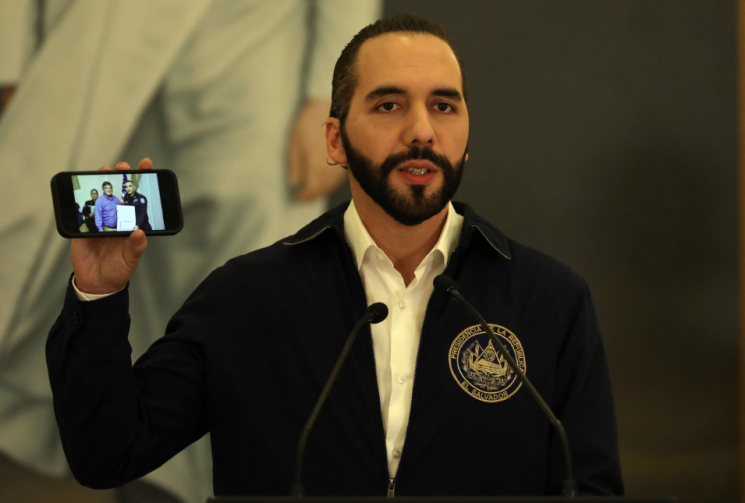
On the 1st, President Nayib Bukele of El Salvador tweeted, "Today, El Salvador bought 80 Bitcoins (BTC) at $19,000 each," adding, "Bitcoin is the future. Thank you for selling at a low price."
Along with this statement, President Bukele disclosed the Bitcoin transaction details executed at $19,000.
Earlier, on the 20th of last month, President Bukele tweeted, "Some people seem worried or anxious about Bitcoin prices," advising, "Don't look at the charts; enjoy life."
He continued, "Bitcoin investment is safe. Bitcoin prices will rise tremendously after the bear market ends," emphasizing, "Patience is key." President Bukele has shown infinite trust in Bitcoin.
Meanwhile, the El Salvador government is reportedly required to repay about $800 million (approximately 1.034 trillion KRW) in national bonds. The bond maturity is in January next year, and failure to repay by then would lead to a default crisis.
In February, credit rating agency Fitch downgraded El Salvador's long-term debt rating from 'B-' to 'CCC,' which falls into the category of 'default is realistically possible.' El Salvador was the first country in the world to adopt Bitcoin as legal tender in September last year.
Alejandro Zelaya, El Salvador's Finance Minister responsible for the national treasury, claimed, "We have not sold a single Bitcoin, so there are no losses."
Minister Zelaya also emphasized that Bitcoin investments account for only 0.5% of El Salvador's total assets. However, AP pointed out that this argument is less convincing since about 20% of El Salvador's population earns a daily wage of only $5.5 (7,000 KRW).
© The Asia Business Daily(www.asiae.co.kr). All rights reserved.

















