Next Year's Minimum Wage 9,620 Won... Up 5%
Minju No Chong "Minimum Wage Effectively Cut" Anger
Small Business Owners and Self-Employed Also Criticize "Pushed to the Limit"
"Professors Hold the Lifeline... Fundamental Reform Needed"
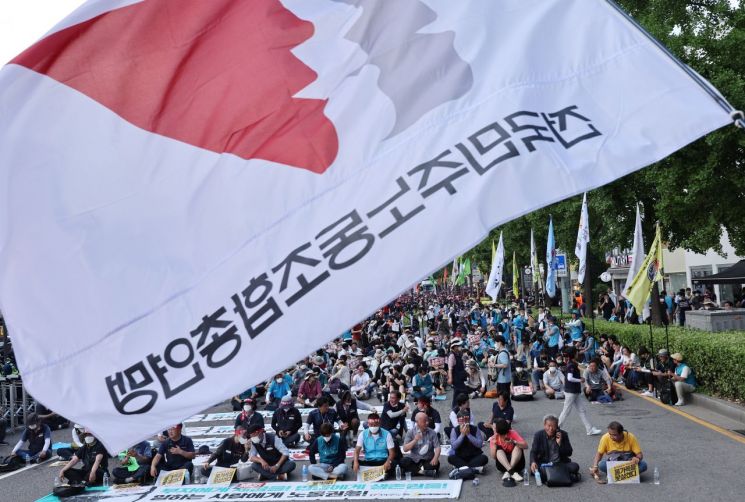
Next year's minimum wage has been set at 9,620 won, a 5% increase from this year, sparking dissatisfaction primarily among labor and management sectors. The Korean Confederation of Trade Unions (KCTU) pointed out problems in the minimum wage determination process and announced plans for protest, while small and medium-sized enterprises (SMEs) and small business owners also opposed the decision, calling it "an action that ignores the reality of small business operators." Voices from the industry are calling for a reform of the system, criticizing that the minimum wage is decided every year mainly by public interest members without objective grounds.
The Minimum Wage Commission (MWC) held its 8th plenary meeting on the 29th of last month, where public interest members put forward a single proposal and voted to finalize next year's minimum wage at 9,620 won. Initially, the labor sector demanded 10,890 won, and the management sector proposed 9,160 won (freeze), but no agreement was reached. Subsequently, the public interest members suggested a deliberation promotion range (9,410 to 9,860 won) and then presented a single proposal of 9,620 won, which is 5% higher than this year's minimum wage.
The public interest members explained that the 5% increase rate was calculated by adding this year's projected economic growth rate of 2.7% and the consumer price inflation rate projection of 4.5%, then subtracting the employment increase rate projection of 2.2%. The MWC used a similar formula last year to determine the increase rate. However, since the formula presented by the public interest members lacks legal basis, both labor and management find it difficult to accept. This time as well, when the public interest members presented the single proposal, four worker representatives from the KCTU and nine employer representatives abstained from voting and left the meeting.
On the same day, the KCTU held a nationwide workers' rally in the area around Sejong-daero in Jung-gu, Seoul, and the plaza in front of Seoul City Hall, with about 60,000 participants (estimated 50,000 by police). They claimed that the current minimum wage increase rate is effectively a cut. Yang Kyung-soo, chairman of the KCTU, said, "They forced us to tighten our belts because of the IMF, the financial crisis, and the COVID-19 crisis," adding, "Rent has jumped two to three times, franchise fees guarantee maximum profits for conglomerates, yet they say the 460 won increase in the minimum wage is the cause of our pain."
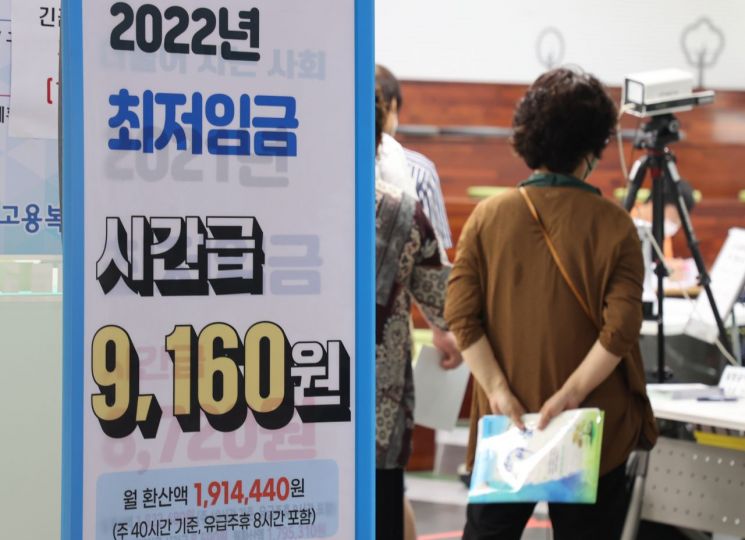
On the other hand, self-employed and small business owners say even a 5% increase is difficult to bear. The Korea Federation of Small and Medium Business issued a statement calling it "an irresponsible act that ignores the desperate cries of small business owners," and said, "Considering the payment capacity of small business owners and the current economic situation comprehensively, it is absolutely unacceptable." The Korea Federation of SMEs, the Korea Employers Federation, the Korea Chamber of Commerce and Industry, and the Federation of Korean Industries also opposed the decision. They explained that if wage burdens increase amid rapidly rising raw material prices, small businesses will inevitably be pushed to the brink.
Consequently, both labor and management sectors are pointing out the need for fundamental reform of the minimum wage determination structure. Although the MWC is structured for worker and employer representatives to discuss and set the minimum wage, the final decision repeatedly follows the public interest members' proposal. In fact, over the past 10 years including this year, the public interest members' proposal has been put to a vote seven times. Due to the lack of clear criteria, dissatisfaction arises from both labor and management every year, escalating social conflicts.
Public interest members showed signs of being swayed by the administration, as in 2018 during the early Moon Jae-in government when the minimum wage was raised by a staggering 16.4%. Following controversies, the increase rate dropped sharply to 1.5% in 2021. Ryu Ki-jung, executive director of the Korea Employers Federation, said, "The decision criteria fluctuated under the Moon Jae-in government due to public interest members," adding, "If the calculation formula were reasonable, it would be accepted, but arbitrary and impulsive items are inserted into the formula, making it incomprehensible."
A labor sector official said, "The reason why everyone is dissatisfied with the increase rate and the differential application by industry is because the first step was taken incorrectly," and added, "Discussions for system reform need to proceed." Seung-jae Choi, a member of the People Power Party, held a press conference at the National Assembly Communication Office the day before and said, "The current minimum wage determination structure, where professors (public interest members) who have never paid a salary hold the lifeline of small business owners and self-employed people, must be fundamentally reformed."
© The Asia Business Daily(www.asiae.co.kr). All rights reserved.


















