147-Year Record Heatwave... 7 Consecutive Days Over 35°C
Surging Electricity Demand for Air Conditioners Raises Power Shortage Concerns
Japanese Government Urges "Cooperation in Saving Electricity"
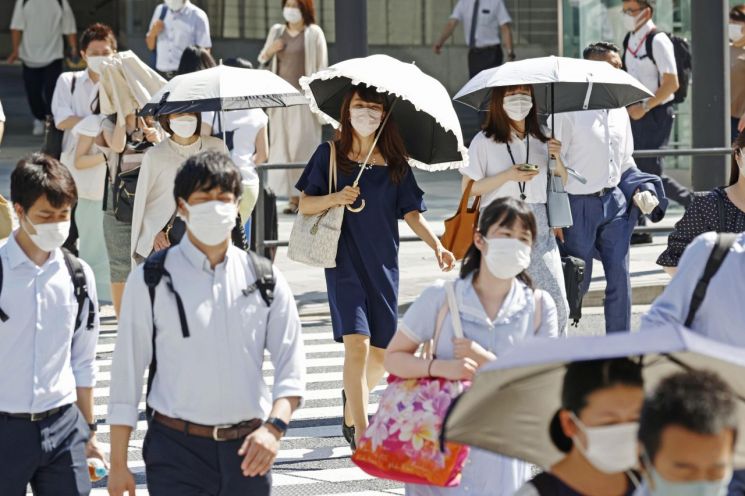
[Asia Economy Reporter Park Hyun-joo] As a record-breaking heatwave continues for the first time in 147 years, electricity demand is surging across Japan. The Japanese government has urged households and businesses to cooperate in saving electricity.
Recently, abnormal high temperatures have been observed mainly in the eastern Japan region. According to NHK on the 1st, in central Tokyo, the heatwave has continued for seven consecutive days with temperatures exceeding 35 degrees Celsius since last week, marking the first time since records began in 1875. In Kumagaya City, Saitama Prefecture, the highest temperature reached 40 degrees Celsius around 1:30 PM, and scorching heat above 38 degrees continues in the Kanto region and along the Sea of Japan coast.
Japanese meteorologists predict that the heatwave will persist until September after the Japanese archipelago reaches peak temperatures in July and August.
Meanwhile, on the 30th, a Twitter user who farms in Ibaraki Prefecture posted a photo that went viral showing four crayfish cooked red from the heat, saying, "It was so hot that cooked crayfish were floating in the rice paddies." The next day, on the 1st, he measured the water temperature in the paddies using a thermometer and revealed, "In shallow areas, the temperature was 43 degrees Celsius, and in slightly deeper areas, it was 41 degrees."
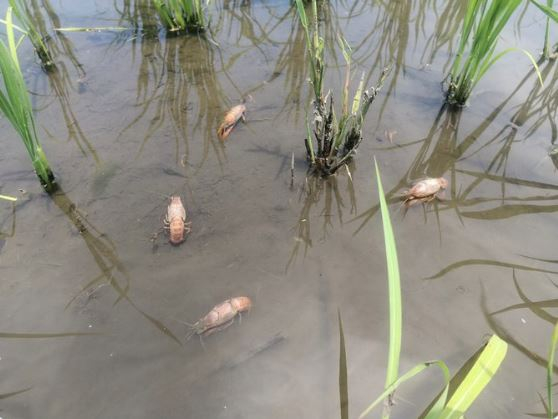 On the 30th, crayfish ripened by the heatwave were found in a rice field on Twitter. Photo by Twitter
The problem is that the ongoing heatwave is causing a surge in electricity demand, raising concerns about a power shortage. The sharp rise in energy prices due to the Ukraine war, aging thermal power plants, and their gradual reduction are also reasons for concerns about power supply and demand.
Another cause of power shortages is the decreased operation rate of nuclear power plants. After the Fukushima Daiichi nuclear disaster in 2011, Japan gradually shut down nuclear power plants, and currently, nuclear power accounts for only 6% of the total electricity supply. Of the 33 nuclear reactors Japan owns, only 10 are currently operational after undergoing regulatory and safety inspections by the Nuclear Regulation Authority.
Accordingly, the Japanese government has designated a "power-saving period." According to NHK on the day, the government urged households and businesses nationwide to cooperate in saving electricity within the range that does not interfere with daily life and economic activities until the end of September. Previously, at the end of last month, a "power supply and demand tightness caution" was issued, and in March, a "power supply and demand tightness warning" was issued for the metropolitan area.
However, experts emphasize that people should protect themselves from the heatwave even if it means using cooling devices. NHK reported, "There have been consecutive deaths from heatstroke among the elderly," and advised, "Avoid going out during the day as much as possible and use air conditioning appropriately indoors."
© The Asia Business Daily(www.asiae.co.kr). All rights reserved.


















