Severe and Moderate-Critical Beds at Half the April Capacity
Utilization Rate Plummets Below 10%
"Premature Shift to General Medical System" Also Criticized
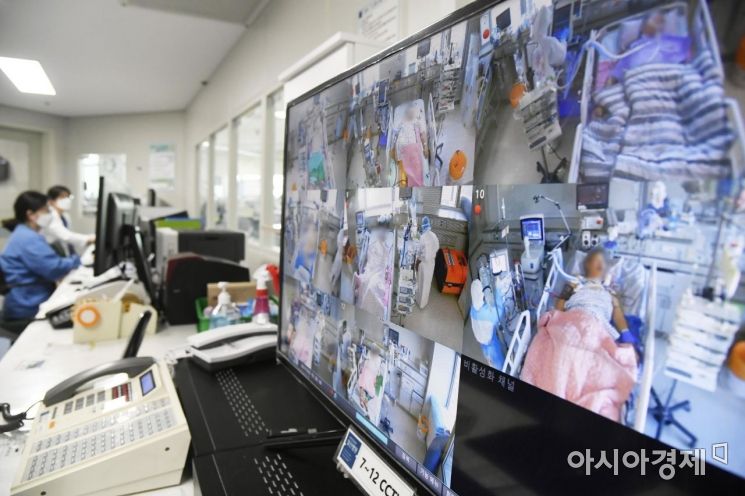
As the decline in the COVID-19 pandemic shows signs of stagnation, the number of dedicated COVID-19 hospital beds nationwide has rapidly decreased over the past three months. This is the result of the government’s announcement to transition to the general medical system and the release of dedicated beds, but on the other hand, there are concerns that a certain number of beds should be maintained considering the spread of variant viruses and the possibility of a resurgence.
According to health authorities and frontline tertiary hospitals on the 1st, the number of dedicated COVID-19 beds, which once approached 33,000 during the peak of the Omicron wave, has recently plummeted to around 7,700.
As of April 1st, there were 2,825 critical care beds dedicated to severe COVID-19 patients nationwide, but this number decreased to 2,781 on May 1st, then to 1,728 on June 1st, and was found to be 1,486 as of the previous day (June 30th). Semi-critical beds, which accommodate patients in less severe condition than critical patients, decreased from 5,359 to 3,555, then to 2,673 during the same period, and currently about 2,356 beds are secured.
The number of moderate to severe beds in infectious disease dedicated hospitals nationwide decreased from 24,697 in early April to 15,956 in early May, then to 3,349 in early June, and 2,385 as of June 30th.
The reduction in dedicated COVID-19 beds in medical institutions is due to the government’s directive to reduce beds as the Omicron wave subsided and the number of new confirmed and severe patients sharply declined, lowering bed occupancy rates. The occupancy rate of critical and semi-critical beds, which once approached 70%, plummeted to the 10% range last month, and as of the previous day, it stood at only 5.7% and 8.2%, respectively. Starting from public medical institutions at the end of April, the government instructed frontline private hospitals to reduce the number of dedicated beds and convert them to general beds, and recently announced plans to reduce compensation for unused beds and support for labor costs of dispatched personnel such as nurses.
A representative from a university hospital said, "Last year, hospitals hurriedly built isolation wards and intensive care units to secure dedicated COVID-19 beds," adding, "Our hospital also invested a considerable amount in expanding ECMO (extracorporeal membrane oxygenation) and negative pressure facilities, but now the government is notifying us to reduce beds on our own due to financial burdens."
Experts point out that transitioning to the general medical system without clear isolation principles for confirmed patients requiring emergency room or intensive care treatment while the COVID-19 pandemic continues is somewhat premature. As the number of new confirmed cases has recently shown signs of increasing again, raising the possibility of a COVID-19 resurgence this summer, there are opinions that preparations are necessary.
Professor Lee Jae-gap of the Department of Infectious Diseases at Hallym University Gangnam Sacred Heart Hospital said, "At the field level, COVID-19 confirmed patients still continue to come to outpatient clinics or emergency rooms and need hospitalization, but if all these beds are eliminated, confirmed patients will have to be transferred to other dedicated hospitals," adding, "If the wave increases, beds will be needed again, but the government is reducing beds too hastily."
The government maintains that even with a significant reduction in COVID-19 beds, regional hub dedicated hospitals can be operated flexibly. Earlier, Park Hyang, head of the Central Disaster and Safety Countermeasure Headquarters’ quarantine team, explained, "In the event of an Omicron resurgence, the number of confirmed cases is expected to be between 100,000 and 200,000 based on fatality rates and risk levels," adding, "It is possible to respond sufficiently with the beds already secured."
© The Asia Business Daily(www.asiae.co.kr). All rights reserved.

















