International Oil Prices Fall Over 3%... Demand Contraction and Production Increase Expectations
OPEC+ Maintains Production Increase Levels... Saudi Arabia Contacts US Companies
Growing Doubts About Production Capacity... "Supply Constraints Difficult to Resolve"
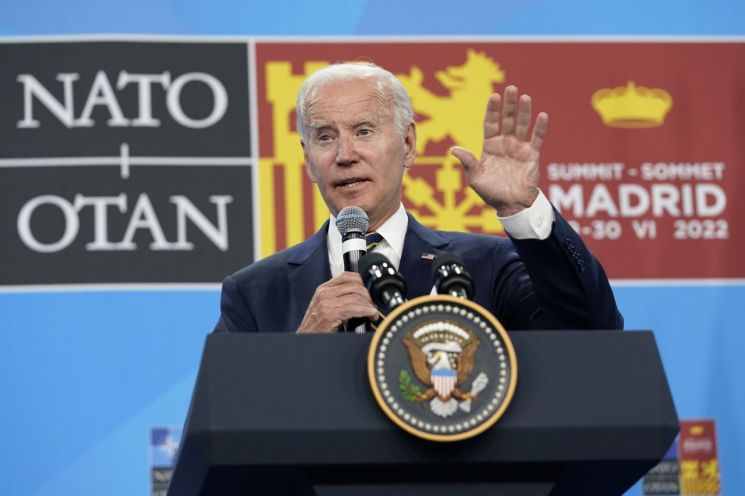
[Asia Economy Reporter Hyunwoo Lee] Ahead of U.S. President Joe Biden's scheduled visit to Saudi Arabia in mid-July, he indicated that he would not directly demand increased oil production from Saudi Arabia but would instead seek to encourage voluntary production increases from all Middle Eastern countries. Amid concerns over economic recession and demand pressures, international oil prices, which had been fluctuating, closed lower due to combined expectations of increased supply.
According to the Associated Press on the 30th (local time), President Joe Biden stated at a press conference following the conclusion of the NATO summit, "I will not directly request Saudi Arabia to increase oil production," adding, "I have pointed out to all Gulf countries collectively that oil production needs to be increased, not just specifically to Saudi Arabia."
This statement raised expectations that increased production would be secured from Middle Eastern countries such as Saudi Arabia and the United Arab Emirates (UAE) ahead of Biden's visit to Saudi Arabia scheduled from July 13 to 16. International oil prices, which had been fluctuating due to concerns over demand contraction amid soaring prices and recession fears, closed lower.
On the same day, West Texas Intermediate (WTI) crude oil traded on the New York Mercantile Exchange (NYMEX) closed at $105.76 per barrel, down 3.66% from the previous session, while Brent crude on the London ICE Futures Exchange fell 3.04% to $109.03 per barrel.
According to Bloomberg News, the OPEC Plus (+) meeting, a coalition of the Organization of the Petroleum Exporting Countries (OPEC) and major non-OPEC oil-producing countries including Russia, decided to maintain the production increase level of 648,000 barrels per day announced in early June. Additionally, reports emerged that the Saudi investment ministry is in contact with U.S. companies ahead of President Biden's visit, raising expectations that a visible production increase policy might be announced around the time of the visit.
However, there are also concerns that Middle Eastern countries may have limited capacity to increase production. During the G7 summit held on the 27th, French President Emmanuel Macron advised President Biden that "Saudi Arabia and the UAE have limited capacity to increase production," explaining that "the UAE is already producing at maximum capacity, and while Saudi Arabia can increase production by 150,000 barrels per day, it cannot immediately ramp up production within the next six months."
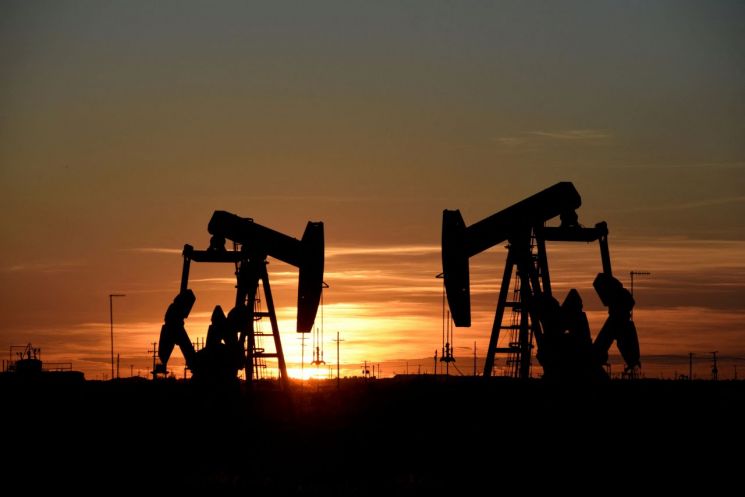
According to OilPrice.com, a specialized oil market media outlet, the Saudi government is currently producing about 11 million barrels per day and is confident it has the capacity to increase production by more than 1 million barrels per day. However, OilPrice.com pointed out that the highest production Saudi Arabia has recorded so far was 11.55 million barrels per day in April 2020, a figure that was achieved only temporarily over two months while competing with Russia for market share.
In the case of the United Arab Emirates (UAE), it officially states a current production of 3.4 million barrels per day and claims to have more than 25% production capacity left to increase. However, evaluations suggest that it is currently difficult to produce more than 3 million barrels per day.
According to The Wall Street Journal (WSJ), the OPEC+ Joint Technical Committee (JTC) pointed out in May that the total daily production of member countries was 42 million barrels, which was more than 3 million barrels less than the planned 45 million barrels according to the production increase targets.
Experts predict that even if Saudi Arabia and other Middle Eastern countries decide to increase production around President Biden's visit, it will be difficult to fully resolve the oil supply-demand imbalance, making it challenging to curb the rapid rise in international oil prices. Ole Hansen, head of commodity strategy at Danish investment bank Saxo Bank, analyzed, "Supply constraints will likely continue to support the surge in oil prices rather than concerns over demand contraction due to recession."
© The Asia Business Daily(www.asiae.co.kr). All rights reserved.



















