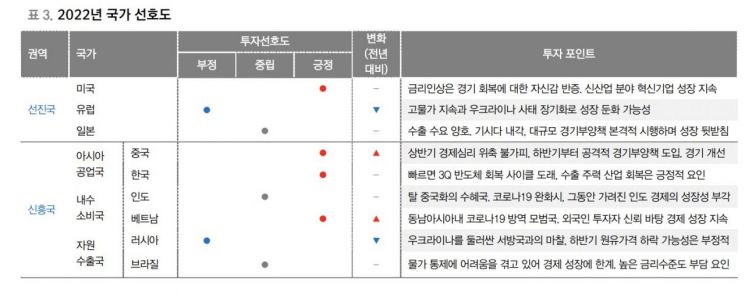
[Asia Economy Reporter Lee Seon-ae] Attention is focused on whether the U.S. stock market will officially enter a bear market in July. If the entry into a bear market is formalized, the optimism surrounding the stock market is expected to retreat further amid concerns of an economic recession.
According to Daishin Securities on the 1st, as of June 29, the returns for the U.S. stock market in the first half of the year (S&P 500, Nasdaq, Dow) were -19.9%, -28.6%, and -14.6%, respectively. Accordingly, the official confirmation of whether the S&P 500 has entered a bear market will depend on the May PCE/Core data released on the 30th (expected 6.4%, 4.8%). Moon Nam-jung, a researcher at Daishin Securities, said, "It has been a period of weighing the possibility of entering a bear market," adding, "Once the entry is officially confirmed, stock market optimism will retreat." He further noted, "Currently, since the situation does not involve an economic recession, assuming it does, the average duration and decline rate of 11 bear markets since World War II were 6 months and -28.9%, respectively."
The current cause of the stock market decline is tagged as high inflation → high-intensity tightening → entry into economic recession, so starting with the May PCE/Core data on the 30th, followed by the June CPI on July 13, the preliminary Q2 GDP on the 28th, and the July Federal Open Market Committee (FOMC) meeting, investor sentiment will inevitably continue to monitor and respond to these results. In particular, the June CPI result, which is difficult to predict, is expected to be a crucial turning point that will determine whether the U.S. stock market levels up or down. Even assuming limited declines in goods prices, considering the drop in oil prices in June, the expected inflation rate may decrease, providing a foothold for a rebound.
The Federal Reserve (Fed), which was at the center of the debate over a potential policy mistake, has begun to express concerns about the real economy ahead of the market. This started with the June FOMC, where the economic growth rate for this year and next year was projected at 1.7%, below the potential growth rate (1.75%), increasing the probability of the U.S. entering a recession. Past experience shows that major risks arise after interest rate hikes end. The year-end terminal policy rates presented for this year, next year, and the year after (3.4%, 3.8%, and 3.4%, respectively) make the probability of the U.S. entering a recession highest in Q2 of next year. Researcher Moon said, "These three fragments suggest that the keywords for the U.S. stock market in July will be high inflation, high-intensity tightening, and entry into an economic recession."
© The Asia Business Daily(www.asiae.co.kr). All rights reserved.
![User Who Sold Erroneously Deposited Bitcoins to Repay Debt and Fund Entertainment... What Did the Supreme Court Decide in 2021? [Legal Issue Check]](https://cwcontent.asiae.co.kr/asiaresize/183/2026020910431234020_1770601391.png)















