Biden "Strengthening Readiness"... Troop Buildup in Eastern Europe
NATO-Russia Basic Agreement Collapses... Concerns Over Cold War-Style Military Standoff
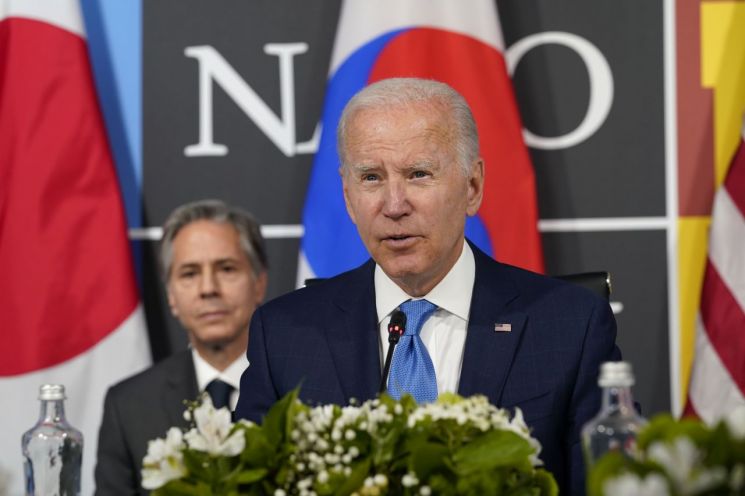
[Asia Economy Reporter Hyunwoo Lee] The United States announced that it will strengthen the military capabilities of NATO member countries in Eastern Europe by deploying permanent troops in Poland, which borders Russia, for the first time. This move has completely undermined the basic security agreement between NATO and Russia signed in 1997, raising concerns that a military confrontation between NATO and Russia similar to the Cold War era may resume.
Experts predict that the Ukraine war has solidified the confrontation between NATO, Russia, and China, signaling the full-scale entry into a new Cold War era.
◆ NATO-Russia Basic Agreement Virtually Nullified
On the 29th (local time), U.S. President Joe Biden emphasized at the NATO summit held in Madrid, Spain, "To respond to the changed security environment in Europe and strengthen our collective security, we are enhancing the U.S. military posture," adding, "NATO will prepare to respond to threats from all domains and directions, including land, air, and sea."
Under this military enhancement measure, the U.S. will permanently station the headquarters of the 5th Army Corps Forward Command along with a field support battalion in Poland, which borders Russia. This is the first time the U.S. has deployed permanent troops in a country bordering Russia. The U.S. government also announced plans to additionally rotate combat brigades of 3,000 and 2,000 personnel in Poland and Romania, respectively. Rotational forces including armored, aviation, air defense, and special forces will be strengthened in the three Baltic states (Lithuania, Latvia, Estonia).
The most controversial aspect of this military enhancement is the deployment of permanent troops in Poland. This move is seen as a complete collapse of the 'NATO-Russia Founding Act,' which has maintained the post-Cold War security framework between Russia and NATO since the 1990s.
According to the British BBC, in May 1997, the U.S., Russia, NATO, France, the UK, Germany, and others signed a basic agreement aiming to establish a peaceful security framework with Russia after the collapse of the Soviet Union. Under this agreement, NATO promised not to deploy permanent troops or nuclear forces in countries bordering Russia while expanding its membership in Eastern Europe.
The U.S. government, seemingly aware of the controversy, explained that actual combat troops in Poland will be rotational. According to the Associated Press, a U.S. official stated, "The permanent presence in Poland applies only to the corps-level command headquarters, and the rest are rotational deployments, so it complies with the agreement," emphasizing, "There was no need to inform Russia of these deployment plans in advance."
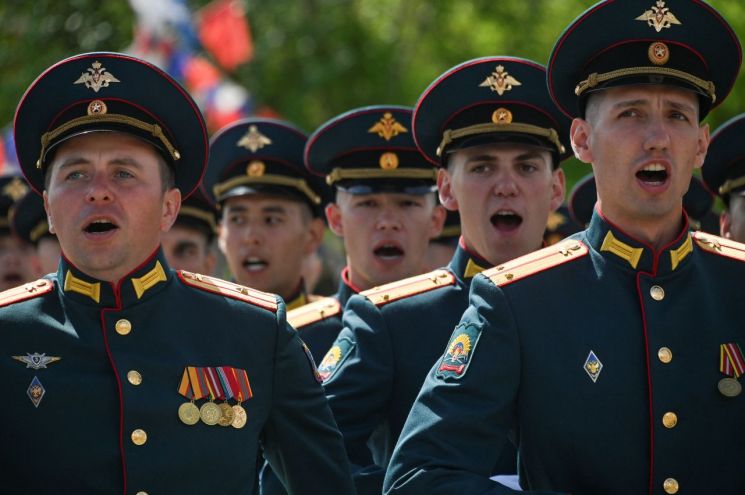
Russia warned it could respond if NATO deploys forces in neighboring countries. Russian President Vladimir Putin, attending the Caspian Sea littoral states summit in Turkmenistan that day, said, "If NATO troops are dispatched or military facilities are deployed in Sweden and Finland, we will respond accordingly," warning, "We will impose threats equivalent to those imposed on us."
◆ "Ukraine War Resembles Korean War"
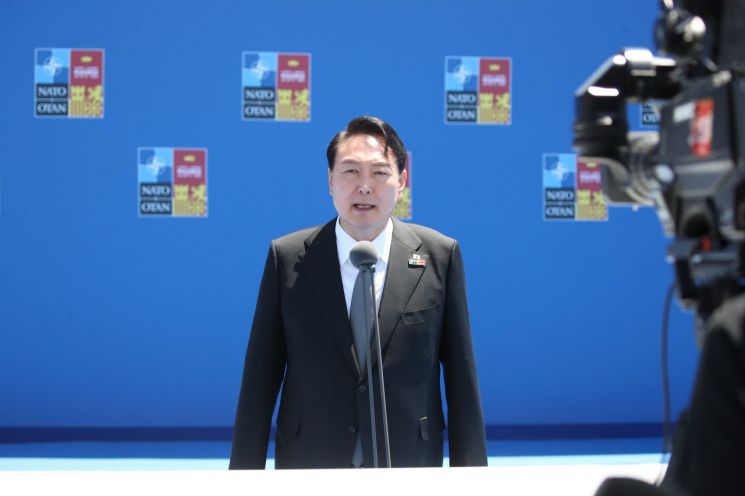
Meanwhile, NATO announced that it adopted a strategic concept that explicitly identifies China as a structural challenge for the first time.
In the new strategic concept, NATO stated, "China seeks to control key technological sectors, industrial sectors, critical infrastructure, strategic materials, and supply chains, and attempts to overturn the rules-based international order in space, cyberspace, and maritime domains," adding, "The deepening strategic partnership between China and Russia and their attempts to undermine the rules-based international order run counter to our values and interests."
Experts view these measures taken in response to the Ukraine war as intensifying tensions between the West and China-Russia, signaling the entry into a new Cold War era.
Jo Inge Bekkevold, senior researcher at the Norwegian Institute for Defence Studies (NIDS), wrote in Foreign Policy (FP), "The current Ukraine war is evolving into a conflict similar to the Korean War," analyzing, "The Korean War contributed to the bipolar Cold War structure between the U.S. and the Soviet Union, and the Ukraine war is bringing about a similar geopolitical realignment. Europe's view of China as a potential security threat alongside Russia will solidify."
© The Asia Business Daily(www.asiae.co.kr). All rights reserved.



















