[Asia Economy Reporter Hwang Yoon-joo] On the morning of the 30th, the KOSPI and KOSDAQ are both down by over 1%. Foreigners increased their selling due to exchange rate pressures. The futures market also shifted to a 'sell' stance.
As of 10:18 AM, the KOSPI is trading at 2,351.47, down 1.12% (26.52 points) from the previous day. The KOSPI opened at 2,368.57, down 0.40% (9.42 points), and has been gradually widening its losses since then.
Market supply and demand are deteriorating. Foreigners and institutions are net sellers of 152.5 billion KRW and 92.6 billion KRW respectively. Only individuals are net buyers with 238.7 billion KRW. Foreigners, who were net buyers in the futures market early in the session, have turned to net sellers with 24.2 billion KRW.
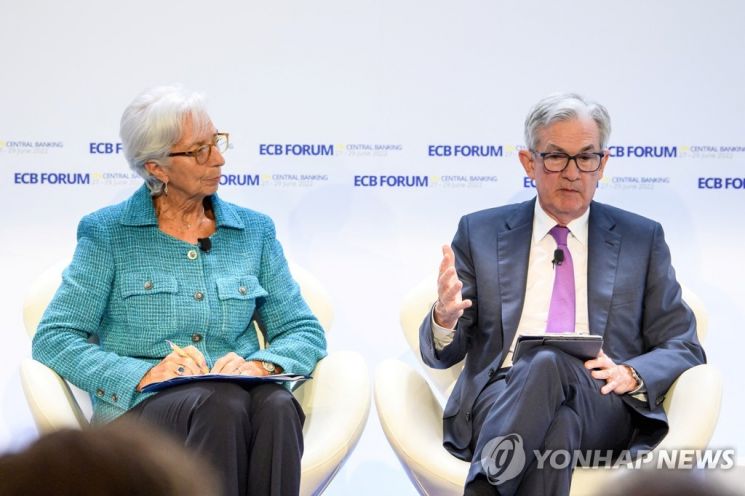
Externally, remarks by Jerome Powell, Chair of the Federal Reserve (Fed), have dampened risk asset investment sentiment. On the 29th (local time), at the European Central Bank (ECB) annual policy forum, Powell emphasized that "the Fed is focused on bringing down inflation," dismissed recession concerns, and reaffirmed the commitment to tightening. As a result, the U.S. stock market closed mixed with a slight decline.
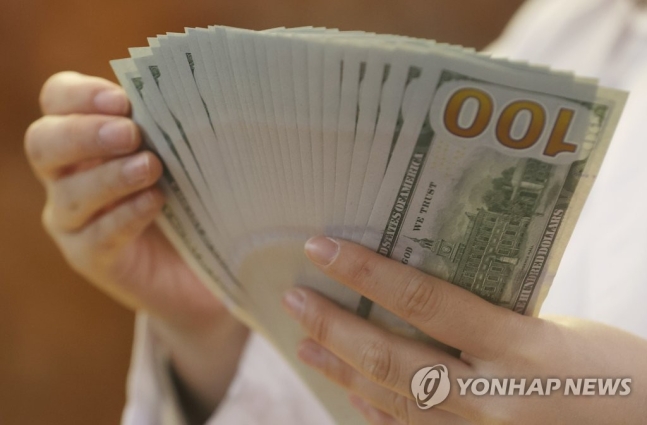
Domestically, the won-dollar exchange rate surpassing 1,300 KRW is having an impact. The won-dollar rate started at 1,300.5 KRW, up 1.5 KRW, and hit a new high. When the won weakens, even if the stock market yields investment returns, the risk of exchange losses increases, raising the possibility of capital outflows by foreign investors.
Among the top 10 stocks by market capitalization, the decline in secondary battery stocks such as Samsung SDI (-6.49%) and LG Energy Solution (-5.11%) is notable. In contrast, only Hyundai Motor (+2.56%), LG Chem (+0.38%), and Kia (+2.47%) are rising.
By sector, most sectors are declining, with textile and apparel (-2.36%), chemicals (-2.22%), non-metallic minerals (-2.20%), and electrical and electronics (-2.14%) showing significant drops. Meanwhile, construction (+3.12%) and transportation equipment (+2.46%) are recording strong gains.
Kim Dae-jun, a researcher at Korea Investment & Securities, pointed out, "The market continues to face downward pressure due to inflation and monetary tightening concerns," adding, "Supply-demand instability such as foreign net selling is also a burden." Kim analyzed, "These negative factors are unlikely to be resolved in the short term," and "Although the intensity may weaken, since they will not disappear completely, the index is expected to maintain a sideways trend."

As of 10:29 AM, the KOSDAQ is at 751.78, down 1.39% (10.57 points) from the previous day. The KOSDAQ opened slightly up by 0.01% (0.10 points) at 762.45 but turned downward shortly after opening and is widening its losses.
Similarly, selling pressure has increased compared to the morning. Foreigners and institutions are net sellers of 138.4 billion KRW and 29.7 billion KRW respectively. Individuals alone are net buyers with 174.6 billion KRW.
The top 10 stocks by market capitalization show a mixed pattern. Like the KOSPI, secondary battery stocks such as L&F (-4.41%) and EcoPro BM (-5.27%) are showing notable declines. Cheonbo (-6.78%) had the largest drop. On the other hand, Celltrion Pharm (+5.77%), Alteogen (+5.00%), and Celltrion Healthcare (+4.61%) posted the highest gains.
By sector, general electrical and electronics (-3.59%), IT components (-2.83%), paper/wood (-2.81%), chemicals (-2.56%), IT hardware (-2.51%), and semiconductors (-2.47%) are declining in order. Distribution (+2.08%) and pharmaceuticals (+1.15%) showed the highest increases.
© The Asia Business Daily(www.asiae.co.kr). All rights reserved.



















