'Geumdong Amitabha Triad and Associated Relics', 'Myo Beop Yeonhwa Gyeong' Also Announced for Treasure Designation
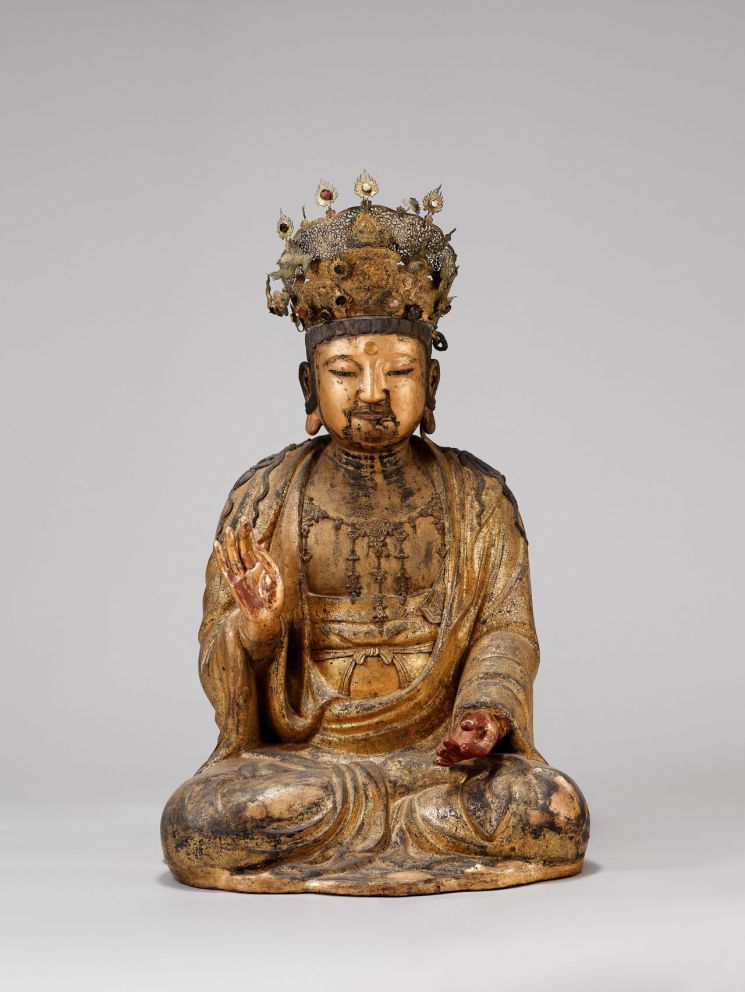
The solemn and intricate decorative 'Geonchil Bodhisattva Seated Statue,' the 'Gilt-bronze Amitabha Triad and Associated Relics' featuring characteristics of the 14th-century Goryeo triad statues, and the 'MyoBeop YeonHwa Gyeong' (Lotus Sutra) boasting high academic value are designated as national treasures. The Cultural Heritage Administration announced on the 30th that it will finalize the designation after collecting opinions from various sectors for a month and reviewing them through the Cultural Heritage Committee.
The Geonchil Bodhisattva Seated Statue is a bodhisattva statue created from the late Goryeo to early Joseon period. It wears an ornate crown on its head and displays the preaching mudra. The preaching mudra is a hand gesture showing the Buddha's teaching and enlightenment. The Geonchil Bodhisattva Seated Statue is posed in the Simuoein and Yeowonin postures, symbolizing the removal of all fears and the granting of all wishes. The statue was made using the geonchil technique, which involves creating a clay model, layering multiple sheets of cloth over it, and then applying lacquer.
Only about twenty geonchil Buddhist statues currently exist. The Geonchil Bodhisattva Seated Statue is relatively large, standing 124.5 cm tall. It demonstrates the pinnacle of realism through its stable proportions and dignified body expression, hands emphasizing volume like human hands, naturally braided hair flowing over the shoulders, and separately crafted quartz eyes. The solemnity emanating from the face contrasts with the grandeur conveyed by the broad shoulders, presenting a dignified beauty.
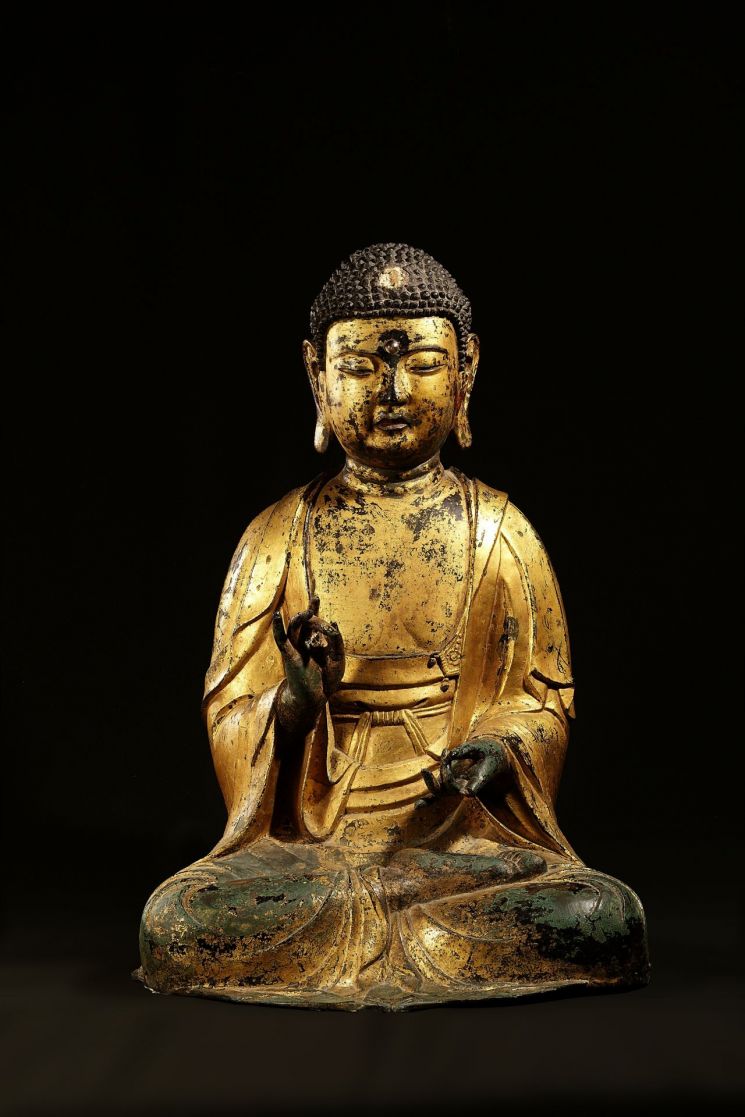
The Gilt-bronze Amitabha Triad and Associated Relics have an inscription in the reliquary petition stating they were created in 1333. The triad consists of the principal Amitabha Buddha statue and the attendant bodhisattvas Avalokiteshvara and Mahasthamaprapta on the left and right. Donors such as Jang Hyeon, his wife Lady Seon, Kim Jin, and Lee Gyeom participated as petitioners. Kim Jin and Lee Gyeom were high-ranking officials who had records of paying respects to the Yuan Empress Dowager and participating in important Buddhist ceremonies.
Features of the statues include aristocratic facial features, elegant forms, rounded intermediate crowns, tall halos, gracefully lively body curves, and neatly tied inner garment sashes. All these reflect the Buddhist statue styles popular in the 14th century. The delicate carving and casting techniques, as well as metalcraft methods, are evident, leading to a high evaluation of their preservation value.
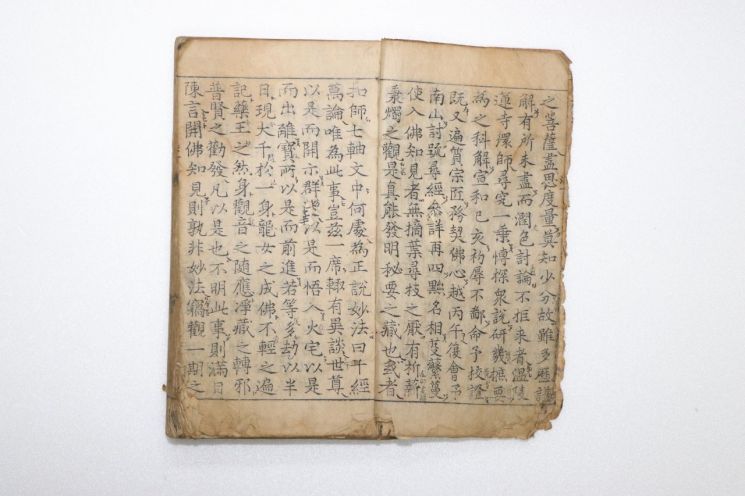
The MyoBeop YeonHwa Gyeong is a Buddhist scripture printed in later generations from a woodblock created in late March of 1405 at Ansimsa Temple. It consists of 7 volumes in 2 books. Both the donors and publication information are confirmed, giving it considerable academic value. Volumes 1 to 3 are also rare editions. The Cultural Heritage Administration explained, "It holds high historical and cultural value as primary information tracing early Joseon Buddhist scripture publishing and printing trends, the level of the woodblock carvers' illustrations, and Buddhist thought trends from late Goryeo to early Joseon."
© The Asia Business Daily(www.asiae.co.kr). All rights reserved.



















