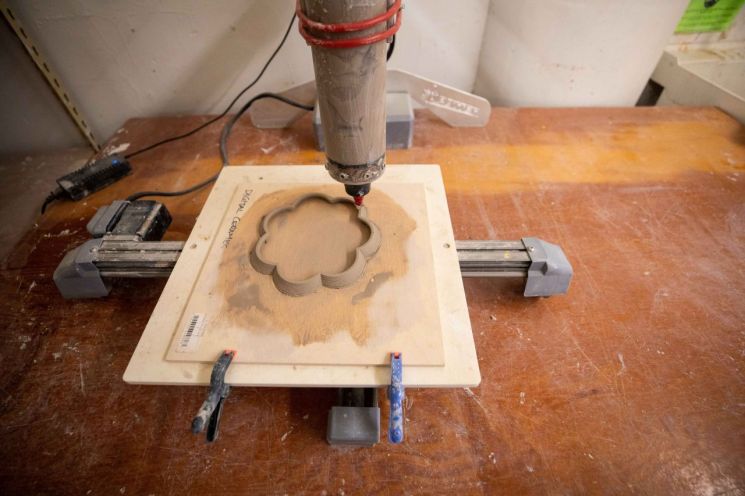
 The 'Ceramics' design research team is studying new materials based on sustainability using 3D printing.
 [Asia Economy Reporter Choi Dae-yeol] Hyundai Motor Group unveiled a collaborative project on the theme of sustainable future design, jointly researched with the Rhode Island School of Design (RISD), a U.S. art university, on the 30th.
This is the third collaboration following future mobility (2020) and future cities (2021). Four teams composed of faculty and students researched ways to build a sustainable future using different perspectives and technologies. Nature Lab, a research institute under the design school, also participated in the research. Established in 1937, it has supported in-depth research activities on natural life forms and ecosystems.
Since 2020, RISD has been operating an industry-academic cooperation program annually for joint research with Hyundai Motor Group. Four faculty members lead the project, and Hyundai Motor and Kia designers assist the research. Thirty-six RISD students also participated as researchers. During this spring semester, the research was conducted across four fields: ceramics, glass, experimental/basic research, and digital+media.
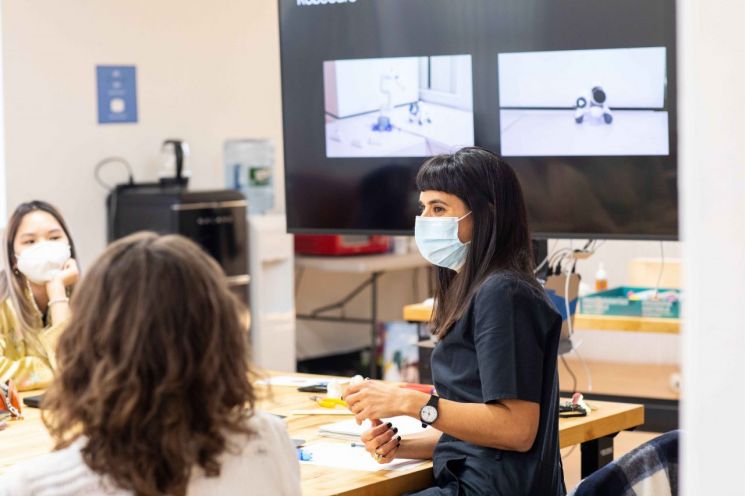 The 'Experimental and Basic Research' design team conducting a class to imagine and create robot and AI entities
 The ‘Ceramics’ design research team focused on creating forms using sustainable materials such as salt and sand. The ‘Glass’ design team conducted research visualizing natural structures or patterns based on an understanding of the properties of glass and light. The ‘Experimental and Basic Research’ design team mainly studied future robot designs that coexist with nature. The ‘Digital+Media’ design team concentrated on raising social awareness for resilient future environments.
Jiyoung Jo, Head of Innovation at Hyundai Motor Group, said, "This year’s collaboration with RISD was an opportunity to contemplate the image of a ‘sustainable future’ where humans coexist with nature, based on wisdom gained from nature." He added, "Especially this year, the New Horizons Studio, which is developing future mobility beyond the limits of conventional automobiles, also participated in the joint research, providing new perspectives."
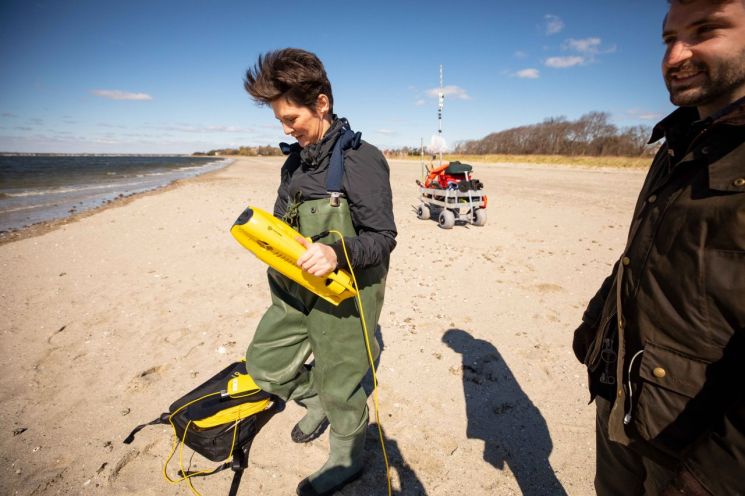 The 'Digital+Media' design research team is studying the combination of places, landscapes, and technology.
 Sangyeop Lee, Vice President in charge of Hyundai Design, stated, "Through this collaboration, we had the opportunity to deeply explore the wisdom of nature, break away from conventional approaches, and expand our insights." Karim Habib, Executive Vice President in charge of Kia Design, said, "Because the responsibility of design has changed over decades, we are now in a situation where design must consider not only human life but also the impact on the Earth. Through joint research with RISD, which deeply studies and explores nature, we were able to broaden our perspective on sustainability encompassing humans, technology, and nature."
Crystal Williams, President of RISD, said, "Our research aims to imagine the future reality through collaboration, experimentation, and abstraction, and to create insights for building a socially and environmentally just society."
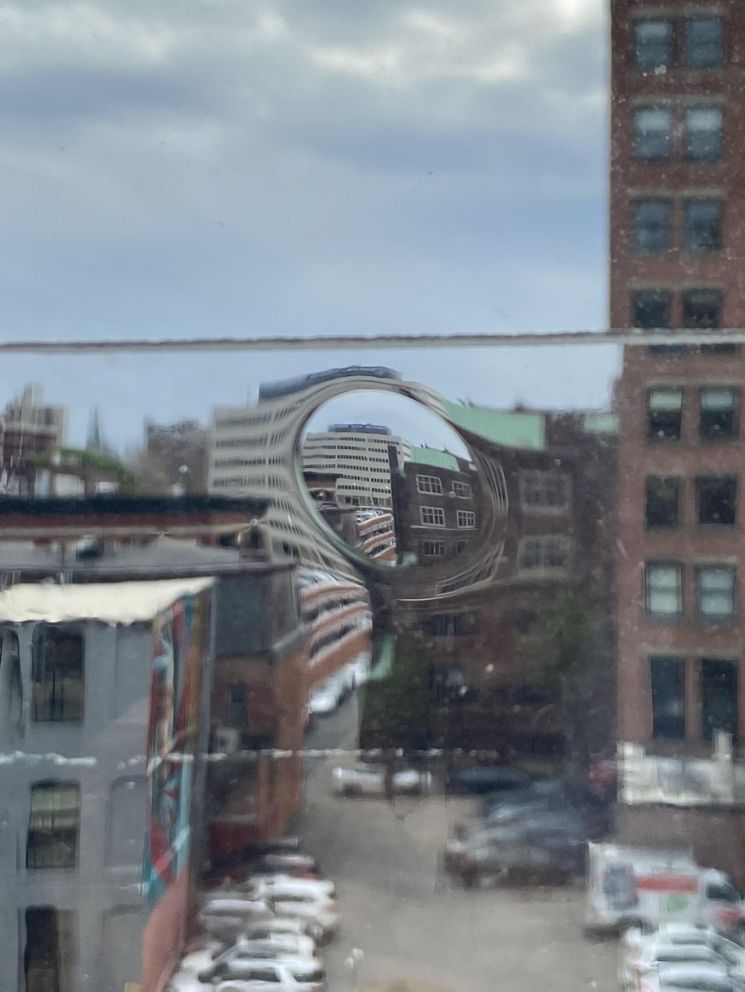 The 'Glass' design research team created an aperture on a glass window through experiments utilizing light, transparency, air, and phenomenology.
© The Asia Business Daily(www.asiae.co.kr). All rights reserved.



















