A Long-Lived Species Eating What Kind of Plastic?
"Protect Internationally Endangered Species, Reduce Marine Debris"
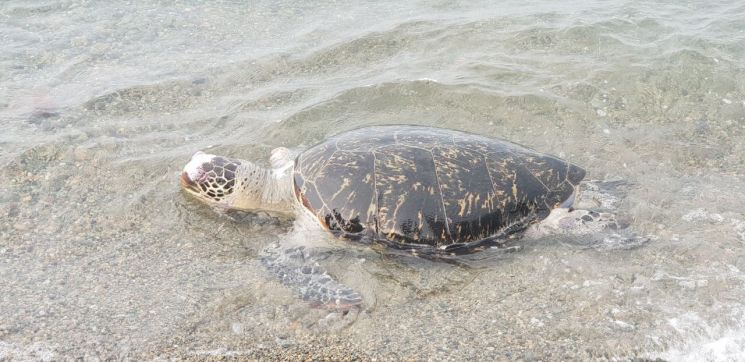
[Asia Economy Yeongnam Reporting Headquarters Reporter Kim Yong-woo] Hungry sea turtles indiscriminately consumed plastics discarded by humans. Indigestible marine debris created by humans threatens the lives of turtles, symbols of longevity and endangered species.
The Korea Institute of Ocean Science and Technology (KIOST) has attracted attention by releasing research results examining the stomach contents of 34 sea turtles of four species that were bycaught, stranded, or drifting along the Korean coast.
KIOST confirmed that 28 sea turtles?Loggerhead sea turtle (Caretta caretta), Green sea turtle (Chelonia mydas), Olive ridley sea turtle (Lepidochelys olivacea), and Leatherback sea turtle (Dermochelys coriacea)?had ingested plastics abandoned in the ocean.
These plastics were mainly single-use packaging materials flowing into the sea from land and plastic debris related to fisheries.
Currently, seven species of sea turtles are distributed worldwide. International environmental organizations such as the International Union for Conservation of Nature (IUCN) classify and manage sea turtles according to their risk categories.
The Convention on Biological Diversity (CBD) report included Loggerhead and Green sea turtles among the six marine species most affected by plastic ingestion and entanglement.
KIOST is collaborating with various related organizations to participate in the international community’s efforts to protect sea turtles and is striving to conserve sea turtles inhabiting Korean coastal waters.
The research team led by Shim Won-jun and Senior Researcher Hong Sang-hee at the Risk Analysis Research Center of the Namhae Institute is analyzing the amount and characteristics of plastic debris found in the digestive tracts of sea turtle carcasses in cooperation with the National Marine Biodiversity Institute and the National Institute of Ecology to assess the status of plastic ingestion by sea turtles.
The three institutions have been conducting joint autopsies on sea turtle carcasses since 2017. In April, the “Sea Turtle Cooperative Research Group” was officially launched to promote sea turtle conservation.
The research group has conducted joint autopsies on a total of 61 sea turtle carcasses found along the Korean coast to date, and published research results on 34 of them in an international academic journal last February.
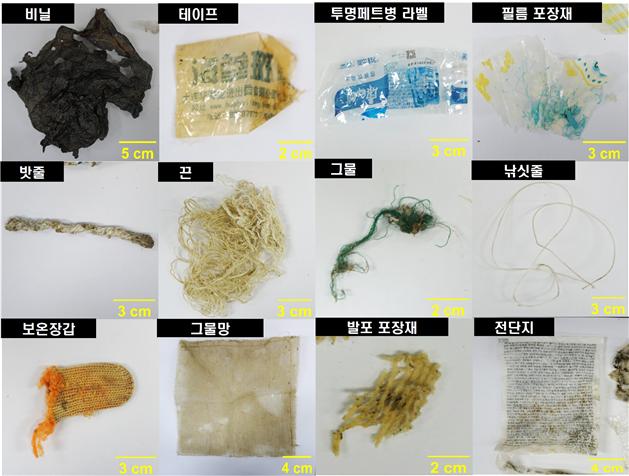
According to the study, a total of 1,280 pieces of plastic were found in 28 of the 34 sea turtles. While some were relatively large chunks, the total weight including microplastics was 118 grams. This means that one sea turtle ingested an average of 38 pieces (3 grams) of marine plastic.
The forms of plastic were predominantly film type (42%) and fiber type (39%), and the colors were mostly white (42%) and transparent (23%).
The materials were mainly polyethylene (51%) and polypropylene (35%), with many identified as film packaging (19%), plastic bags (19%), strings (18%), nets (16%), and ropes (11%).
Fiber-type plastics were dominant in herbivorous sea turtles, while film-type plastics were dominant in omnivorous sea turtles, indicating species-specific differences according to feeding habits.
KIOST is promoting a project titled “Development of Impact Assessment Technology for Plastic Debris on Marine Ecosystems” to elucidate the effects of marine plastic debris (MPD) on marine ecosystems.
This research is conducting studies on pollution by floating medium-to-large plastic debris, entanglement and ingestion impacts on marine organisms, movement of plastic-attached invasive species and pathogens, and habitat destruction.
Director Kim Woong-seo stated, “It is very meaningful to protect internationally endangered sea turtles and to evaluate the status and characteristics of plastic ingestion by sea turtles as indicators of marine plastic pollution.”
Director Kim emphasized, “This will raise awareness of the impact of marine plastics on marine ecosystems and serve as an opportunity to highlight the importance of the marine environment.”
Senior Researcher Hong Sang-hee, who participated in the study, explained, “The results of the sea turtle carcass autopsies show the impact of marine plastics on sea turtles inhabiting Korean coastal waters and the reality of marine pollution.”
In particular, she stressed, “It is urgent to establish measures to reduce marine debris, including household waste originating from land and discarded fishing gear from rivers or seas during fishing operations.”
© The Asia Business Daily(www.asiae.co.kr). All rights reserved.


















