EU's Largest Gas Reserve... Can Replace 3 Years of Russia's Gas Supply to EU
Hundreds of Earthquakes Occurred During 60 Years of Development... 80% of Homes Damaged
Prime Minister Rutte: "Production Expansion Is a Last Resort"... Residents Say "Sacrifice to Stop Russia"
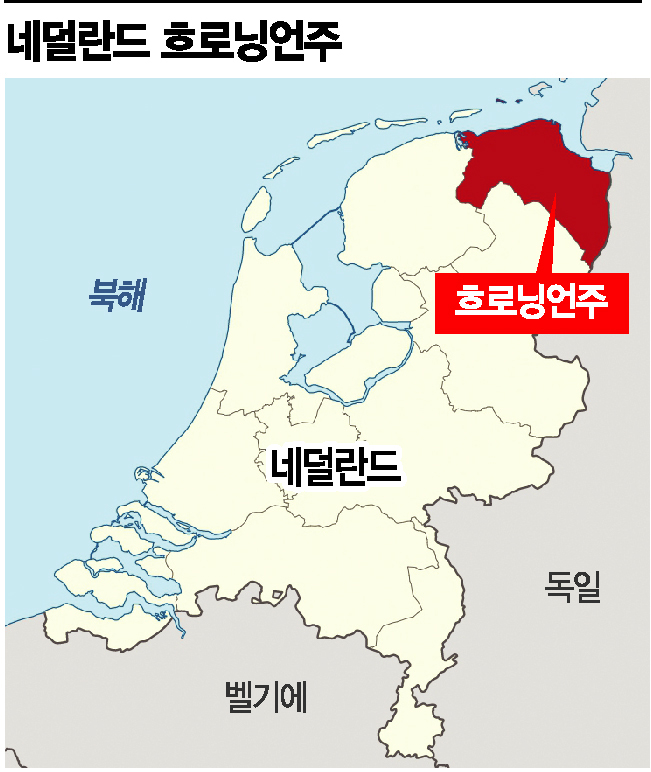
[Asia Economy Reporter Park Byung-hee] Controversy is growing over the Dutch government's decision to close the Groningen gas field amid Russia's gas weaponization strategy.
According to Bloomberg and other sources, Groningen is the largest gas deposit area in the European Union (EU). It is estimated to contain enough gas to replace three years' worth of gas supplied by Russia to the EU. However, the Dutch government plans to close the Groningen gas field by October next year. This is because hundreds of earthquakes have occurred in the Groningen area over the past approximately 60 years of gas field development, causing significant damage to residents.
The Groningen gas field was discovered in 1959 and gas production began in 1963. Earthquake damage in the Groningen area started to occur from the 1980s. Since the earthquake magnitudes were not large, the Dutch government initially ignored the earthquake damage. However, the frequency and magnitude of earthquakes gradually increased. Eventually, the Dutch government decided on a phased reduction in production in 2013.
At that time in 2013, the production volume of the Groningen gas field reached 54 billion cubic meters. This exceeded the Netherlands' annual consumption of 40 billion cubic meters. However, the expected production volume this year is only 4.6 billion cubic meters.
As gas prices have risen, the value of the Groningen gas field has also increased. The currently estimated economic value of the Groningen gas field reaches 450 billion dollars. Increasing gas field production would not only solve the gas shortage in the Netherlands but also bring enormous economic benefits.
However, since local residents must bear the sacrifices and it goes against carbon neutrality plans, the political sphere is taking a cautious stance.
Dutch Prime Minister Mark Rutte maintains that expanding production at the Groningen gas field is a last resort. At a press conference after the EU summit on the 24th, he said that the Groningen gas field issue would never be discussed as a means to increase gas supply and would only be discussed in extreme cases. He also added that although there are demands to increase Groningen gas production to lower gas prices, the 400 cubic meters that can be produced in Groningen is not enough to reduce gas prices.
Recently, after Russia's state-owned gas company Gazprom drastically reduced gas supplies to Europe, the Dutch government decided to increase the use of coal-fired power generation instead of expanding production at the Groningen gas field.
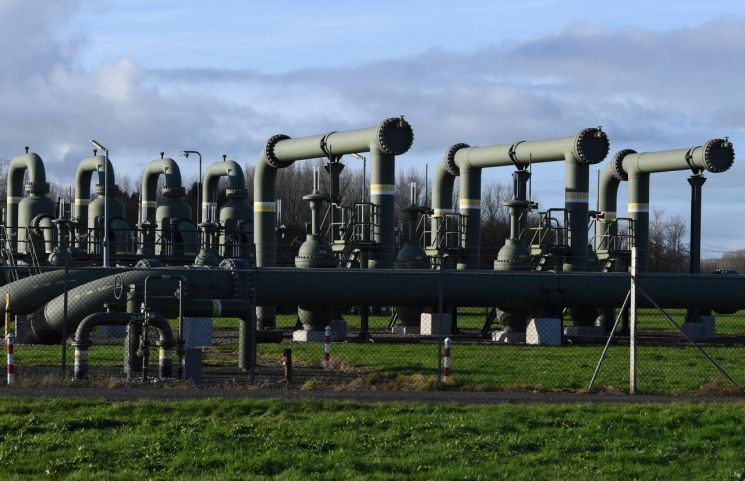
The stance of Groningen residents has shifted toward accepting increased gas production following Russia's invasion of Ukraine. They are willing to sacrifice themselves to stop Russia. In a survey conducted last March, two-thirds of Groningen residents supported increased gas production. Another survey showed that over 80% of Dutch citizens supported stopping imports of Russian gas. This means Groningen residents acknowledge that Russian gas should be replaced with Groningen gas.
Currently, 80% of homes in the Groningen area are reported to have suffered earthquake damage. To date, more than 160,000 claims for earthquake damage compensation have been filed by local residents.
Even after the Dutch government decided to reduce production, earthquakes in Groningen continued. In 2017, the number of earthquakes nearly reached 100, with the highest Richter magnitude recorded at 3.6. Earthquake experts expect that earthquakes will continue for at least 10 years even if gas production stops. The Groningen provincial government and gas field developer NAM have paid about 1.5 billion euros in compensation to affected residents so far. Future compensation costs, including housing reconstruction, are expected to reach tens of billions of euros. NAM is a joint venture between Royal Dutch Shell and ExxonMobil.
As the Groningen gas field has become a hot-button issue, the public hearing on the Groningen gas field, which began on the 27th in the Dutch parliament, is also attracting attention. The hearing will continue throughout this week, take a parliamentary recess, and then continue for another six weeks. The parliament plans to investigate the reasons for the increase in earthquakes after gas production in Groningen and the responsibility for earthquake damage.
© The Asia Business Daily(www.asiae.co.kr). All rights reserved.


















