The ancestral home of the Pungsan Yu clan's Ucheon branch
Still preserves rituals like the Bulcheonwi memorial service and Gije ritual today
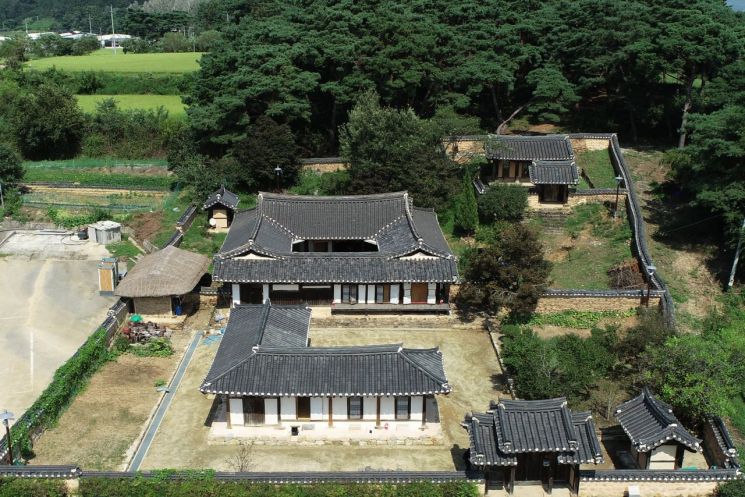
The Suam Jongtaek (修巖宗宅) in Sangju, where the Pungsan Yu clan's Ucheon branch has lived for generations, is designated as a National Folk Cultural Property. The Cultural Heritage Administration announced on the 29th that it will finalize the designation after collecting opinions from various sectors for a month and reviewing them through the Cultural Heritage Committee.
The site was established by Yu Jin (1582?1635), the third son of Ryu Seong-ryong (1542?1607), and the building was constructed by his seventh-generation descendant Yu Hu-jo (1799?1876). The location is a prime site where the ridges of Sogrisan, Palgongsan, and Ilwolsan mountains converge, and where the Nakdong River and Wicheon stream meet, known as Samsan Isu (Three Mountains and Two Waters). It is said that Jeong Gyeong-se (1563?1633), a disciple of Ryu Seong-ryong from Sangju, selected the site. Yu Hu-jo, who built the house, was famous for Baekbitang (white boiled water) served without any additives. When his stipend was delayed and guests visited, he would serve it sincerely in brass bowls as a gesture of hospitality.
The Suam Jongtaek consists of the main house (Anchae), the Noksa-cheong (錄事廳), and a shrine. The Anchae, connected to the Sarangchae (men's quarters), features a 'ㅁ'-shaped floor plan reflecting the architectural characteristics of northern Gyeongsang Province. Unlike typical traditional houses, the floor on the right side of the main hall (Daecheong) is raised to create a Numaru (a loft-like elevated floor). The 'ㄴ'-shaped Noksa-cheong is believed to have been built by Yu Hu-jo to accommodate officials who had retired with the honorary title of Bongjoha (奉朝賀, a special rank granted to second-rank officials upon retirement) and to receive or lodge officials bringing their stipends. The Cultural Heritage Administration stated, "It is rare for a private residence to have a Noksa-cheong. It is modest without elaborate decorations, befitting a family known for integrity, and holds historical value that helps understand the social structure of the time."
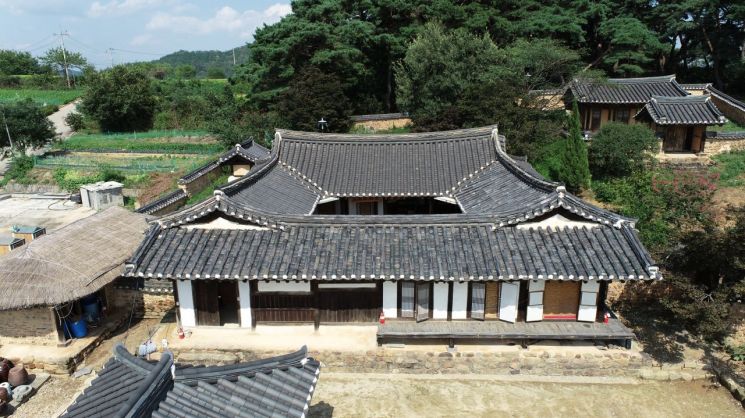
The shrine is enclosed by a stone wall behind the Anchae. Even today, rituals such as Bulcheonwi Jesa (不遷位祭祀, a state-permitted ritual to enshrine and honor a person with great achievements permanently in the shrine) and Gije Jesa (忌祭祀, annual memorial rites on the death anniversary) are preserved. The Cultural Heritage Administration evaluated, "The construction date (1858) is clearly confirmed from the beam inscription in the main hall of the Anchae, and historical documents such as Nokpae (official appointment plaques), literary collections, as well as folk artifacts like kilns and official robes are well preserved, offering a glimpse into the lifestyle culture of upper-class houses in mid-to-late Joseon." Notably, the bamboo folding screen (Jukbyeong) is said to have been painted by Heungseon Daewongun while staying here, planning for the future. After Heungseon Daewongun came to power, Yu Hu-jo served sequentially as Minister of Personnel (Ijo Champan), Right State Councillor (Uuijeong), and Left State Councillor (Jwauijeong) under the pro-Namin faction appointments.
© The Asia Business Daily(www.asiae.co.kr). All rights reserved.
![Clutching a Stolen Dior Bag, Saying "I Hate Being Poor but Real"... The Grotesque Con of a "Human Knockoff" [Slate]](https://cwcontent.asiae.co.kr/asiaresize/183/2026021902243444107_1771435474.jpg)

















