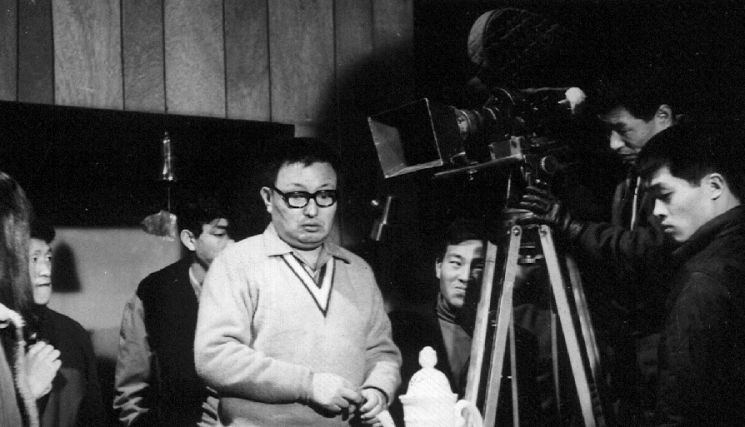
The Korean Film Archive announced on the 28th that it has made public online (on the Korean Film Database) traces of censorship on films directed by the late director Kim Ki-young. The materials relate to twenty-four out of the thirty-two films he directed during his lifetime. The total volume amounts to 1,681 pages, averaging about seventy pages per film. Most of the documents are ancillary materials such as tax payment certificates and revenue stamps. A representative from the Archive explained, "Although the direct relevance to censorship content is low, various censorship anecdotes can be confirmed."
Unlike director Lee Man-hee, who was imprisoned for violating the Anti-Communist Law, or director Yoo Hyun-mok, who was prosecuted for obscenity for directing Chunmong (1965), Kim was rarely mentioned as a victim of censorship. This is because censorship was concentrated on films he released from the mid to late 1970s to the early 1980s rather than his representative works such as The Housemaid (1960), Goryeojang (1963), and Woman of Fire (1971). Neumi (1979) and Bangeumryeon (1981) are typical examples.
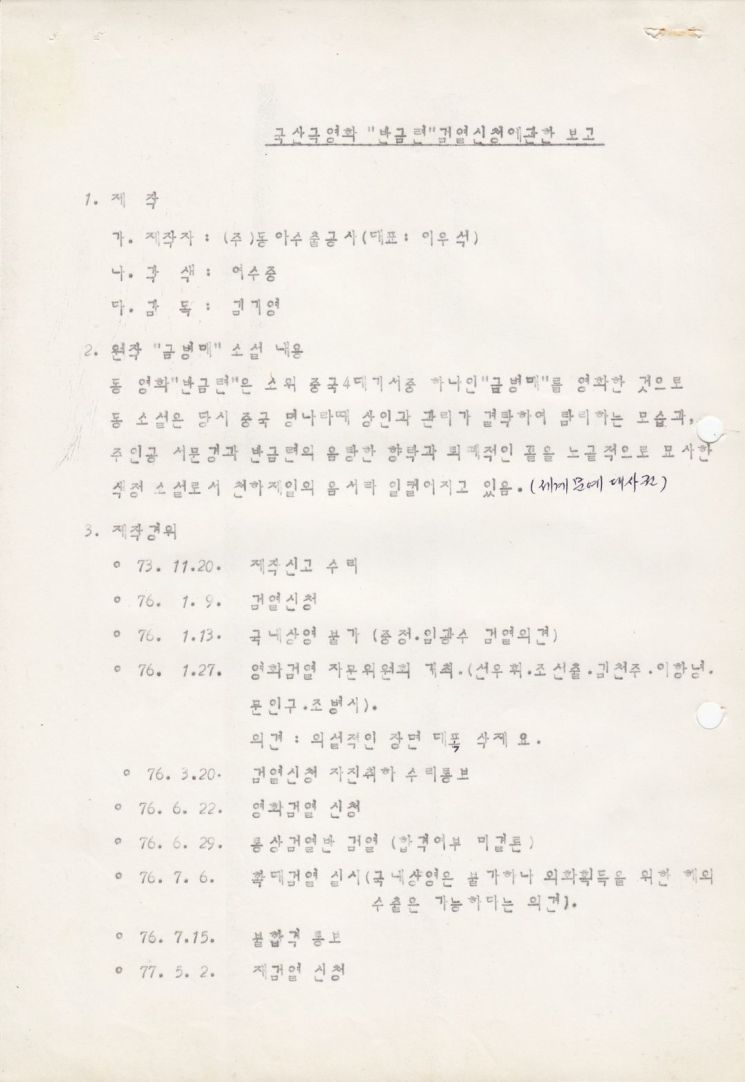
The former underwent script censorship revisions and failed the first main film censorship. The latter was submitted four times over five years starting in 1976 but was rejected each time. It only passed through after re-editing in 1981. Beauty Hong Nangja (1969) was also rejected for production registration due to concerns about promoting superstition and excessive scenes of cruel ghost revenge. It passed only after deleting or altering as many as sixty-two scenes. A representative from the Archive explained, "This suggests that Kim’s artistic world became more bizarre and subversive from the mid-1970s."
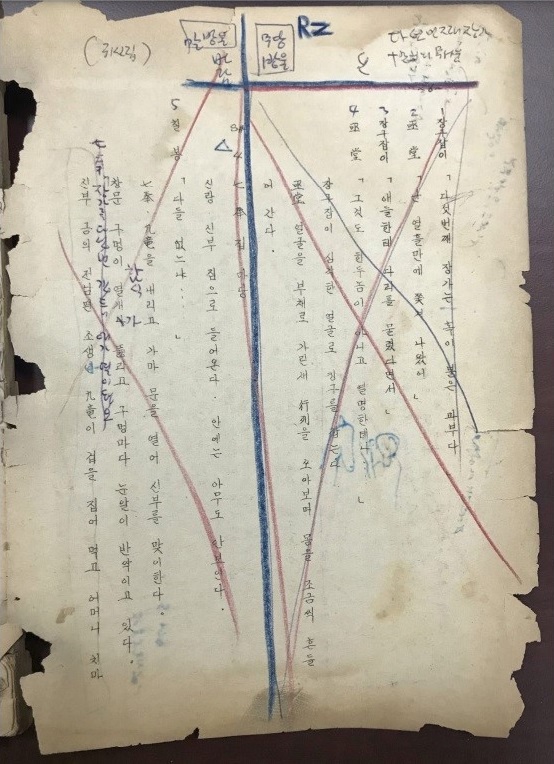
The released materials also include a large number of Kim’s literary documents. There are 249 items related to his directed works such as The Housemaid, Goryeojang, and Ieodo (1977), as well as scripts he participated in writing like Baeknyeonhan (1963) and Twilight Manhattan (1974), and unfinished works such as Stairway to Heaven, Tomorrow is Rain, Arario Legend, and The Survivor. One can also find handwritten notes left on memo pads intended to clarify his intentions or capture fleeting impressions before filming.
© The Asia Business Daily(www.asiae.co.kr). All rights reserved.



















