Ministry of Health and Welfare Holds the 14th Health Insurance Policy Deliberation Committee Meeting
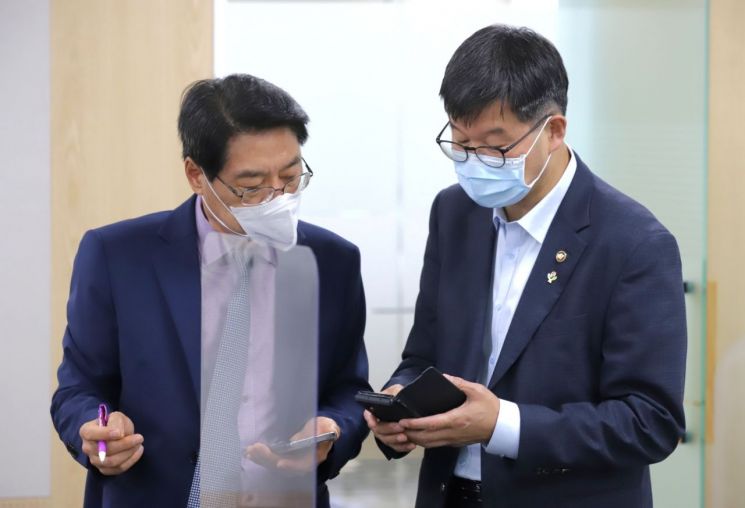
[Asia Economy Reporter Kim Young-won] Next year's health insurance medical fees have been decided to increase by 1.98%.
On the 28th, the Ministry of Health and Welfare held a meeting of the Health Insurance Policy Deliberation Committee (Geonjeongsim), the highest decision-making body for health insurance, and announced the conversion factor for outpatient clinics and Korean medicine clinics for 2023. Health insurance fees (medical benefit costs) are determined by multiplying the relative value by the conversion factor.
At this Geonjeongsim meeting, it was decided to raise next year's conversion factor by an average of 1.98% compared to this year.
Earlier, the National Health Insurance Service conducted fee negotiations with medical organizations last month, but negotiations with outpatient clinics and Korean medicine clinics broke down, so the increase rates for the conversion factors for these two types were decided at this Geonjeongsim deliberation. The conversion factor for outpatient clinics will be 92.1 won, up 2.1% from this year, and for Korean medicine clinics (including Korean medicine hospitals), it will be 95.4 won, up 3.0% next year.
Accordingly, the final conversion factors for medical institutions next year are ▲Hospitals: 1.6% increase (79.7 won) ▲Outpatient clinics: 2.1% increase (92.1 won) ▲Dentistry: 2.5% increase (93.0 won) ▲Korean medicine clinics: 3.0% increase (95.4 won) ▲Pharmacies: 3.6% increase (97.6 won) ▲Midwifery centers: 4.0% increase (151.9 won) ▲Public health institutions: 2.8% increase (91.0 won).
Expansion of Isolation Benefit Coverage by Infectious Disease Classification
The Geonjeongsim meeting also discussed the 'Improvement Plan for Negative Pressure and General Isolation Room Benefit Standards.'
The Ministry of Health and Welfare will expand the coverage of inpatient fees for negative pressure and general isolation rooms by comprehensively considering the recommended isolation levels for infectious diseases under the Infectious Disease Prevention and Control Act and related guidelines, as well as expert opinions.
Among legally designated infectious diseases, Class 1 infectious diseases are defined as those requiring "immediate reporting upon outbreak and high-level isolation such as negative pressure isolation," and Class 2 infectious diseases are defined as those requiring "reporting and isolation within 24 hours."
Twelve Class 1 infectious diseases, including Ebola, will be added to the coverage for negative pressure isolation rooms. For general isolation rooms, 14 Class 1 infectious diseases and 1 Class 2 infectious disease will be added to the coverage.
Previously, the coverage for negative pressure isolation rooms included a total of four diseases: one Class 1 infectious disease, Middle East Respiratory Syndrome (MERS), and three Class 2 infectious diseases?measles, tuberculosis, and chickenpox. General isolation room coverage applied to MERS, anthrax, diphtheria, and most Class 2 infectious diseases.
Health insurance coverage will be implemented from August after procedures such as revising related notifications.
© The Asia Business Daily(www.asiae.co.kr). All rights reserved.

















