Introduction of Housing Finance Debt Deduction from September... 740,000 Regional Subscribers to Benefit
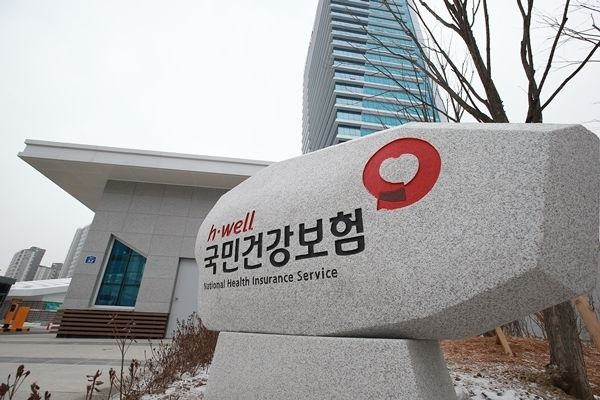 ▲National Health Insurance Service
#A, a National Health Insurance regional subscriber, is a non-homeowner living in a rental house with a deposit of 200 million KRW and a monthly rent of 500,000 KRW. Of the deposit, 180 million KRW is a jeonse (long-term deposit) loan. A currently pays 65,690 KRW per month in health insurance premiums based on property, excluding income, but from September, this amount will be significantly reduced to 4,510 KRW.
#B, another National Health Insurance regional subscriber, currently owns and resides in a single house valued at 300 million KRW market price and 200 million KRW official assessed price, with a mortgage loan of 100 million KRW. Currently, B pays 95,460 KRW monthly in health insurance premiums based on property, but going forward, 50 million KRW of the mortgage loan will be deducted, reducing the premium to 70,620 KRW per month, a decrease of about 25,000 KRW.
Starting this September, when calculating health insurance premiums for regional subscribers, debts borrowed to purchase or rent a house for actual residence by non-homeowners (jeonse or monthly rent) or single-homeowners (owners) will be excluded from the premium base. It is expected that health insurance premiums based on property for 740,000 regional subscriber households will decrease by an average of 22,000 KRW per month.
The Ministry of Health and Welfare announced that the "Partial Amendment to the Enforcement Decree of the National Health Insurance Act" containing these details was approved at the Cabinet meeting on the 28th.
Unlike workplace subscribers, regional subscribers currently have their health insurance premiums calculated and imposed annually by scoring both income and property by grade. The amendment was prepared with the intention of reducing the burden of health insurance premiums by considering the realistic burden such as rising loan interest rates on housing finance debt for actual residence.
First, the deduction for housing finance debt applies only to single-homeowner households or single non-homeowner households. In the case of renting, the person must be actually residing there. Even if a single-homeowner household rents out the house to others, they can receive a deduction for the owned house, but in this case, loans related to the rental deposit cannot be deducted.
The houses eligible for deduction are owner-occupied homes with an official assessed price of up to 500 million KRW (property tax base 300 million KRW), market price between 700 million and 800 million KRW, or rental houses with deposits up to 500 million KRW. Loans must be housing mortgage loans, Bogeumjari loans, jeonse deposit loans, or jeonse deposit secured loans received by regional health insurance subscribers from financial institutions, excluding private loans. Also, the loan must have been executed within three months before or after the ownership acquisition date or the move-in or registration date on the lease contract.
For owners, 60% of the loan amount is multiplied, and for renters, 30% is multiplied to evaluate the amount deducted from the health insurance premium property tax base. Owner households can deduct up to 50 million KRW of the tax base (equivalent to about 83 million KRW loan principal), and renter households can deduct up to 150 million KRW within the deposit (equivalent to 500 million KRW loan principal).
Currently, when calculating property premiums, a basic deduction of 5 million KRW is applied for owned houses and 10 million KRW for rented houses. A Ministry of Health and Welfare official explained, "For single-homeowner households, a deduction cap is set to prevent owners of high-priced homes from receiving greater benefits by taking out large loans. However, for single non-homeowner households, debts can be deducted up to 150 million KRW within the total deposit amount without a cap."
Regional subscribers who wish to receive deductions for housing-related loans from their health insurance premiums must submit the necessary debt-related information or consent to information provision starting from the 1st of next month via the National Health Insurance Service website, mobile application, or by visiting a branch office. The submitted and verified housing finance debt deduction applications will be reflected from the September premiums and are expected to be notified around September 26.
Choi Jong-gyun, Director of the Health Insurance Policy Bureau at the Ministry of Health and Welfare, said, "Unlike income, property often does not accurately reflect actual economic ability, so we are reforming the premium imposition system to gradually reduce the proportion of property in the premium base. Along with the housing finance debt deduction system and the second phase of health insurance premium system reform to be implemented this September, the burden of premiums imposed on property for regional subscribers will be further reduced."
© The Asia Business Daily(www.asiae.co.kr). All rights reserved.
![Clutching a Stolen Dior Bag, Saying "I Hate Being Poor but Real"... The Grotesque Con of a "Human Knockoff" [Slate]](https://cwcontent.asiae.co.kr/asiaresize/183/2026021902243444107_1771435474.jpg)















