[Seoul District News] Guro-gu Equips Anyangcheon with Waterslide, Shade Tents, Camping Decks; Deokui, Cheonwang Neighborhood Parks and Solgil Children's Park Water Playgrounds Open Until August 28... Jongno-gu Offers Free Flood Prevention Facility Installation and 70-92% Subsidy on Flood Insurance Premiums... Seodaemun-gu Releases Educational Video on 'Understanding Resident Participatory Budgeting'
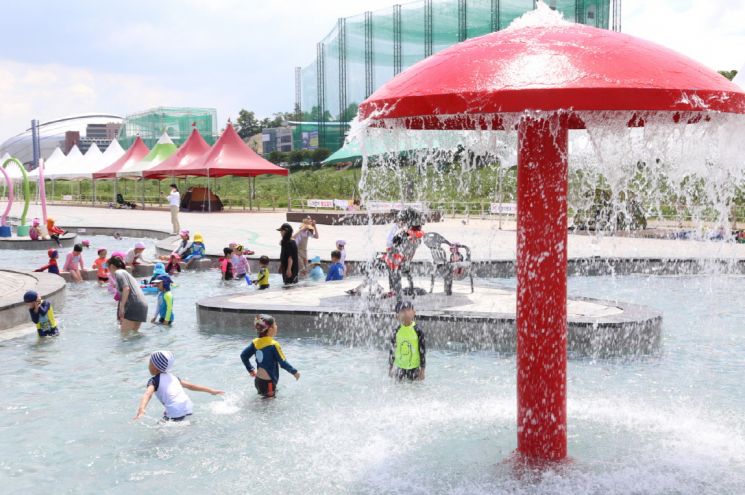
[Asia Economy Reporter Park Jong-il] “If you want to play in the water, come to Anyangcheon or the park!”
Guro-gu (District Mayor Lee Seong) will open water play areas at Anyangcheon and local parks on July 5.
Guro-gu announced on the 28th, “We will open water play areas in the district in July so that residents can enjoy a cool summer,” adding, “This is the first time in three years since the water play areas were closed due to COVID-19.”
The Anyangcheon water play area, located on the riverside under Ogeumgyo Bridge, covers 6,975㎡ and features four pools with different depths of 0.2m, 0.4m, 0.6m, and 0.75m, as well as fountains and water slides.
Convenience facilities around the pools include 50 shade tents, 6 outdoor showers, 2 temporary changing rooms, 18 camping decks, and 4 food trucks.
It will operate until August 26, from 10 a.m. to 6 p.m. During the peak season from July 29 to August 7, the hours will be extended until 7 p.m. It is closed every Monday and will not operate on rainy days.
To manage water quality, the water is changed daily, and the pools and surrounding areas are cleaned. Water quality tests are conducted every two weeks. For safety, lifeguards and first aid personnel are also assigned.
Water play areas in local parks will also open from July 5 to August 28.
The Deokui Neighborhood Park water play area in Gocheok-dong covers 300㎡ and includes a combination play structure, water drops, water seesaws, and wall fountains.
The Cheonwang Neighborhood Park water play area, covering 500㎡, features a combination play structure and various fountains.
The Solgil Children's Park water play area is opening for the first time since its completion in 2020 in Guro-dong. It covers 300㎡ and includes a combination play structure, water drops, and a semicircular tunnel.
The water play operates from 10 a.m. to 5 p.m. with 50 minutes of playtime followed by a 10-minute break (break time from 12 p.m. to 1 p.m.). It is closed every Monday.
A Guro-gu official said, “We will do our best to manage the water play areas safely,” and added, “We hope residents enjoy a pleasant summer at water play areas close to their homes.”
Jongno-gu is making every effort to prevent summer flooding damage to residents as the rainy season intensifies.
First, the district plans to install ‘flood prevention facilities’ such as water barriers and indoor backflow prevention valves in areas vulnerable to sewage backflow and rainwater intrusion to minimize damage caused by heavy rain. All costs will be fully covered by the district.
The targets are houses and commercial buildings vulnerable to flooding, including ▲houses expected to have surface water intrusion through basement windows ▲houses with gates located on low-lying roads expected to have rainwater intrusion ▲sewage backflow ▲houses with poor internal drainage (removal of water remaining in the outlet of rainwater storage tanks by natural drainage or pumping).
Water barriers are installed at entrances of low-lying houses and shops and basement windows to block surface water from entering indoors during the rainy season. Indoor backflow prevention valves installed in bathroom and kitchen drains prevent rainwater from flowing back indoors through public sewers.
Residents who wish to apply can contact their local community service center or the Flood Control Division of Jongno-gu Office.
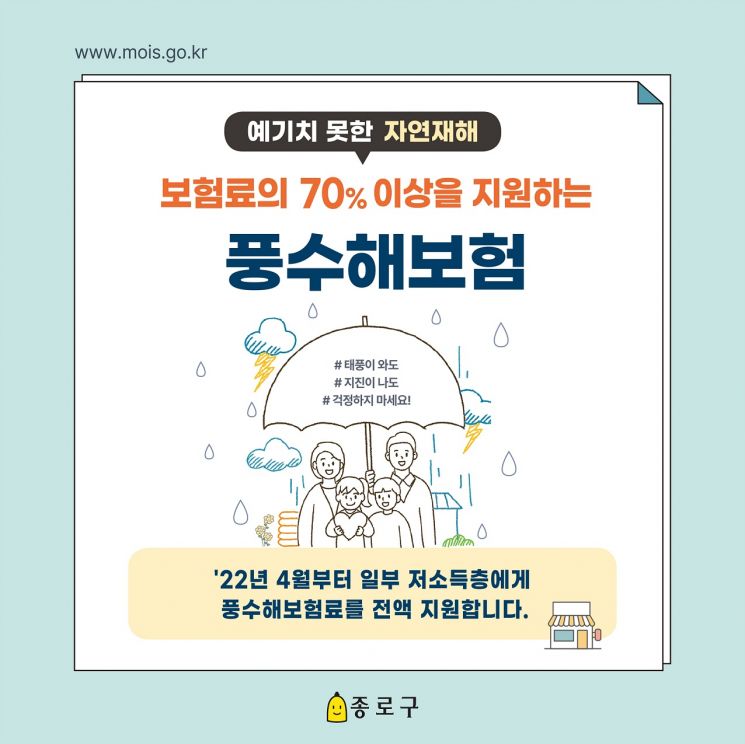
Additionally, the district supports premiums for the ‘Wind and Flood Insurance,’ a policy insurance managed by the Ministry of the Interior and Safety.
Basic livelihood security recipients and lower-income residents receive full premium coverage, while other residents receive 70-92% subsidies from the national and local governments. Subscribers pay only a minimal amount and can be compensated for damages caused by unexpected typhoons, floods, heavy rain, strong winds, storms, tidal waves, heavy snow, and earthquakes. Eligible properties include houses, small business shops and factories, and greenhouses within the district, and tenants can also subscribe.
More detailed information is available on the National Disaster Safety Portal, and applications can be made through the Wind and Flood Insurance online page.
Since March this year, the district has designated areas with dense floating populations, including Gwanghwamun, as ‘Intensive Rainfall Management Zones’ and is promoting sewer and rainwater drain dredging. Accumulation of soil, cigarette butts, and trash in rainwater drains can cause poor drainage, leading to flooding and odor problems.
To prevent resident damage and provide a safe and pleasant urban environment, the district is also conducting high-pressure water cleaning of sewers at least once a month in restaurant-dense areas and traditional market streets, among other efforts.
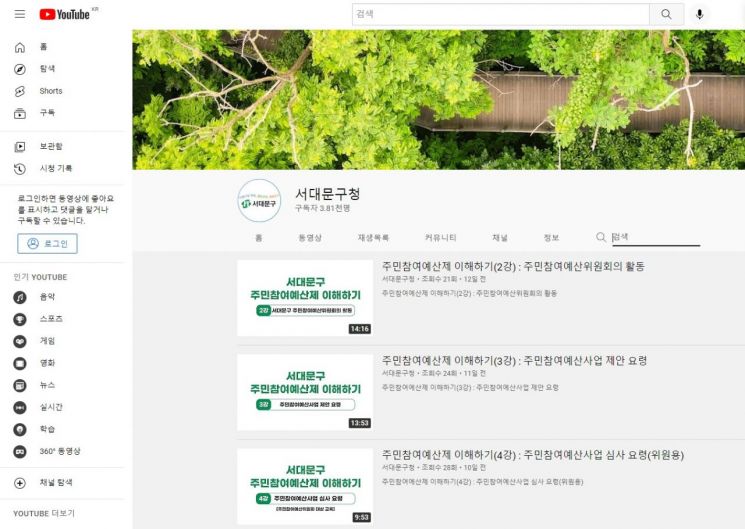
Seodaemun-gu announced on the 28th that it has produced educational videos on the Resident Participatory Budget System and released them on the district office’s YouTube channel and the Resident Participatory Budget homepage (Videos & Promotional Materials → Video Materials).
The district created five videos, each about 15 minutes long, to help residents understand the basic concepts of the participatory budget system and its practical application.
The titles are ▲Lecture 1: What is the Resident Participatory Budget System? ▲Lecture 2: Activities of the Resident Participatory Budget Committee ▲Lecture 3: How to Propose Resident Participatory Budget Projects ▲Lecture 4: How to Review Resident Participatory Budget Projects ▲Lecture 5: How to Monitor Resident Participatory Budget Projects.
In particular, the videos provide detailed coverage of the role of the Resident Participatory Budget Committee, which is the core of the system’s operation. These videos are available for anyone to watch through the channel and homepage.
A district official said, “We expect these educational videos to increase residents’ interest and understanding of the participatory budget system.”
© The Asia Business Daily(www.asiae.co.kr). All rights reserved.
![Clutching a Stolen Dior Bag, Saying "I Hate Being Poor but Real"... The Grotesque Con of a "Human Knockoff" [Slate]](https://cwcontent.asiae.co.kr/asiaresize/183/2026021902243444107_1771435474.jpg)


















