Manufacturing Auto Companies Transform... Racing for Survival in 'Mobility' Competition
SW Core Talent Rising Rapidly... Programmer Organizational Culture Remains a Challenge
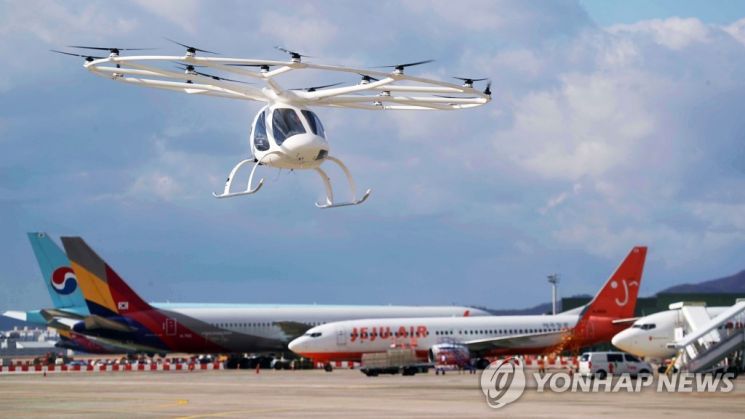
[Asia Economy Reporter Han Seung-gon] # Kim, a 20-something office worker, commutes to work by riding a pre-summoned "flying car" Urban Air Mobility (UAM) from the balcony of his 10th-floor apartment. After work, he travels to a meeting spot at Gangnam Station in Seoul by an unmanned autonomous taxi. Kim said, "I haven't worried about transportation for a long time. No matter when, where, or what I do, I can go wherever I want as if teleporting."
Of course, Kim's scenario is fictional. However, considering the fierce competition among manufacturing automobile companies, this could soon become a reality in the near future. This is the so-called mobility competition. The concept of traditional public transportation such as taxis, buses, and subways, as well as newly emerging modes like car sharing, car hailing, and ride hailing, is changing.
At the center of this are developers who combine manufacturing with software concepts such as artificial intelligence (AI) to realize future cars. This is why companies are actively recruiting programmers. Experts analyze that organizations for software personnel, including how developers grow through the company, are important. It is seen as a critical battleground in the mobility competition.
◆ "Recruit Software Talent" Fierce Battle for 'Mobility President' Positions at Global Auto Companies
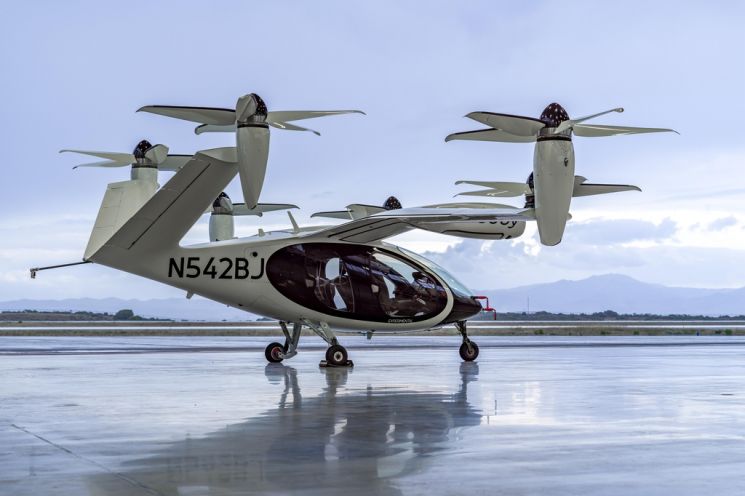
Hyundai Motor Group is currently securing core software technologies including AI to strengthen competitiveness in future business areas such as autonomous driving, robotics, and UAM. Recently, autonomous taxi test drives with minimal driver intervention began in Gangnam, Seoul.
LG is also actively utilizing its existing robotics, data fusion, and communication technologies to build mobility services. Samsung Electro-Mechanics hosted over 100 major domestic automakers and automotive electronics customers at its Busan plant on the 23rd and 24th to share its mid-to-long-term vision for multilayer ceramic capacitors (MLCC) for automotive electronics.
Global automakers are accelerating efforts to dominate the mobility market. Volkswagen, founded in 1937, plans to expand its software workforce from about 4,000 to 10,000 by 2025.
Meanwhile, Mercedes-Benz is opening a new technology center to strengthen its in-house software capabilities. In April, Benz opened a new software center in Sindelfingen, Germany, with an investment of 200 million euros (approximately 268.5 billion KRW), announcing plans to launch the next-generation infotainment architecture MB.OS operating system by 2024.

They also plan to hire 10,000 multinational software engineers across Germany, China, India, Israel, Japan, and the United States. Of the 3,000 newly hired employees, about 750 will be assigned to the Sindelfingen research center to work on autonomous driving research.
In December last year, Stellantis, the world's fourth-largest automaker, held a global event called "Software Day" to announce its software business strengthening plans.
Stellantis reported that software revenue from vehicles is currently about 400 million euros, aiming to expand it to 4 billion euros from 26 million vehicles by 2026, and 20 billion euros from 34 million vehicles by 2030. This is a declaration of transformation into a software-centric mobility company.
To this end, Stellantis announced plans to invest 30 billion euros in electric vehicles and software by 2026. Stellantis was established earlier this year through a 50-50 merger between France's Peugeot Citro?n (PSA) Group and Fiat Chrysler Automobiles (FCA). It owns 14 brands including Peugeot, Fiat, and Chrysler.
Additionally, Japan's Toyota is filling 40-50% of its new hires this year with software majors. Toyota's significant shift in hiring policy is due to fierce technological competition in future car fields called CASE (Connectivity, Autonomous driving, Shared mobility, Electrification). Other automakers such as Volvo, Honda, and Ford have also officially announced the use of Google's Android Automotive platform.

◆ Developers Emerging as Core Talent in Manufacturing Auto Companies, Organizational Culture Could Determine Success
While major global manufacturing automakers are securing software talent, there are concerns about whether they can properly guarantee a culture for developers. Kim, a developer in his 30s, said, "I hope developers don't become just manpower for making electric or autonomous vehicles," emphasizing, "Developers value freedom of thought and pride in the projects they accomplish."
Another programmer in his late 20s, Park, said, "There may be variations depending on the organization, but factory-like, mass-production style orders show a lack of understanding of developers' nature," adding, "First, they need to provide time and space where we can freely work and play."
Experts suggest that companies should provide a foundation where developers can fully demonstrate their abilities. They emphasize that creative and competitive results can emerge through this process.
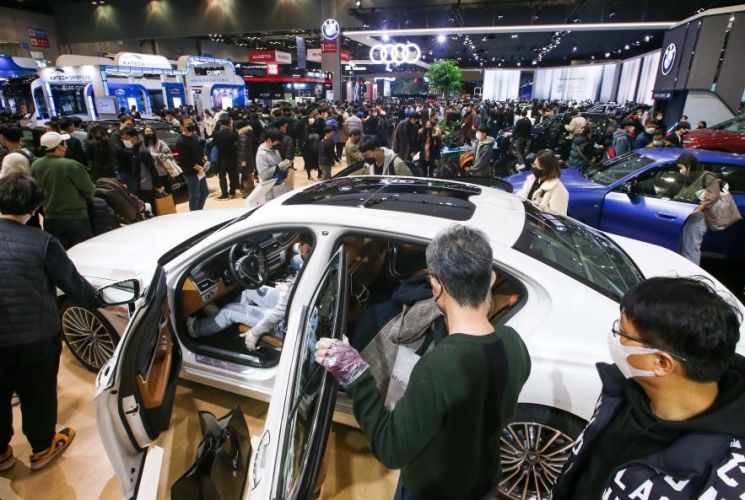 The '2021 Seoul Mobility Show' held at KINTEX in Goyang-si, Gyeonggi Province on December 26 last year. Citizens are looking around futuristic cars.
 [Image source=Yonhap News]
Lee Min-seok, head of Innovation Academy, stressed that organizational personnel evaluations for developers should focus solely on software aspects. He said, "Developers should be evaluated based on the impact of the software they create, not influenced by market effects or other company factors," adding, "If decisions from upper management drastically change what developers are preparing, they inevitably develop negative feelings."
For example, if Developer A creates a program, it should be evaluated on its own merits. Evaluations influenced by market reception or other factors exceed the scope of developer assessment and prevent proper personnel management. While global manufacturing automakers are recruiting software personnel, there must be an organizational culture for them to create synergy effects.
From another developer's cultural perspective, "It is important to see how committed the company is to technology marketing, whether it is willing to use open source, and whether it is willing to release what we create as open source," they emphasized.
© The Asia Business Daily(www.asiae.co.kr). All rights reserved.



















