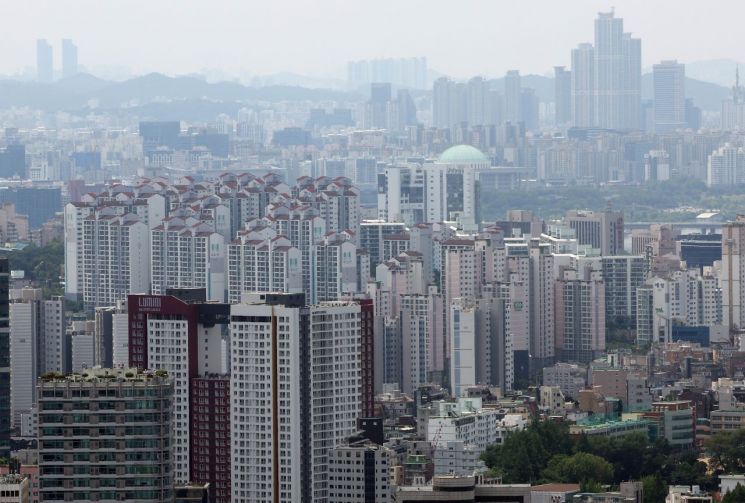
[Asia Economy Reporter Hwang Sumi] Recently, the trend of increasing real estate transactions by foreigners in South Korea has become prominent. Following the fact that foreign land transactions exceeded 6,000 cases last year, lease contracts for houses owned by foreigners have also sharply increased this year.
According to the Court Registry Information Plaza on the 26th, among the real estate properties that received a confirmed date at registries and community centers last month, contracts where the lessor was a foreigner totaled 2,362 cases. This represents about a 52% increase compared to April (1,554 cases), which previously held the record for the highest number. These contracts have exceeded 1,000 cases every month since July last year and surpassed 2,000 cases for the first time in the related statistics last month. By region, 53% were concentrated in the metropolitan area, with Seoul (619 cases), Gyeonggi (548 cases), and Incheon (85 cases) in that order.
Foreigners' purchases of domestic real estate are also steadily increasing. According to the Korea Real Estate Board, the number of building transactions by foreigners last year was 21,033 cases, the second highest since statistics began in 2006. This is similar to the record high in 2020 (21,048 cases). The latest statistics show that April recorded 1,536 cases, the highest monthly figure this year. Foreigners' pure land transactions (land excluding cases where land and buildings were traded together) also reached 6,583 cases last year, the highest since the statistics began in 2006.
As such, with the increasing trend of foreigners' real estate transactions in South Korea, cases where the property owner is a foreigner are also gradually increasing.
The problem is that regulatory reverse discrimination may occur between nationals and foreigners. While nationals are subject to various real estate regulations, foreigners are effectively excluded from these regulations, receiving preferential treatment.
Nationals face many restrictions on housing acquisition due to domestic financial regulations, but foreigners can easily secure funds through financial institutions in their own countries. In fact, Chinese nationals are not subject to loan regulations such as Loan-to-Value ratio (LTV) and Debt Service Ratio (DSR) when purchasing houses. They can freely purchase by securing funds from financial companies in China. Additionally, it is difficult to verify whether foreigners own multiple houses in their home countries, making it virtually impossible to impose acquisition tax and capital gains tax surcharges, a concern that has been consistently raised.
According to Yonhap News, the recent government joint investigation into speculative real estate transactions by foreigners includes cases such as an 8-year-old Chinese child purchasing an apartment in Gyeonggi-do. Other cases confirmed include a US teenager buying a 2.7 billion KRW house in Yongsan, Seoul, and a 40-year-old American owning 45 houses in the metropolitan and Chungcheong regions. There was also a case of a Chinese female student on a student visa purchasing two villas in Incheon and receiving monthly rent of 900,000 KRW.
Meanwhile, the government is promoting real estate policies to resolve issues such as regulatory reverse discrimination between nationals and foreigners. Measures under consideration include designating specific areas as foreigner real estate transaction permit zones and requiring non-resident foreigners to submit a funding plan when acquiring domestic housing.
© The Asia Business Daily(www.asiae.co.kr). All rights reserved.
![Clutching a Stolen Dior Bag, Saying "I Hate Being Poor but Real"... The Grotesque Con of a "Human Knockoff" [Slate]](https://cwcontent.asiae.co.kr/asiaresize/183/2026021902243444107_1771435474.jpg)











