H&M Faces Boycott by Chinese Consumers After Criticizing Human Rights Issues in Xinjiang Uyghur Autonomous Region
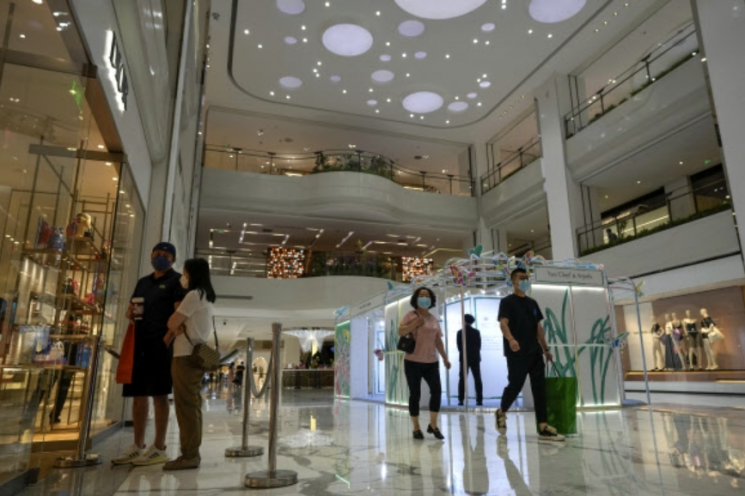 Chinese people are visiting Beijing shopping malls that had closed due to COVID-19 as they reopen. China locked down Shanghai due to COVID-19, and the areas under lockdown faced an economic downturn.
 [Image source=Yonhap News]
[Asia Economy Intern Reporter Kim Nayeon] Swedish fashion brand H&M closed its Shanghai flagship store on the 24th amid a sharp decline in demand due to China's COVID-19 lockdown and consumer boycotts following the suspension of cotton imports from China.
According to foreign media on the 25th, the H&M Shanghai flagship store opened earlier this month but was confirmed to be boarded up with its sign removed on the 24th.
H&M refused to comment on this matter, citing the 'blackout' period during which public statements are prohibited ahead of the first-half earnings announcement scheduled for the 29th.
As one of the world's largest fast fashion brands, H&M entered the Chinese market in 2007 and experienced rapid growth, operating over 500 stores nationwide as of early last year.
However, according to the company's website, only 376 stores remain in China, including the Shanghai flagship store.
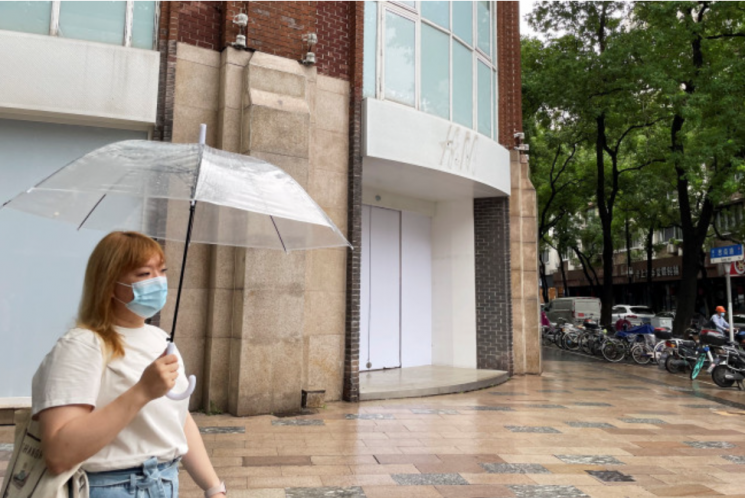 On the 24th, the Shanghai flagship store of Swedish fashion brand H&M was seen boarded up. [Image source=Yonhap News]
Previously, in September 2020, H&M stated on its website that it would not cooperate with any garment factories in the Xinjiang region suspected of forced labor, nor would it source cotton produced there.
Xinjiang accounts for over 80% of cotton production in China. At that time, there was little reaction in China, but a boycott campaign began belatedly last year.
Other global fashion brands such as Zara, Nike, and Adidas also became targets of Chinese consumer boycotts for the same reason, but H&M, which was the first to suspend imports of Xinjiang cotton, suffered the most damage.
Unlike other brands, H&M's online sales channels remain blocked, and its products cannot be purchased on major Chinese e-commerce platforms such as Tmall and JD.com.
United Nations (UN) experts and human rights organizations estimate that more than one million people, including Uyghurs and other Muslim minorities, are detained in large-scale camps in the Xinjiang region of western China.
© The Asia Business Daily(www.asiae.co.kr). All rights reserved.


















