The Effects and Mechanism of 'Coffee Nap'
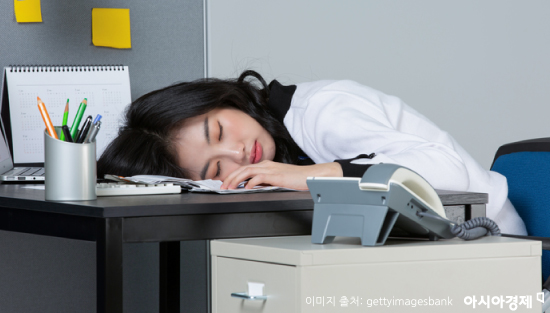
[Asia Economy Reporter Jin-kyung Lee] These days, when the heat is at its peak, many office workers feel drowsy and sluggish after lunch, making it difficult to concentrate on their work. The desperate battle against sleepiness continues throughout the afternoon while drinking cold iced coffee. Ultimately, work efficiency drops, and stress only increases. It feels unfair to dismiss this as just an everyday experience that most office workers go through. Is there a good way to prevent drowsiness? Today, we have some welcome information to share. It is said that there is a better way to chase away sleepiness than simply drinking coffee. It is called a ‘Coffee Nap.’ The name may be unfamiliar, but its effects are said to be certain, so let’s take a closer look at ‘Coffee Nap.’

● Coffee Nap (Coffee+Nap)
A ‘Coffee Nap’ refers to drinking coffee and then immediately taking a short nap of about 15 to 20 minutes. Doing this is said to be much more effective at preventing drowsiness than just taking a nap or just drinking coffee alone. But since caffeine intake usually interferes with sleep, making it hard to fall asleep quickly, how is it possible to take a short nap right after drinking coffee? You might wonder if a short nap would leave you feeling less refreshed or even more sleepy and tired. Is the effect of a Coffee Nap scientifically proven?

● The First Experiment on Coffee Nap Effects
The first Coffee Nap experiment was introduced in 1997 by Professor Lewis Reiner of the Department of Psychophysiology at Loughborough University in the UK. Professor Reiner’s research team divided 24 participants into three groups to investigate the relationship between coffee and sleep. One group drank only coffee, another took a 15 to 20-minute nap, and the third group drank a cup of coffee and then took a 15-minute nap. To assess the participants’ condition, they conducted a driving simulation. According to the results, the group that drank coffee and then took a nap showed better driving concentration than the other two groups. In other words, for activities requiring high concentration such as driving, those who drank coffee and took a short nap performed better than those who only drank coffee or only took a nap.

● Coffee Nap Effects Proven by Experiments
Similar research was conducted in the United States at Wright State University, where 24 young men with sleep disorders participated. One group was given 200 mg of caffeine and then took a nap, while the other group took a nap without caffeine. The participants’ conditions were then assessed. The results showed that the group combining caffeine and napping demonstrated higher concentration and activity levels afterward. A similar study in Japan yielded comparable results. Professor Mitsuo Hayashi’s research team at Hiroshima University administered 200 mg of caffeine to 10 young adults and then had them take a 20-minute nap. The group that combined coffee and napping scored higher on memory tests than those who did not.

● What is the Principle Behind Coffee Nap Effects?
Caffeine blocks the binding of adenosine and adenosine receptors, which cause fatigue in our bodies, so the Coffee Nap effect is essentially the effect of caffeine. The awakening effect of caffeine absorbed into the body begins at least 15 minutes after consumption, so if you fall asleep immediately after drinking coffee, you can sleep deeply without being affected by caffeine. During the 15 to 20 minutes of napping, adenosine, the fatigue-inducing substance, is broken down due to the influence of caffeine, allowing you to wake up feeling refreshed. In short, after a 15 to 20-minute nap, the awakening effect of caffeine absorbed in the body starts, enabling you to concentrate better on subsequent activities and work. This is the principle of the Coffee Nap.

● Key to Coffee Nap Effect: Coffee Intake and Nap Duration
To fully experience the Coffee Nap effect, the amount of coffee consumed and the nap duration are important. The amount of caffeine required in studies is about 200 mg, equivalent to 1 to 2 cups of coffee, and it is best to adhere to this. Taking a light nap or just lying down to rest for about 15 minutes can produce the Coffee Nap effect without needing deep sleep. However, if you fall into a deep sleep for more than 20 minutes, the Coffee Nap effect may not occur, so it is advisable to keep this in mind when trying it.

● Precautions!
There are some precautions before starting a Coffee Nap. You should drink coffee quickly and keep your nap under 20 minutes. Also, avoid trying it too late in the afternoon as it may interfere with nighttime sleep. If you are sensitive to caffeine or usually suffer from insomnia, it is better not to try a Coffee Nap. Considering these precautions, why not try a quick Coffee Nap after lunch when it’s hard to endure drowsiness?
“Manager, I’m going to head out first and take a quick nap. It’s absolutely necessary to boost my work concentration! (Wink)”
© The Asia Business Daily(www.asiae.co.kr). All rights reserved.



















