Legislation Proposed by Representative Park Jin
Currently Requires Landlord Consent
"The Right to Plug Must Be Protected"
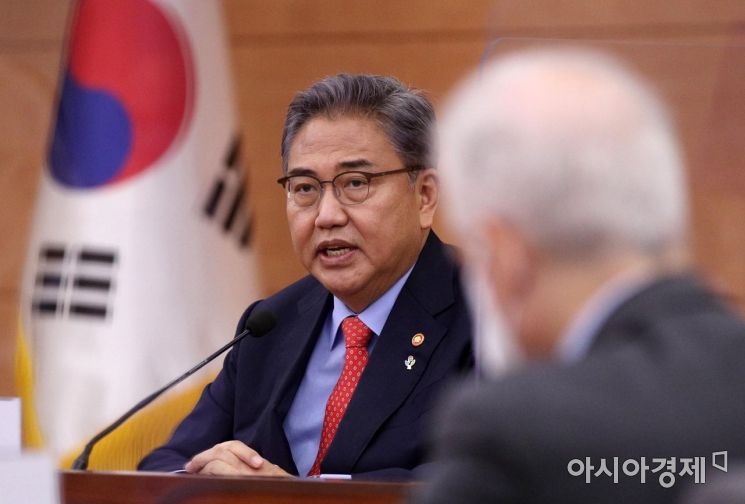
[Asia Economy Reporter Seong Giho] A bill allowing tenants to install electric vehicle chargers in the homes they reside in is being discussed in the National Assembly. The plan aims to activate residential chargers, commonly referred to as ‘Jipbap,’ to prepare for the electric vehicle era. With the Yoon Seok-yeol administration also emphasizing a large-scale expansion of electric vehicle charging stations, there is growing interest in whether the related legislation will pass through the National Assembly.
According to the National Assembly’s legislative information system on the 24th, Park Jin, a member of the People Power Party, recently proposed the “Partial Amendment to the Act on the Development and Promotion of Environmentally Friendly Automobiles” containing such provisions.
This bill includes provisions allowing purchasers and owners of eco-friendly vehicles to install charging facilities in the multi-unit housing where they reside at their own expense, regardless of ownership status. Additionally, the government and local governments are required to establish plans for expansion goals, basic directions, and financial support to promote this initiative.
Currently, for multi-unit housing such as villas and apartments, installing non-public chargers for residents requires the consent of more than 50% of the homeowners, not the residents. However, if homeowners do not agree due to cost burdens, installation itself becomes impossible. This tendency is particularly severe in large cities where the proportion of monthly rent and lease housing is high.
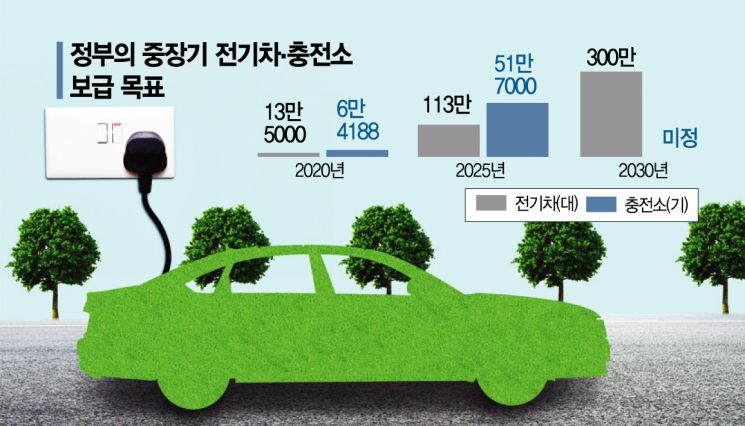
A representative from Park’s office explained, “Although the adoption rate of environmentally friendly vehicles is rapidly increasing, South Korea’s charging infrastructure cannot keep up with the growing demand for charging,” adding, “This law aims to recognize the ‘right to plug’ for users of electric vehicles and other eco-friendly cars regardless of home ownership.”
The ‘right to plug’ is already implemented in advanced countries. It aligns with the Yoon Seok-yeol administration’s national agenda. France passed a similar bill containing these provisions back in 2010. Kang Myungwon, a legal research officer at the National Assembly Library, introduced related content through legislative case studies, stating, “France’s ‘right to plug’ is a legal right allowing the installation of electric vehicle charging stations in multi-unit housing regardless of home ownership,” and added, “This French legislative example could serve as a reference in future discussions on related law amendments.”
The Yoon Seok-yeol administration also announced through its ‘110 National Tasks’ that it will “raise targets for eco-friendly vehicle purchases and strengthen the obligation to install electric vehicle charging facilities in new buildings.”
The industry has responded positively to this bill. A representative from the automotive industry said, “Currently, the number of chargers is less than half the number of electric vehicles, making charging difficult, which acts as a barrier for consumers to easily choose electric vehicles,” and added, “Expanding charging stations, which are the infrastructure for the development and popularization of electric vehicles, is urgent.”
© The Asia Business Daily(www.asiae.co.kr). All rights reserved.


















