Establishing 'Seongweishi' with 970 Billion Won Investment... Former President of Japan's Elpida Joins
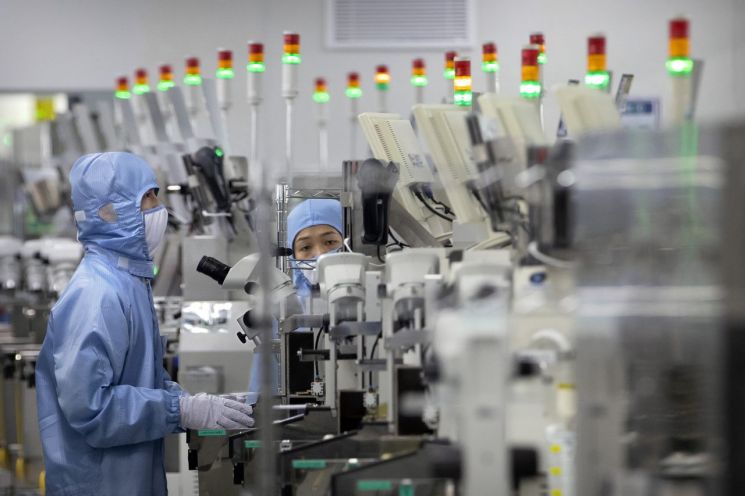 Employees wearing protective equipment are working in a semiconductor production facility.
 [Image source=AP Yonhap News]
[Asia Economy Reporter Kim Jung-wan] A newly established Chinese state-owned semiconductor company has recruited a heavyweight figure from the Japanese semiconductor industry.
The new Chinese semiconductor company SwaySure (昇維旭·SwaySure) recently announced on its WeChat account that it appointed Japanese national Yukio Sakamoto as its Chief Strategy Officer.
Sakamoto, 75 years old this year, is a former president of Elpida, Japan's only DRAM manufacturer, and is considered a heavyweight figure in Japan's memory semiconductor industry.
In a statement posted on the company's WeChat account, he said, "SwaySure has new memory technology with strong competitiveness, abundant financial resources, and capable elite personnel, giving it great potential for future development," adding, "Since this will be the last job of my life, I will help the company achieve its strategic goals."
According to the Chinese corporate information site Qichacha, SwaySure was established in March with 100% investment from a Shenzhen municipal state-owned fund, with a registered capital of 5 billion yuan (970 billion KRW).
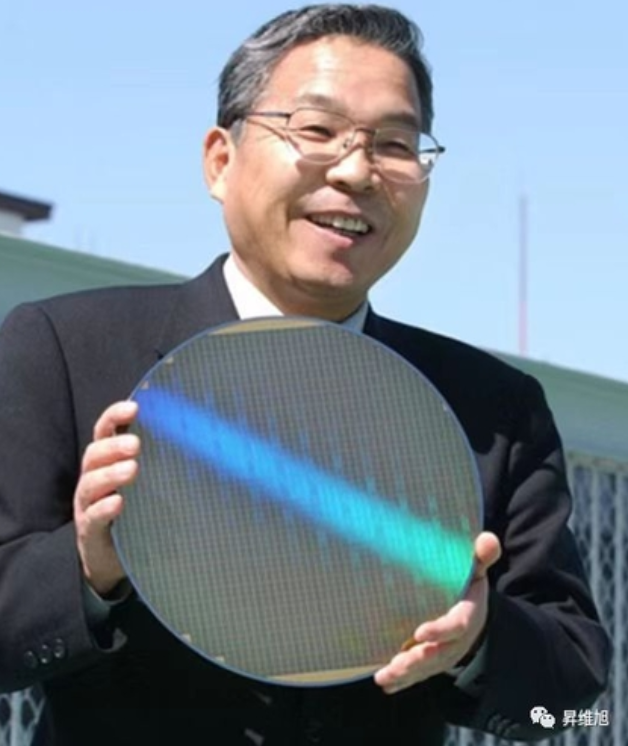 Japanese engineer Yukio Sakamoto recruited by Chinese emerging DRAM company Shengweishi. Photo by Shengweishi WeChat account capture
The CEO of SwaySure, Liu Xiaochang, who led the establishment and operation of the company, is a senior engineer who served as a plant manager at Taiwan's TSMC. Industry insiders evaluate that the establishment of SwaySure led by Shenzhen city and the recruitment of a heavyweight Japanese engineer demonstrate China's determination to enter and nurture the DRAM sector.
The Hong Kong daily South China Morning Post (SCMP) stated, "The recruitment of a heavyweight figure from the Japanese semiconductor industry by a newly established semiconductor company owned by the Shenzhen government shows China's ambition to gain a larger share in the DRAM market dominated by players from the U.S. and South Korea."
Previously, China launched a massive investment drive for the 'semiconductor rise,' but the results have been minimal.
The Wall Street Journal (WSJ) reported in January that "analyzing Chinese state media reports and local government documents, at least six large-scale semiconductor manufacturing projects in China have failed over the past three years," adding, "at least $2.3 billion (about 2.76 trillion KRW) was invested in these projects."
In the past, Fujian JinHua, a DRAM company in Fujian Province that was China's largest-scale project, shut down after losing massive investments when the U.S. raised issues about Micron's technology theft. Last year, China invested about 20 trillion KRW to recruit Chang Sang-yi, a top engineer from TSMC, as CEO of Wuhan Hongxin Semiconductor Manufacturing (HSMC), but the company went bankrupt amid fraud controversies. Chang later described his experience at HSMC as "a nightmare" in an interview with a media outlet.
However, amid ongoing strategic competition between the U.S. and China, China is vigorously nurturing its semiconductor industry, which is considered a vulnerable sector, and concrete results are emerging.
In 2021, China's semiconductor integrated circuit (IC) production reached 359.4 billion units, a 33.3% increase from the previous year, nearly doubling the growth rate.
In the foundry sector, SMIC (中芯國際·Zhongxin Guoji), known as the "Chinese TSMC," began mass production of 14 nm (nanometer = one-billionth of a meter) process products last year, considered a gateway to advanced fine processes, despite U.S. sanctions.
© The Asia Business Daily(www.asiae.co.kr). All rights reserved.


















