[Asia Economy Jeong Jae-hyung, Economic Finance Editor] Former Deputy Prime Minister for Economic Affairs Cho Soon was a giant in South Korea's economics academia, laying the foundation of Korean economics and nurturing numerous disciples as an economics professor.
Also, as a Keynesian economist who emphasized practical engagement, he served as Deputy Prime Minister for Economic Affairs, Governor of the Bank of Korea, and Mayor of Seoul.
◆Keynesian...'Cool Head, Warm Heart'
After studying abroad in the United States and a brief teaching career, former Deputy Prime Minister Cho returned to Korea and actively introduced global economic trends such as Keynesian modified capitalism at Seoul National University, bringing a fresh breeze to the economics community.
His 1974 publication, Principles of Economics, is regarded as an excellent textbook comparable to Paul Samuelson's Economics from the U.S. At that time, although there were economics textbooks, most were mere translations of Japanese books. Cho Soon's Principles of Economics was the first domestic textbook written by a Korean economist with his own perspective and viewpoint.
Former Deputy Prime Minister Cho firmly maintained his identity as a Keynesian. Among the courses he taught in his first semester as a Seoul National University professor was Keynes's General Theory. It is said that he covered the very difficult original text of Keynes within one semester.
Professor Kim Young-sik of Seoul National University's Department of Economics explained, "John Maynard Keynes viewed economics as a moral science and was actively engaged in practical affairs. Professor Cho highly evaluated Keynes comprehensively in many aspects."
Alfred Marshall, Keynes's mentor, said that one should approach economics with a "Cool Head, Warm Heart." This phrase is also the slogan of Seoul National University's Department of Economics.
Former Deputy Prime Minister Cho's practical engagement, including serving as Deputy Prime Minister for Economic Affairs and being elected Mayor of Seoul to carry out municipal activities, was likely an effort to create a better society.
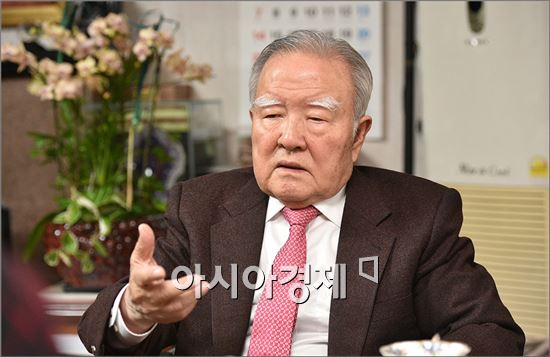 Jo Sun, Professor Emeritus at Seoul National University
◆ Cho Soon School? No... Disciples Numbering 10,000(?)
"Professor Cho humbly said that the 'Cho Soon School' does not actually exist, but the economists who respect and follow him probably number around 10,000."
This is the opening sentence of an essay titled "The Cho Soon School Unknown Even to the Master" in the book My Teacher, My Life, published by former Prime Minister Chung Un-chan in May this year. Former Prime Minister Chung is considered one of Cho Soon's closest disciples and is called a "son-like disciple."
One of former Deputy Prime Minister Cho's achievements is nurturing numerous economists. Professor Kim said, "Many people were inspired by the economics taught by Professor Cho after he returned to Korea and stood on the Seoul National University podium, leading them to study abroad. Prime Minister Chung Un-chan's contemporaries and subsequent cohorts were greatly influenced."
In Korean economics academia, if one considers schools of thought, there is the "Sogang School" centered on former Sogang University professor Nam Deok-woo and the "Hakhyun School" centered on former Seoul National University professor Byun Hyung-yoon. The Sogang School supported developmental economics during President Park Chung-hee's era, while the Hakhyun School took a progressive stance focusing on Korea's economic problems. Although the "Cho Soon School" is said not to exist, figures such as Chung Sung-in, Jeon Sung-in, Kim Sang-jo (former Blue House Policy Chief), Lee Chang-yong (current Governor of the Bank of Korea), and Kim So-young (current Vice Chairman of the Financial Services Commission) are sometimes grouped together.
The characteristic of the Cho Soon School is to seek a balance between economic stability and development through rational economic policies. At that time, it introduced mainstream American systematic methodologies and applied them critically and rationally to Korea's circumstances.
◆ Deputy Prime Minister for Economic Affairs, Mayor of Seoul, Party Chairman
Former Deputy Prime Minister Cho was appointed Minister of Economic Planning and Deputy Prime Minister for Economic Affairs in December 1988, thanks to his connection with former President Roh Tae-woo, whom he met when he was an English instructor at the Korea Military Academy. As Deputy Prime Minister, he also led the introduction of the concept of public land ownership.
He served as Governor of the Bank of Korea toward the end of the Roh Tae-woo administration and later transformed into a politician, serving as Mayor of Seoul under the Democratic Party and Chairman of the Grand National Party. During his tenure as Mayor of Seoul, he left achievements such as collecting congestion charges at Namsan, introducing transportation cards, and creating Yeouido Plaza Park.
© The Asia Business Daily(www.asiae.co.kr). All rights reserved.
















