Confirmed Cases Occur Domestically Following Singapore on the 22nd
WHO to Hold Emergency Meeting on the Afternoon of the 23rd to Discuss PHEIC Declaration
[Asia Economy Reporter Kim Young-won] One month after monkeypox cases were reported in non-endemic countries, confirmed cases have emerged in Asia. Following Singapore, one person in South Korea has also tested positive, drawing attention to whether the virus will spread further.
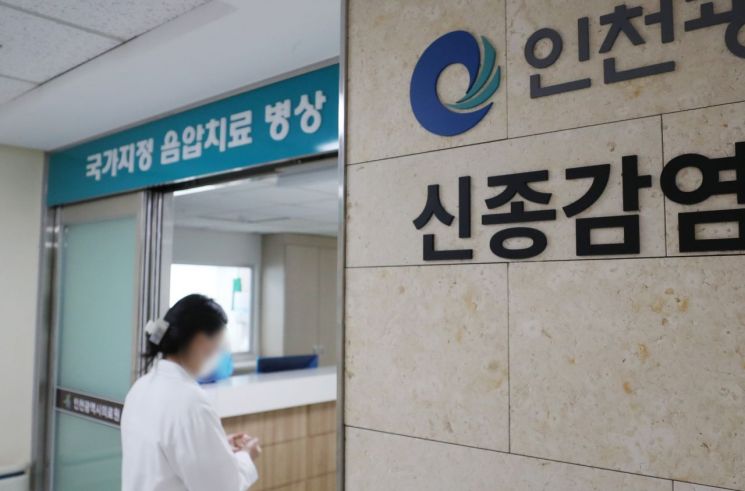
According to the Korea Disease Control and Prevention Agency (KDCA) on the 22nd, a man in his 30s, Mr. A, who arrived from Germany on the 21st, tested positive for monkeypox. Mr. A voluntarily reported to the KDCA at Incheon Airport and was immediately transferred to Incheon Medical Center, where he is currently isolated and receiving treatment in a negative pressure ward. In Singapore, on the 22nd (local time), the first confirmed monkeypox case in Asia outside the Middle East was reported. The confirmed patient is a British male flight attendant, currently hospitalized at the National Centre for Infectious Diseases.
According to data compiled by the KDCA from sources including Johns Hopkins, as of that day, monkeypox infections have been reported in 52 countries worldwide, with 3,127 confirmed cases and 117 suspected cases. Europe has the largest number of infections, with the UK reporting 794 confirmed cases and Spain 520. The KDCA will strengthen quarantine measures starting July 1 by lowering the fever threshold from 37.5℃ to 37.3℃ for travelers arriving from five countries with high numbers of monkeypox cases: the UK, Spain, Germany, Portugal, and France.
Monkeypox primarily occurs among men who have sex with men (MSM), but some countries have reported infections in women, indicating community transmission. The UK Health Security Agency (UKHSA) reported two female cases on the 30th of last month. In Brazil, on the 20th, a man with no overseas travel history tested positive for monkeypox. Although he had not traveled abroad, he was known to have had contact with foreigners recently.
The UK and the US, where infection numbers are high, have begun monkeypox vaccination campaigns. They are using a 'ring vaccination' strategy, vaccinating high-risk groups such as those in outbreak areas or close contacts of confirmed cases. The World Health Organization (WHO) currently does not recommend mass vaccination of the general public against monkeypox. Vaccination is limitedly recommended for confirmed cases, close contacts, healthcare workers, and laboratory personnel at high risk of exposure. Director Baek Kyung-ran of the KDCA stated, "At this stage, with the first confirmed case, we are not considering such (ring vaccination) plans."
On the 23rd at 12 noon (local time), WHO will hold an emergency meeting under the International Health Regulations (IHR) to consider declaring monkeypox a Public Health Emergency of International Concern (PHEIC). Currently, only COVID-19 and poliomyelitis (polio) are designated as PHEICs. The outcome of the meeting will be announced on the 24th through a statement from the emergency committee.
© The Asia Business Daily(www.asiae.co.kr). All rights reserved.

















