[Asia Economy Reporter Park Byung-hee] The global tax reform plan to set a minimum corporate tax rate of 15% for multinational corporations has faced opposition in Europe following the United States.
According to the Wall Street Journal (WSJ) and others, on the 17th, European Union (EU) finance ministers held a meeting in Luxembourg to discuss the legislation of the global minimum corporate tax but failed to reach an agreement due to last-minute opposition from Hungary. Following the announcement last October by the Organisation for Economic Co-operation and Development (OECD), which secured the consent of 137 countries for a minimum corporate tax rate of 15% on global corporations, the EU has been conducting discussions to implement this agreement.
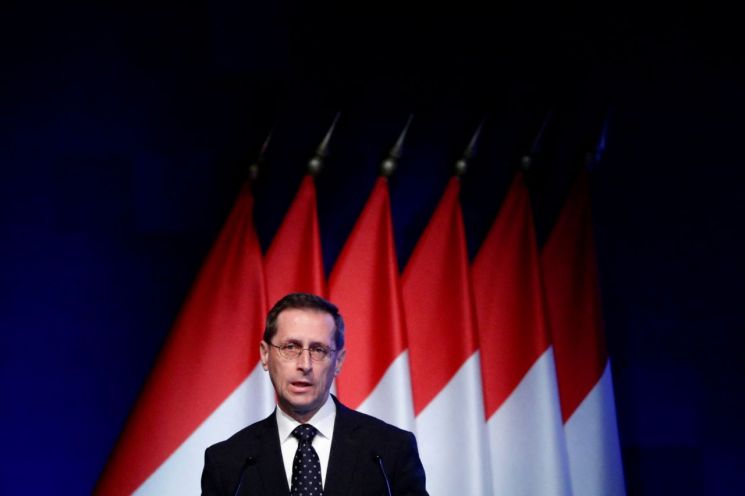
Zoltan Kov?cs, spokesperson for the Hungarian government, pointed out on Twitter that "this tax system could deal a fatal blow to Europe's competitiveness by imposing higher taxes on companies at war." Mih?ly Varga, Hungary's finance minister, also stated in a public meeting, "We are not ready yet. We need to make more efforts to find a solution."
Bruno Le Maire, France's Minister of Economy and Finance and current EU presidency holder, said, "There has been progress, but also setbacks," adding, "I remain optimistic that a solution can be found soon." He urged member state ministers to continue discussions to reach an agreement in the future.
Poland, which had opposed the introduction of the minimum corporate tax alongside Hungary, has shifted its position to support it.
Poland and Hungary have been in conflict with the EU Commission, which has delayed COVID-19 recovery fund support over concerns about adherence to EU values and the rule of law.
The EU Commission approved funding for Poland earlier this month but has maintained a freeze on funds for Hungary.
Due to the failure of the EU agreement this time, it is now expected that the global minimum corporate tax will be introduced not next year as originally planned, but the year after.
In the United States, discussions related to fiscal legislation linked to the global minimum corporate tax have stalled in Congress for months amid controversy and opposition from the Republican Party.
Meanwhile, at this meeting, EU finance ministers agreed to allow Croatia to adopt the euro starting next year. This follows recommendations from the EU Commission and the European Central Bank earlier this month and is expected to be finalized as early as next month after the EU summit to be held in Brussels, Belgium, on the 23rd and 24th of this month.
© The Asia Business Daily(www.asiae.co.kr). All rights reserved.
![Clutching a Stolen Dior Bag, Saying "I Hate Being Poor but Real"... The Grotesque Con of a "Human Knockoff" [Slate]](https://cwcontent.asiae.co.kr/asiaresize/183/2026021902243444107_1771435474.jpg)











