[Friday Story]
Passenger Growth Outpaces Airplanes
Impact of COVID-19 Restrictions
Increasing Seats Becomes Difficult
Soaring International Oil Prices Add Burden
"Stabilization Expected in 1-2 Months"
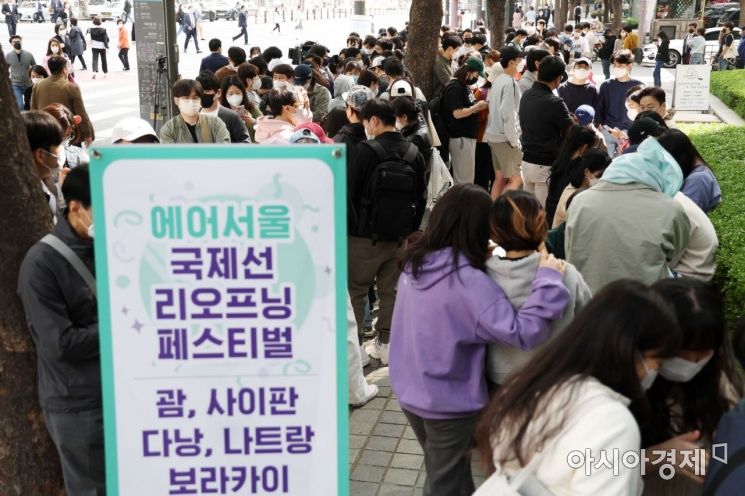 Last April, citizens were waiting in front of The Coffee Bean Gwanghwamun branch in Jongno-gu, Seoul, to purchase discounted air tickets commemorating the reopening of Air Seoul's international flights. To celebrate the resumption of international flights, Air Seoul is offering round-trip tickets on Southeast Asian routes to Guam, Saipan, Nha Trang, Danang, and Boracay at up to 97% off on a first-come, first-served basis for members on its website. Photo by Moon Honam munonam@
[Asia Economy Reporter Choi Dae-yeol] Jung Hoon-seok (38, pseudonym), an office worker who recently got married, went to Hawaii for his honeymoon. After weighing options between Paris, France, and Hawaii, he chose the slightly cheaper Hawaii based on a flight he checked in March (1.2 million KRW). Jung, who postponed Paris as a summer vacation spot, was shocked when he recently tried to book a ticket. According to Asiana Airlines, the round-trip ticket from Incheon to Paris was priced at 3.5 million KRW. He said, "A few months ago, it was about 2 million KRW, so I thought 'Since overseas travel just reopened, there might not be cheap tickets yet,' but the price went up even more, so I decided to go after next year."
Airfare prices are skyrocketing. As the COVID-19 pandemic, which had suppressed daily life for over two years, transitions into an endemic phase, demand for overseas visits such as business trips has surged sharply, coinciding with traditional peak seasons like school vacations and holidays. The inherent characteristic of the air passenger market, where it is difficult to flexibly increase supply in response to rising demand, also plays a role. With fuel surcharges hitting record highs daily due to high oil prices, the burden on consumers planning overseas travel for the first time in over two years since the COVID-19 outbreak is expected to increase further.
According to data from the Korea Aviation Information Portal on the 17th, international passengers totaled 633,317 (combined departures and arrivals) up to this month. This is nearly a 40% increase from about 450,000 during the same period last month. Considering that international flights increased from 6,408 to 7,497, about a 17% rise, the rate of passenger increase is more than twice that of flights.
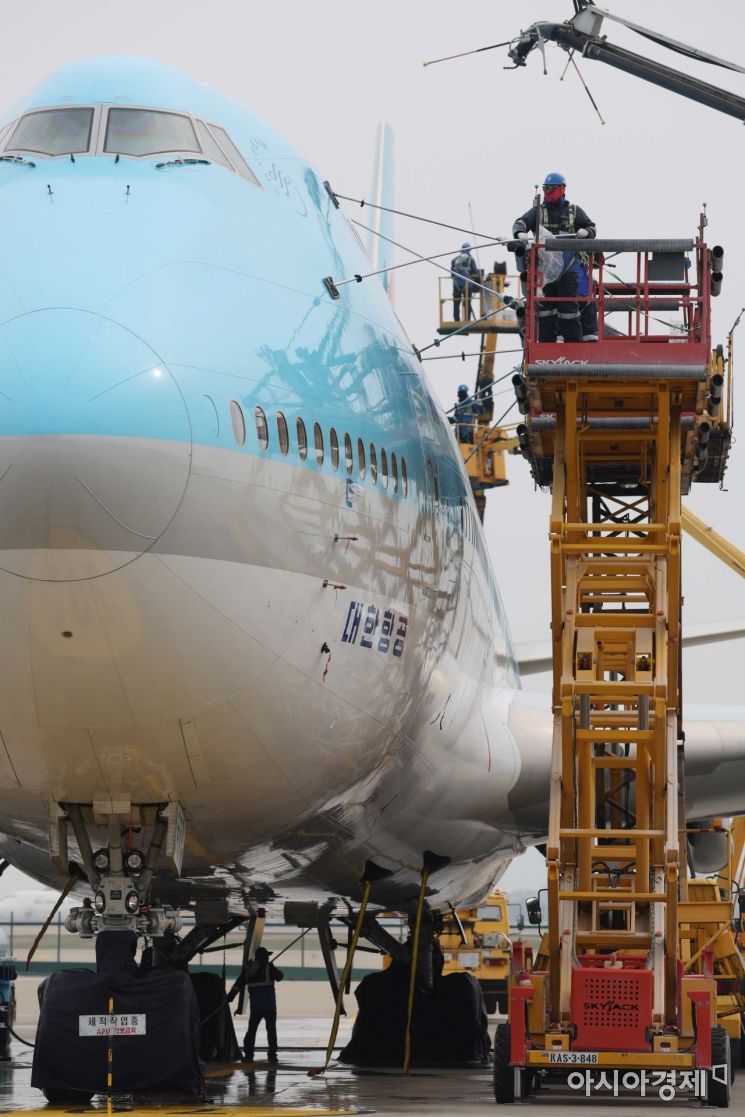 Last April, officials were cleaning the Boeing 747-8i aircraft at the Korean Air maintenance hangar in Unseo-dong, Jung-gu, Incheon to welcome spring. Photo by Mun Ho-nam munonam@
Even though more people are traveling, airlines cannot immediately increase seats. This requires government approval from the start, and the situation has become more complicated due to COVID-19 conditions and quarantine measures. Since April 2020, to prevent overseas COVID-19 inflow, the number of aircraft arrivals per hour has been limited, and night flights have been banned by setting flight prohibition hours. At Incheon Airport, the hourly arrival capacity was 40 before COVID-19 but was halved to 20 over the past two years, and due to difficulties in operating quarantine personnel, flights were banned from 8 p.m. to 5 a.m. the next day.
During periods of low passenger demand, these strict measures were not problematic because there was no need to increase supply. Now, the situation has changed. Preparations must be made in advance, but this is not possible. Flight ticket purchases usually occur several months before exercising the right, and airlines must coordinate route schedules and flights ahead of time. The quarantine measures being applied in weekly segments have a significant impact. Airlines want to respond proactively but are constrained by circumstances. The hourly flight limit and flight ban were lifted on the 8th.
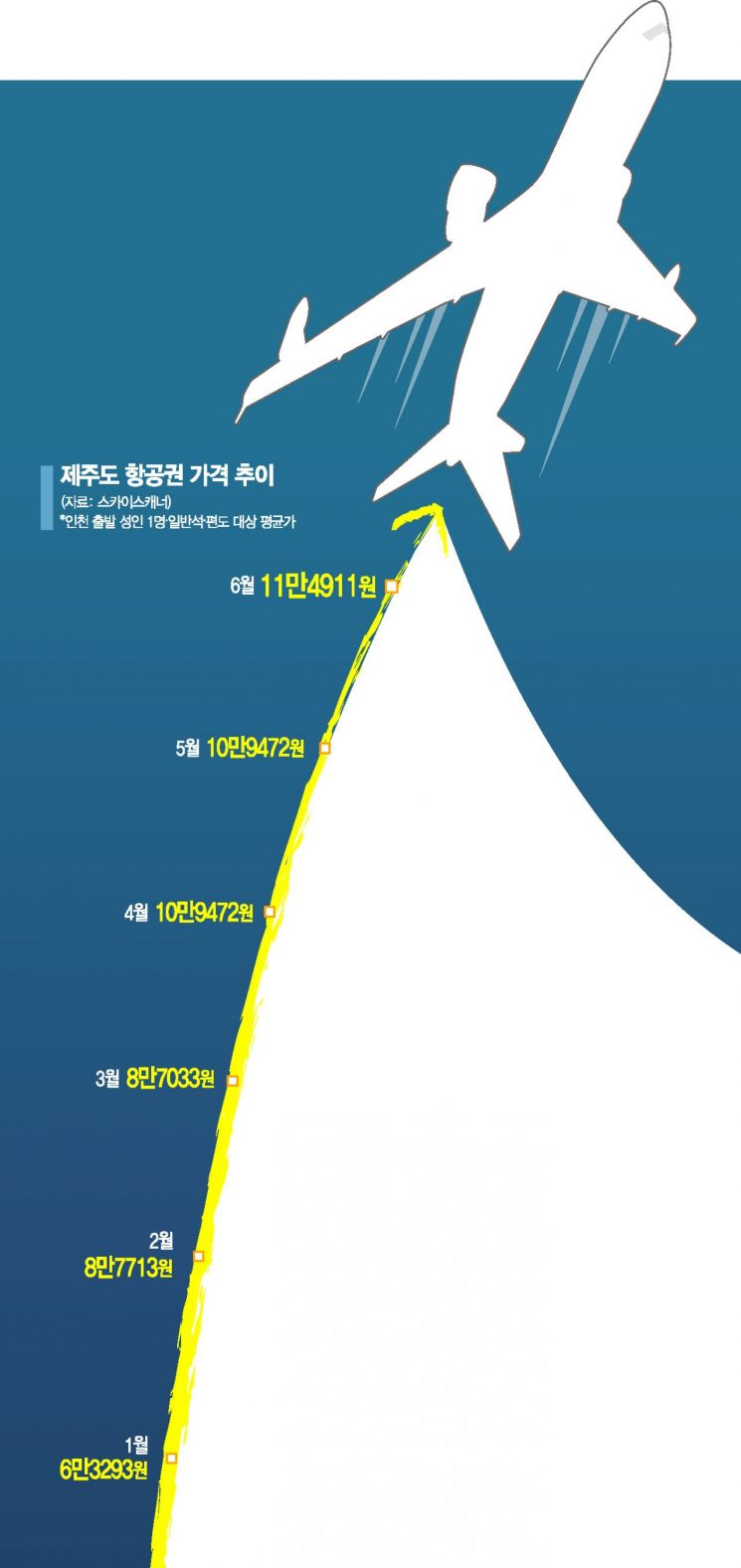
The government aims for an "early normalization" by increasing flight frequency and easing quarantine measures, but realistically, many issues must be resolved before airfare stabilizes in the short term. It is expected to take considerable time for travel agencies, which handled a significant portion of tickets, to get back on track, and the requirement for PCR tests after a certain period post-entry also acts as a barrier to demand recovery. The soaring international oil prices due to war and other factors add to the burden.
Fuel surcharges, which are charged separately from the base fare, are linked not only to international oil prices but also to exchange rates, so under the current high oil price and high exchange rate conditions, fuel surcharges inevitably remain high. The industry expects airfare prices to stabilize after at least one to two months. Passenger fares are determined within the government-approved range based on market conditions such as supply and demand.
An airline official said, "While crew retraining and preparing passenger aircraft can be physically resolved early, scheduling and promotional activities according to the quarantine measures of destination countries and passenger demand inevitably take two to three months or more."
© The Asia Business Daily(www.asiae.co.kr). All rights reserved.
![Clutching a Stolen Dior Bag, Saying "I Hate Being Poor but Real"... The Grotesque Con of a "Human Knockoff" [Slate]](https://cwcontent.asiae.co.kr/asiaresize/183/2026021902243444107_1771435474.jpg)


















