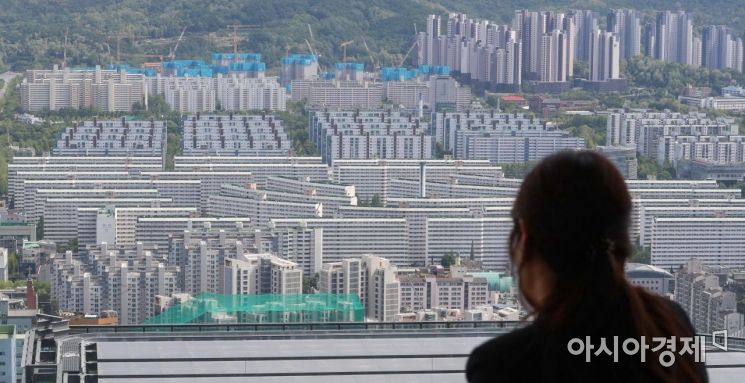
[Asia Economy Reporter Kim Hyemin] The designation of the ‘Land Transaction Permission Zone’ for Jamsil-dong in Songpa-gu, Seoul, and the areas of Samseong-dong, Cheongdam-dong, and Daechi-dong in Gangnam-gu has been extended for one more year. This means these areas will be subject to transaction regulations for the third consecutive year since 2020, as a preemptive measure to block speculative demand amid ongoing concerns about housing price stimulation.
On the 15th, Seoul City held the 7th Urban Planning Committee meeting and approved the original proposal to designate the land transaction permission zone, the city announced on the 16th. Park Heeyoung, head of the Land Management Division at Seoul City, explained the reason for the re-designation, saying, "Large-scale development projects are still ongoing, and it is difficult to say that transaction volumes or housing price volatility have stabilized compared to other areas. It is necessary to continue preemptive measures to prevent speculation."
The target areas?Jamsil-dong, Samseong-dong, Cheongdam-dong, and Daechi-dong?cover approximately 14.4 square kilometers and are sites of large-scale development projects such as the International Exchange Complex District, Yeongdong-daero Metropolitan Complex Transfer Center, and Hyundai Global Business Center (GBC). Seoul City has managed this area as a land transaction permission zone since June 2020 due to concerns about the influx of speculative demand, extending the designation once last year and again this year.
When an area is designated as a land transaction permission zone, transactions involving housing, commercial buildings, or land above a certain size require approval from the head of the relevant district or city office. If a contract is made without permission, the offender faces imprisonment of up to two years or a fine equivalent to 30% of the land price. In particular, residential land must be used for actual residence for two years, making a form of ‘gap investment’ impossible.
Since the government expanded the land transaction permission zone criteria in Seoul from February?applying to residential areas exceeding 6㎡ and commercial areas exceeding 15㎡?small apartments and multi-family houses with land shares of 10㎡ or less, which were not subject to the permission system until last year, are now included in the land transaction permission zone.
However, residents within the designated zones have expressed dissatisfaction, claiming that the regulation only causes a balloon effect, pushing up housing prices in Banpo-dong, Seocho-gu, or Dogok-dong, Gangnam-gu. Bae Hyunjin, a member of the People Power Party representing Songpa-eul, which includes Jamsil-dong, also opposed the measure, stating, "Even law-abiding residents are trapped in indiscriminate regulatory boxes."
Ye Kyunghee, senior researcher at Real Estate R114, said, "Residents may claim excessive infringement of rights, but from the perspective of the overall market, since these areas clearly have development prospects, it is necessary to maintain measures to block speculative demand."
© The Asia Business Daily(www.asiae.co.kr). All rights reserved.

















